
After the Naval Gazing meetup in Dayton, my parents and I headed for Montreal,1 which meant a road trip, mostly across upstate New York. I've already talked about one of the museums we visited along the way, Old Fort Niagara, but there were several others, none of which deserve a full review of their own.
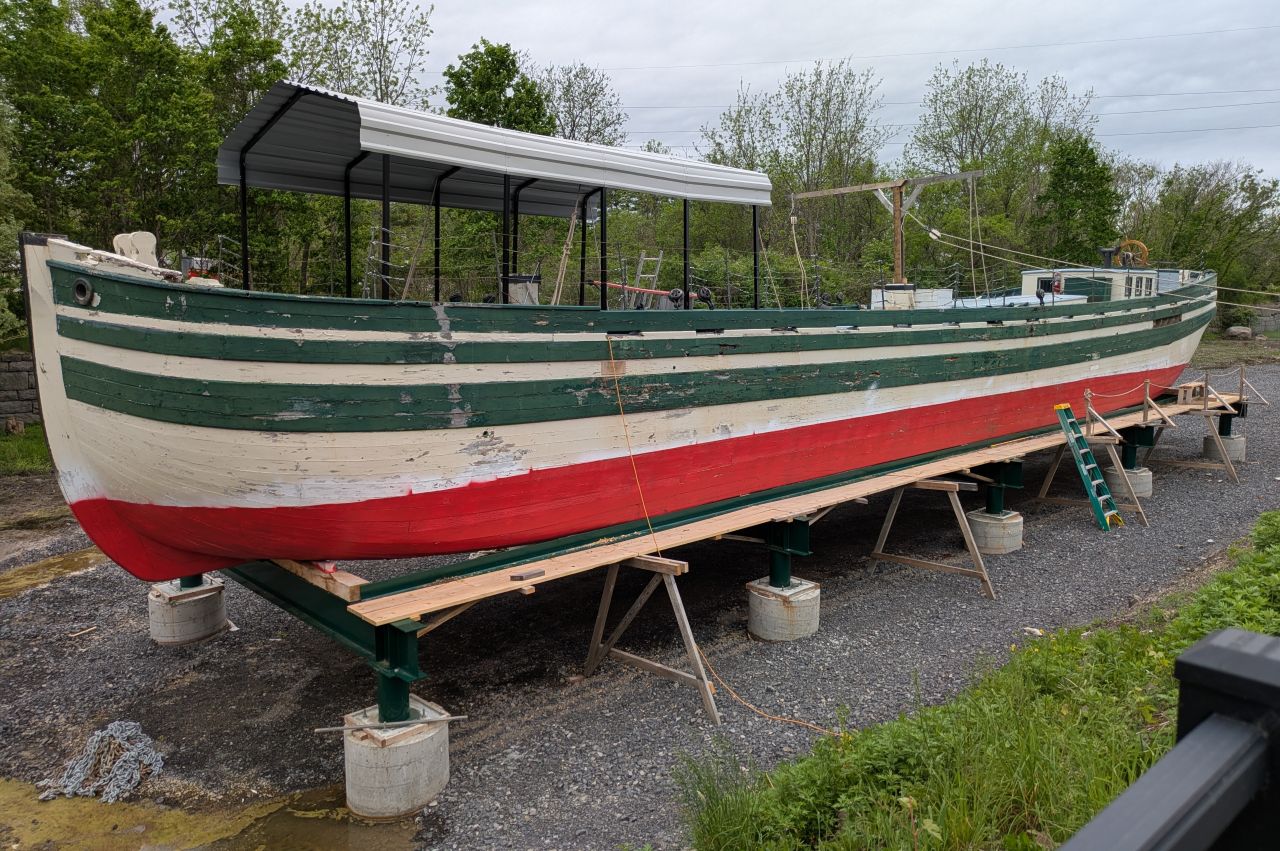
The canal boat at Port Byron
The first was only sort of naval-related, but fits well with my general interests. The Old Erie Canal Heritage Park at Port Byron is just west of Syracuse and right off I-90, and is dedicated to the history of, unsurprisingly, the Erie Canal, originally opened in 1825. This was one of the great wonders of the era, dramatically easing transportation between the Hudson River Valley and the interior of the continent, and this fairly small park has the remains of one of the locks, as well as an old tavern, where crews would get a beer while their boat was locked through, and a visitor center with some exhibits on the construction and history of the Canal. The tavern has recently been restored, and is a fairly typical slice-of-life history museum, while the museum has recently acquired a replica canal boat, which they are in the process of setting up to open to the public. On the whole, it's a pretty nice way to take a break if you happen to be cruising that part of I-90, although it's probably not worth going particularly far out of your way for.
Afterwards, on the way up to the Canadian border, I visited the 10th Mountain Division and Fort Drum Museum, covering both the Army's activities in northern New York, and the history of the 10th Mountain Division, which is based there, in an area chosen back during WWII for its suitability for training armored forces and general lack of mountains.
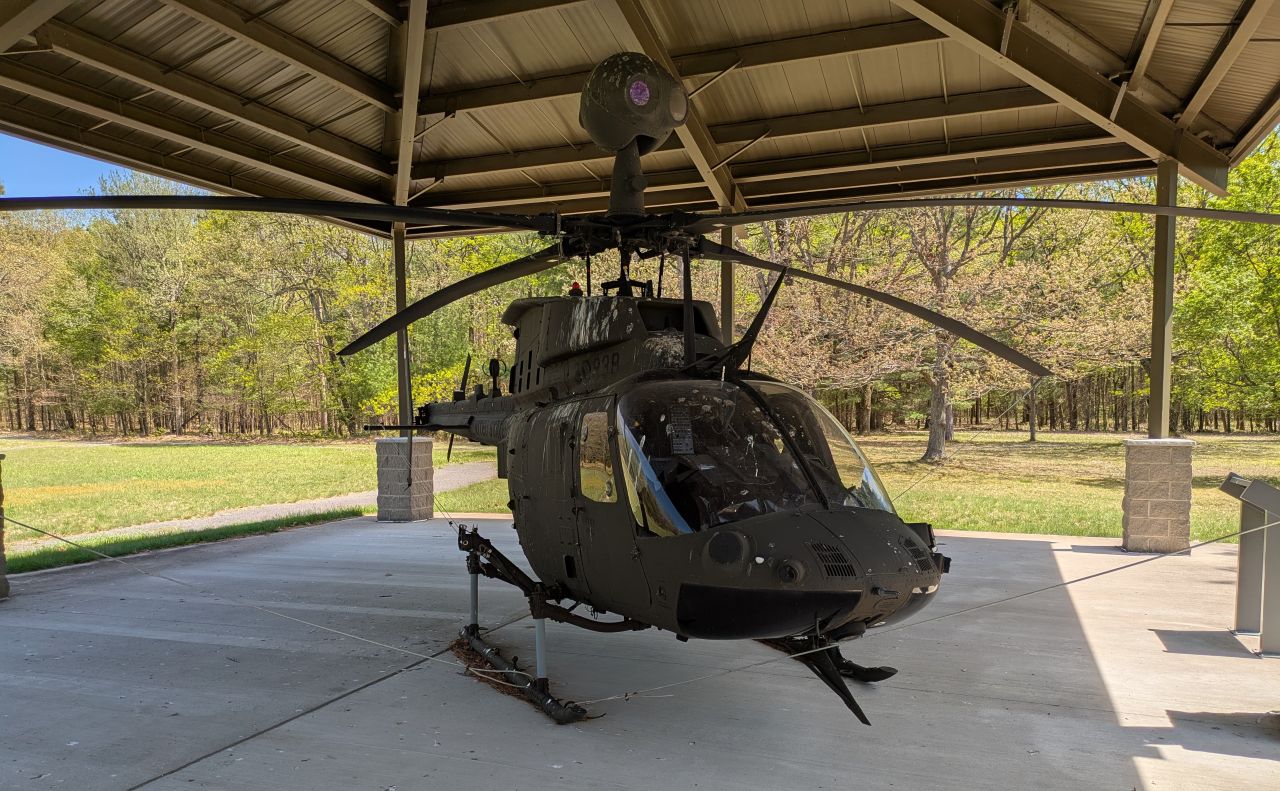
A Kiowa Warrior on display outside the museum
The 10th Mountain Division was activated during WWII to give the US expertise in cold-weather and mountain warfare, and the initial population was heavily drawn from members of the Ski Patrol and other expert mountaineers and skiers. One battalion was used to spearhead the "recapture" of Kiska, but other than that, they didn't get overseas until 1945, taking part in the last stages of fighting in northern Italy. After the war the division was disbanded, although veterans went on to found more than half of all ski resorts in the US. It was briefly reactivated as the 10th Infantry Division in the 50s, then shut down again until the mid-80s, when it was reactivated once again as a light, deployable infantry division in the last-ever major expansion of the US Army. Since then, it has been deployed all over, from natural disasters in the US to Somalia and Haiti to dozens of tours in Afghanistan and Iraq. Despite the name, it has no particular expertise in mountain warfare today, although it might be the premier cold-weather force in the US given how cold the area gets.
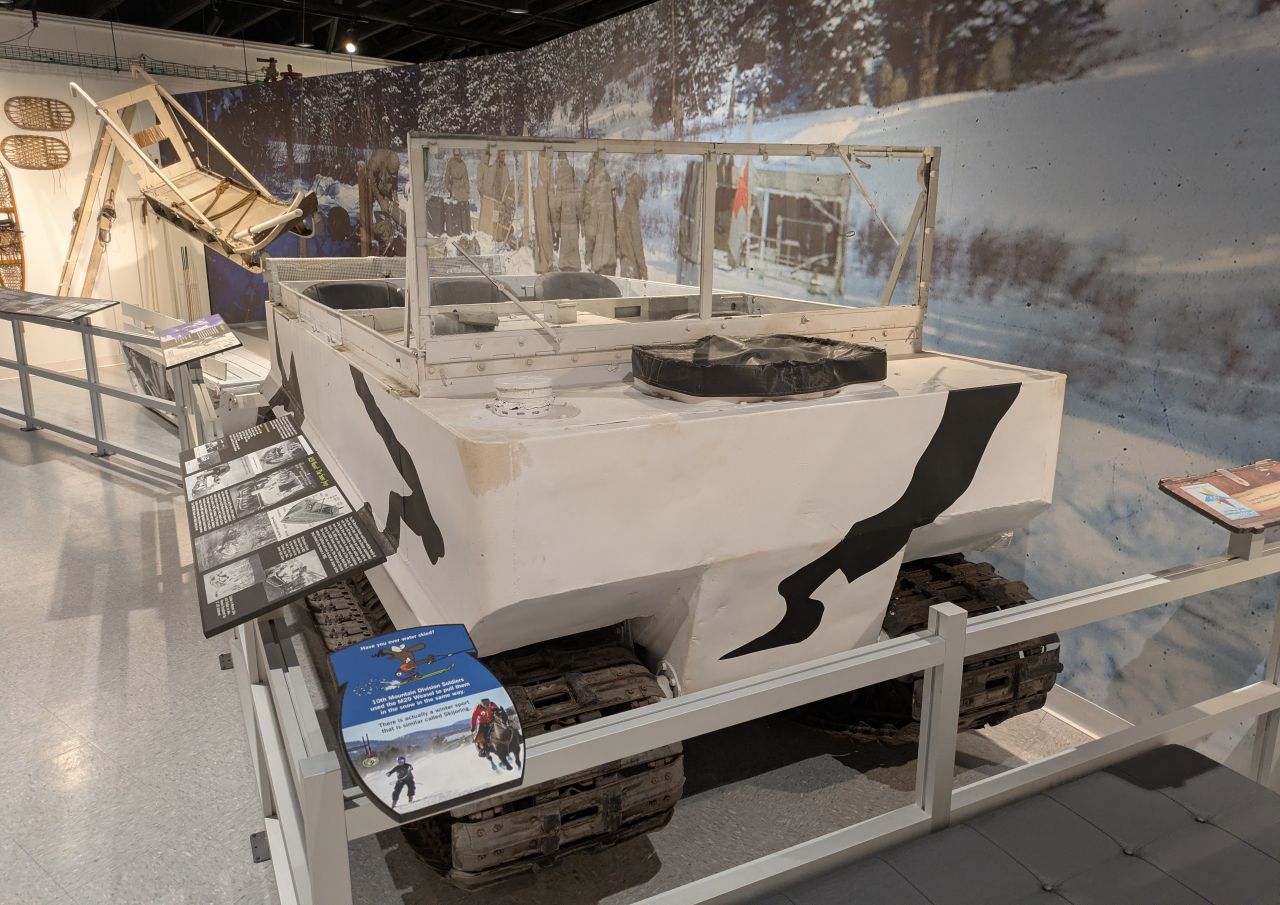
An M29 Weasel and sled at the museum
The museum itself is pretty small, and I was able to read basically every sign there in about an hour. But it was well-done and quite informative about an area of military activity I'm not particularly familiar with. One section covered the history of the area, from military activities before Europeans arrived through its use as a maneuver area in WWII, where, among other units, the 45th Infantry Division did training. Then it was the history of the 10th Mountain, which trained in Colorado during the war. This is split up between a big WWII room, including an M29 Weasel, and another section about the activation and activities of the modern division. Which comes up basically to the present, because the museum was opened in 2022, so even the Afghanistan War is past rather than present.
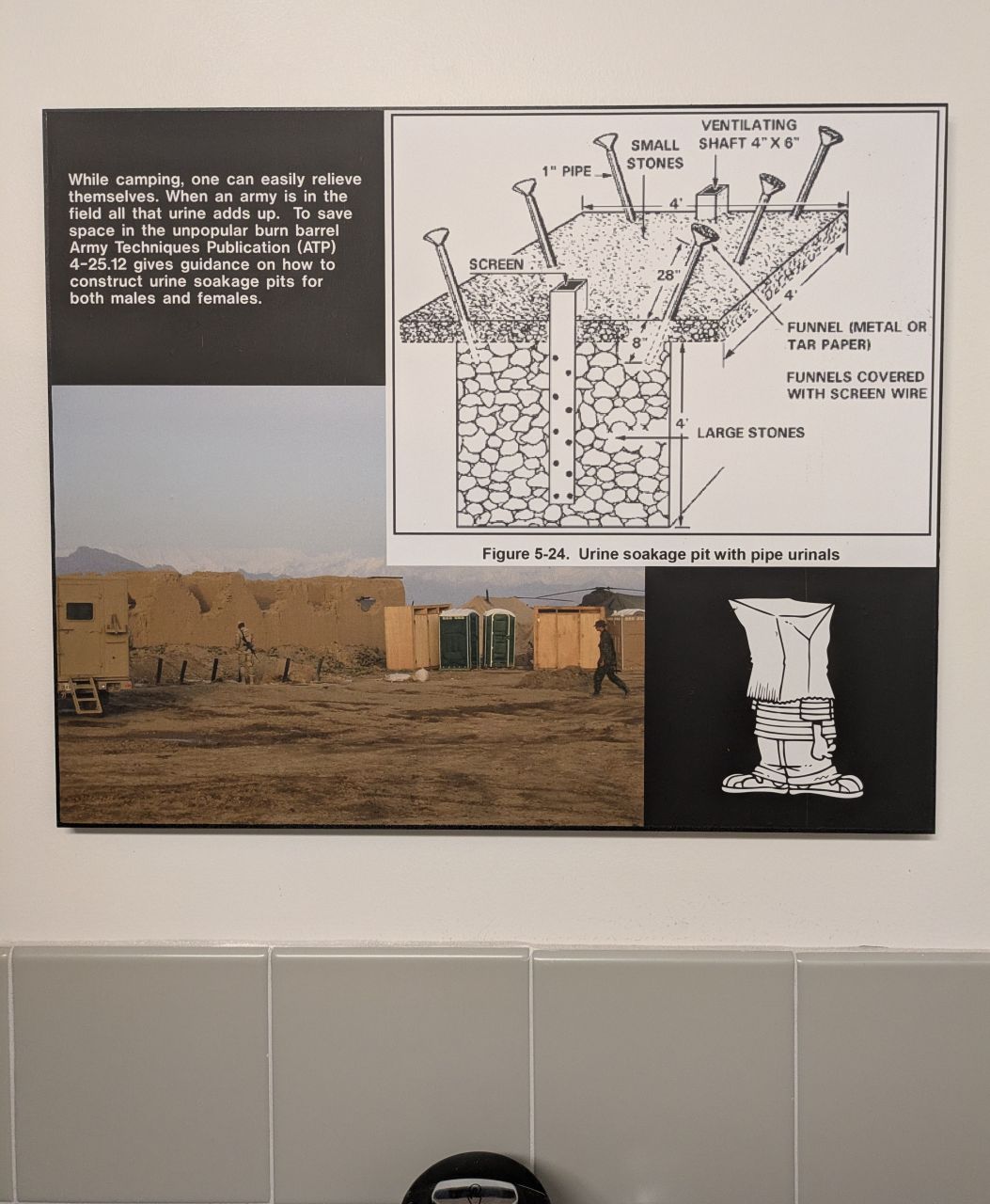
A sign in the bathroom
The only real downside is that Fort Drum is kind of in the middle of nowhere, and the museum isn't big enough to be worth going very far out of your way for. But if you happen to be passing through Watertown, it's worth taking some time to visit. It's an interesting and competent museum, and they also took advantage of their bathrooms to deliver a bit more information, something I really like when museums do.
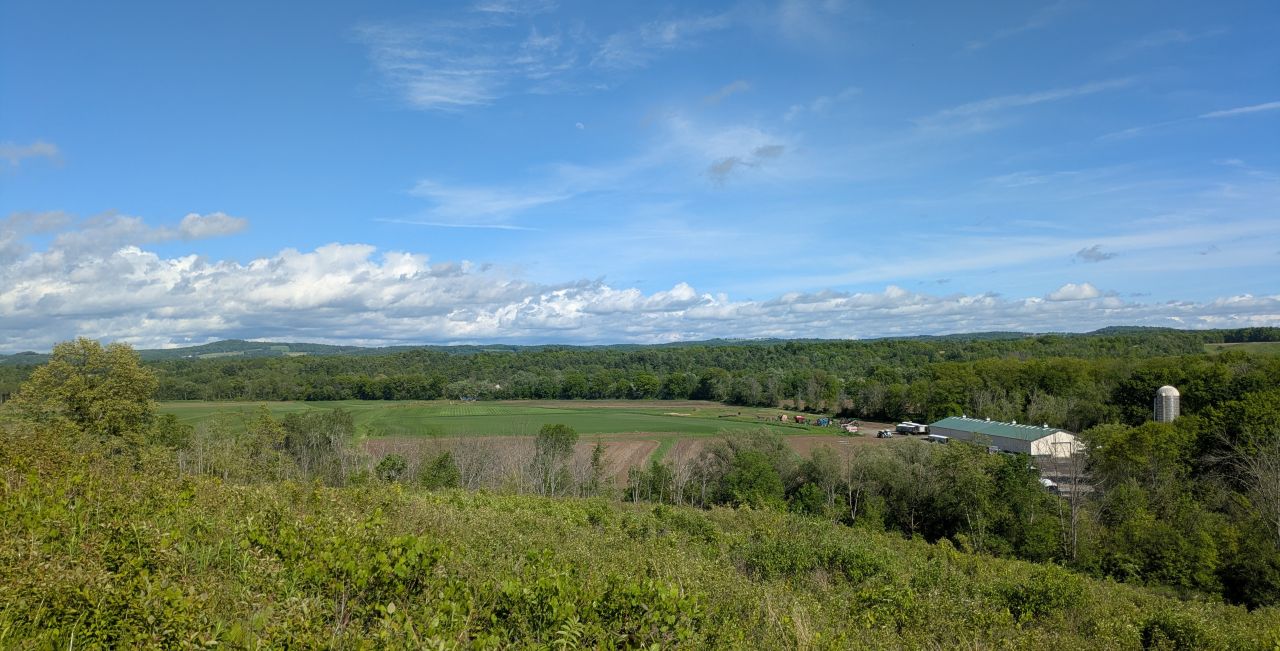
The view down onto the Hudson. Also, it's a really pretty area.
Lastly, we flew out of Albany, and on our way south, we stopped by the Saratoga battlefield. There's a nice visitor center, including a lovely room about the wider global context of the Revolutionary War, and a driving tour of the battlefield, which is managed to keep it looking approximately like it did during the battle itself. It's an interesting chance to get out and study the terrain of a historic battle more or less intact. Looking down on the Hudson from the bluffs makes it abundantly clear why the battle was fought where it was, although we were shorter on time than I would have liked. Still, it was a nice day, and worth a visit if you happen to be in the Albany area. The other thing potentially worth doing in the Albany area is the destroyer escort Slater, which would have had priority except that, like in Buffalo, we were through on a day she was closed.
1 The prime attraction there was the Canadian Grand Prix, which was a lot of fun, but also sort of outside my scope here. ⇑
Comments
The Americans didn't deploy their mountain division to Italy until 1945, and the British mountain division, the 52nd, was not deployed to Italy at all (instead they converted it to an air-landing division and used it in NW Europe, mostly as infantry).
You'd think someone would have noticed that it might have been handy to send mountain troops to Italy, famous for its many mountains...
It's a shame you didn't pass through the USS Slater before flying out of Albany, that one was quite lovely, although not in the most inviting area.
If you happen to be in the area the weekend after Labor Day, there's the Waterford Tugboat Roundup where you can get aboard a bunch of waterway boats.
The battle of Kiska is wild. 300 odd casualties to capture an abandoned island.
@Tony Zbaraschuk
I think Germany did.
@Former Albanian
I did actually check that, but the F1 race meant we didn't make it down until Monday, and she was closed that day. I should edit in a mention of her.
@Tony, @Ike
The British did have mountain troops in Italy: 9 Gurkha battalions served in the Italian Campaign. Not likely to find better mountain troops then from Gurkha tribes that have lived in the foothills of the Himalaya since the last 1500's, if not before.
@Tony Zbaraschuk
The US didn't send a mountain division to mountainous Italy before 1945 because the US didn't HAVE a mountain division before 1945.
Now, why didn't the Army raise a mountain division prior to landing in mountainous Italy? I don't KNOW, but I SUSPECT the reason is that they never wanted or planned to land in Italy at all: they always and only ever wanted to land in France, and had to be dragged kicking and screaming into the Mediterranean theater (indeed, into each new operation in the Med). Also, Churchill swore that Italy would be "the soft underbelly of Europe" - Allied forces would land, the Italians would overthrow Mussolini, the Germans would evacuate, and it would all be over without needing to fight a long campaign up the boot, in mountains most of the way.
If you're in the area, the allegheny portage railroad museum is definitely worth it.