June 23, 2024

Military Spaceflight Part 8 - Nuclear ASAT

Satellites have found a number of military uses: reconnaissance and intelligence, communications and navigation. But all of these require the satellites to be intact and functional, and that raises the possibility of denying the enemy these capabilities by degrading or destroying their satellites. That's right. It's finally time for ASAT.1
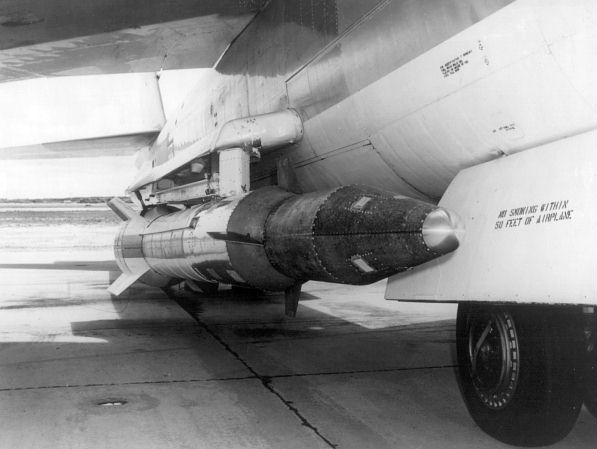

Bold Orion

First, a few words of definition. We can divide ASAT weapons into two fundamental categories: direct ascent and coorbital. Direct-ascent weapons, as the name suggests, ascend directly from the surface to intercept their target, while coorbital ASAT involves launching into the same orbital plane as the target, then approaching and using some sort of warhead at close range. Direct-ascent is conceptually simpler and cheaper (as it can be executed by a fairly small missile if it's in the right place), and can use the target's own speed in place of a warhead if it can get a hit.2 The downside is that it requires incredibly precise guidance, with a typical launch window being a second or less, even if the system is fitted with a nuclear warhead. Coorbital ASAT, on the other hand, needs a full-size booster, but once the price for that has been paid, the guidance problem is greatly simplified, removing the need for a nuclear warhead even with 60s technology, and it is theoretically possible to leave the ASAT shadowing the target, then kill it at a moment's notice when war breaks out. The US has always preferred direct-ascent systems, while the Soviets and Russians often went for coorbital ones. Also worth noting early on is that not all satellites are created equal from the perspective of ASAT systems. An imagery satellite a couple hundred kilometers up is a far easier target than a GPS satellite or a comsat in GEO that are tens of thousands of kilometers up. This is more true for direct-ascent systems than for coorbital systems, but it affects both of them, and news stories about LEO systems that bring up the danger to GPS and the like should not be trusted. Read more...

June 21, 2024

Open Thread 159

It's time once again for our regular Open Thread. Talk about whatever you want, so long as it isn't Culture War.

First, long-time reader and commenter Cassander is looking for a managerial data science/product management role, preferably in aerospace. Email tint.michael@gmail if you have suggestions or leads.

Overhauls are Part 10 of the Aurora tutorial and for 2023, Warship Taxonomies and my writeup of the 2023 meetup in LA.

June 16, 2024

Military Spaceflight Part 7 - Space Surveillance

I've previously gone over the various capabilities that space systems bring to the military, ranging from reconnaissance to communications to navigation. But anything that provides such a capability is obviously going to turn the military mind to countermeasures.

At this point, it would be easy to immediately launch into a recounting of the various and delightful ways that people have come up with to blow up satellites, but that would be premature, because a great deal of the time and energy involved in counter-space work has been spent on keeping track of what is going on up in orbit. After all, it's rather difficult to blow up satellites if you don't know where they are, and very easy to blow up the wrong one if you don't know what they are, not to mention all of the other things you can do with this information. Read more...

June 09, 2024

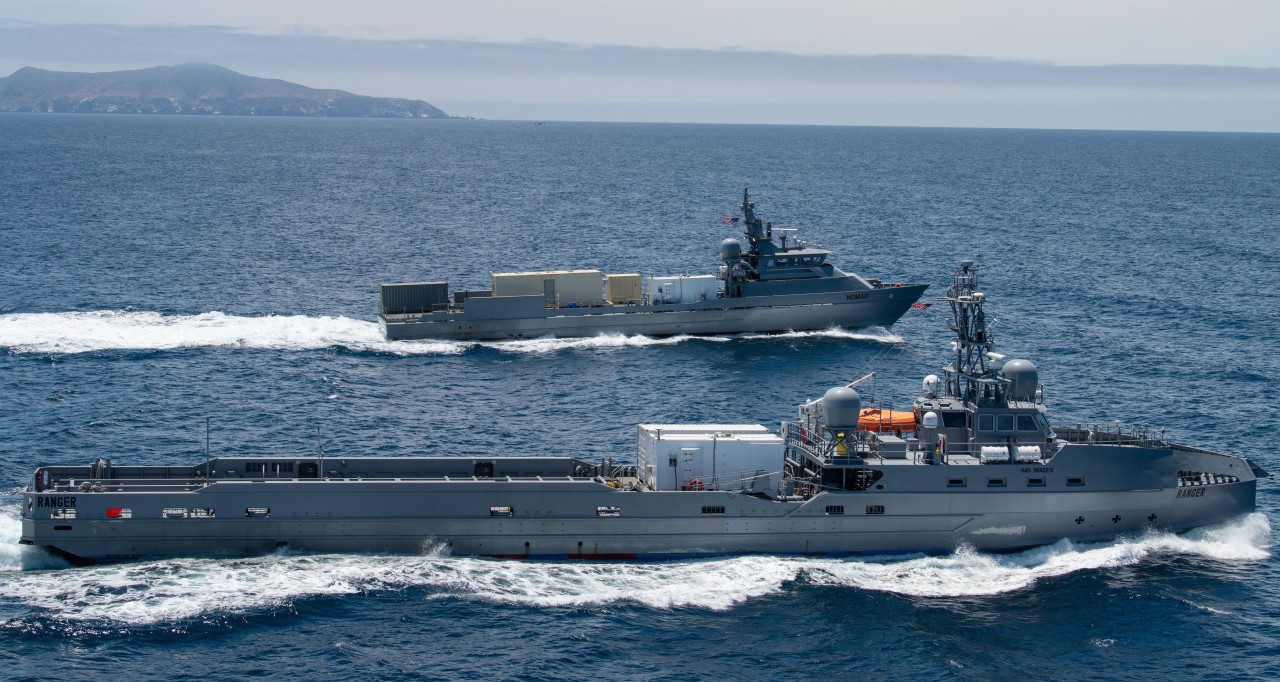
Distributed Maritime Operations and the LUSV

The latest hotness in the USN is Distributed Maritime Operations (DMO), which is their strategy for dealing with the rise of Chinese maritime power. I'd love to give you the official definition here, but I can't, because despite talking about this for 6 years now, they have yet to give an official unclassified definition for it.3


Two USV prototypes

The best definition I've been able to find from DoD sources, and it took a bit of looking,4 is "An operations concept that leverages the principles of distribution, integration, and maneuver to mass overwhelming combat power and effects at the time and place of our choosing. This integration of distributed platforms, weapons, systems, and sensors via low probability of intercept and detection networks, improves our battlespace awareness while complicating the enemy’s own scouting efforts. Applying combat power through maneuver within and across all domains allows our forces to exploit uncertainty and achieve surprise." Translated out of five-sided thought,5 this is sort of a turbocharged version of network-centric warfare, seamlessly linking together all of the various sensors and weapons wherever they may be so we can face the PLAN with whatever assets are best-placed to destroy them while avoiding providing the enemy with juicy targets. Read more...

June 07, 2024

Open Thread 158

It's time once again for our regular Open Thread. Talk about whatever you want, so long as it isn't culture war.

First, apologies for not having a Jutland post this year. I didn't really have anything to cover, so I left that slot empty.

Second, I recently watched the Prime documentary on the Blue Angels, and very much enjoyed it. Would recommend.

Overhauls are Coastal Defenses Part 3 and for 2023, The East Asia Squadron Part 2, my review of Rules of the Game and RTW3 and Information.

June 02, 2024

Museum Reviews - 2024 New England Meetup

During the 2024 Naval Gazing Meetup, I got a chance to revisit several museums I'd been to years ago, and I thought I should take the chance to update my impressions based both on what has changed there and on the fact that I have spent the last few years thinking about how best to run a museum ship.

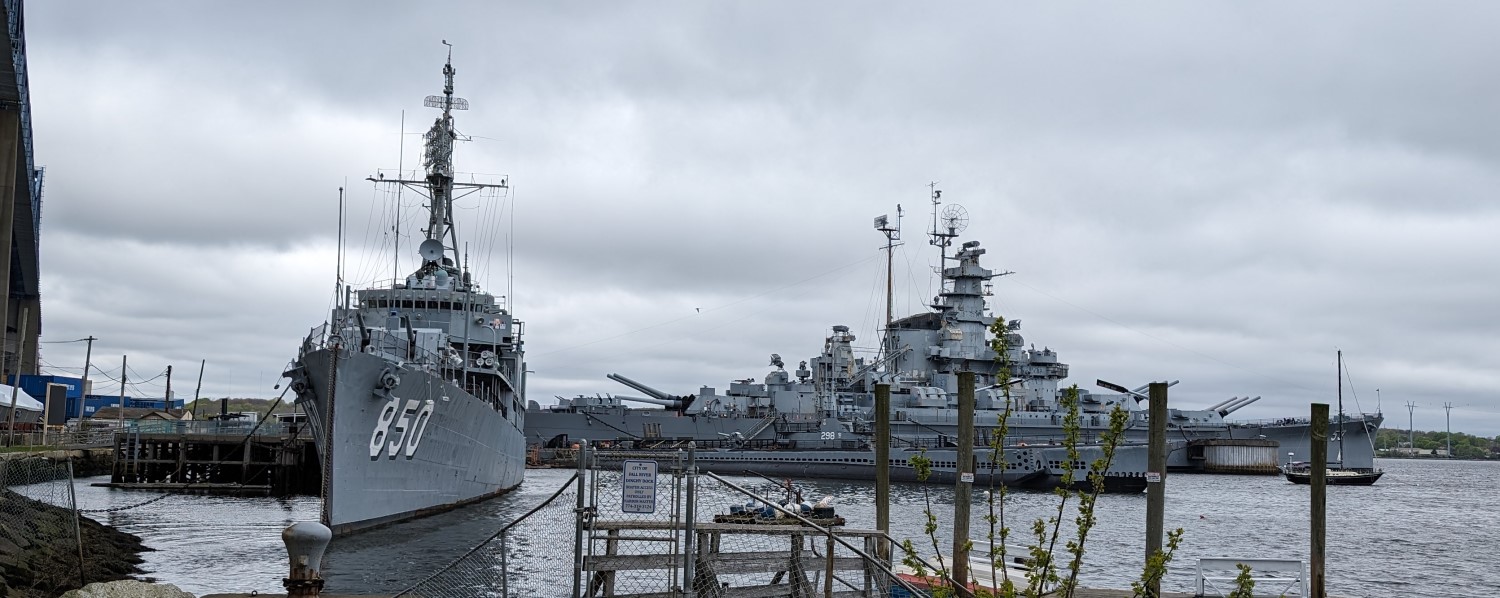
First was Battleship Cove, where the biggest change was the loss of Hiddensee, which had to be scrapped in 2023 because she was in bad shape and it would have been too expensive to keep her. This is an unfortunately common fate for Soviet-bloc museum ships, and I am aware of at least three others that were ultimately consigned to the scrapyard for similar reasons, but at least I got to see her before she went, unlike the others. This has had a knock-on effect, as previously visitors got onboard Lionfish via Hiddensee, so Lionfish was currently closed while they got alternate access set up, although that should be done by now. Read more...

May 26, 2024

USCGC Eagle

Navies have long believed that seamanship and shiphandling are best learned at sea, particularly on sailing ships. Initially, virtually all naval training was conducted at sea, but as ships grew more complicated, some work began to move to shore facilities and hulked ships. And even as sail gave way to steam in the 19th century, many clung to this belief, with rather odd results, such as the existence of a small fleet of sailing ships with unpaid crews, as many nations required sail experience to get a merchant mariner's license. The argument advanced by proponents of sail was that it taught seamanship, particularly an understanding of wind and current, in a way that simply couldn't be matched by powered vessels, as well as giving cadets a chance to learn leadership and teamwork.


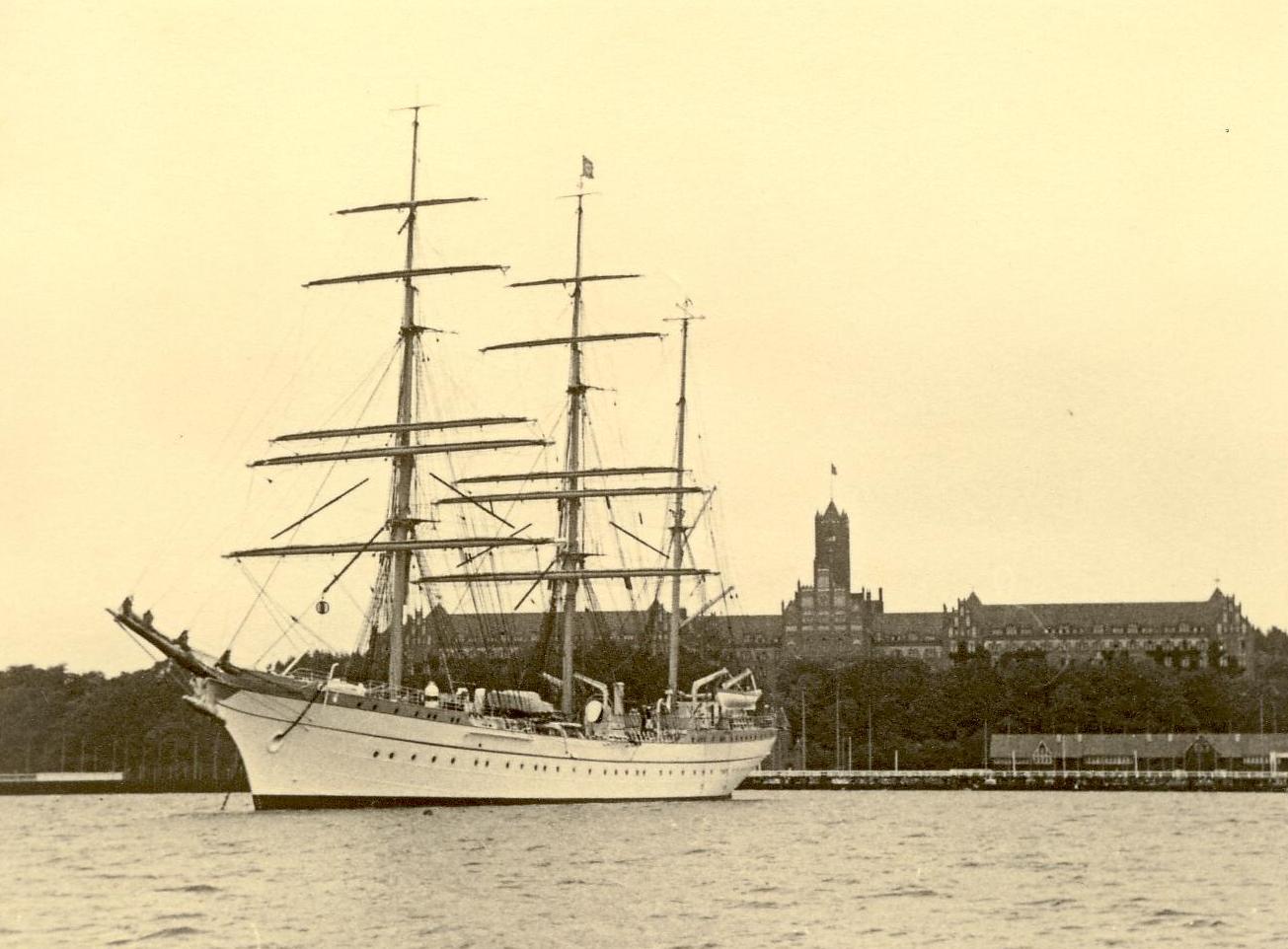
Horst Wessel in Nazi service

How seriously this was taken varied greatly between navies. Some, such as the USN and RN, were quick to abandon sail training on seagoing ships, although small-boat sailing remains part of the curriculum at the US Naval Academy at Annapolis to this day. Others took it far more seriously, building new steel-hulled training ships for the benefit of future officers. Among the leading proponents of this view was Germany. The German training ship Niobe was sunk in a squall in 1932 with heavy loss of life, and public support was rallied for the building of a replacement, named Gorch Fock. She was a steel-hulled barque,6 and proved successful enough that the Kriegsmarine ordered two stretched sister ships, Horst Wessel and Albert Leo Schlageter, named after heroes of the Nazi party. A fourth ship was built for Romania, while a fifth, Herbert Norkus, was cancelled incomplete when war broke out. Gorch Fock spent the war primarily as an accommodations ship, while Horst Wessel and Albert Leo Schlageter, now equipped with light AA guns, continued to conduct training cruises in the Baltic. Read more...

May 24, 2024

Open Thread 157

It's time once again for our regular Open Thread. Talk about whatever you want, so long as it isn't culture war.

Overhauls are Millennium Challenge 2002, Auxiliaries Part 1, FFG(X), Tomahawk Part 1, Tomahawk Part 2 and for 2023 Drydocks and my review of RTW3.

May 19, 2024

Museum Reviews - Boston 2024

While in Boston ahead of the Naval Gazing meetup, I was able to tour some of the city's coastal defenses, and go back to one of the ships I saw during my last visit to the northeast that had not been on my iternary.


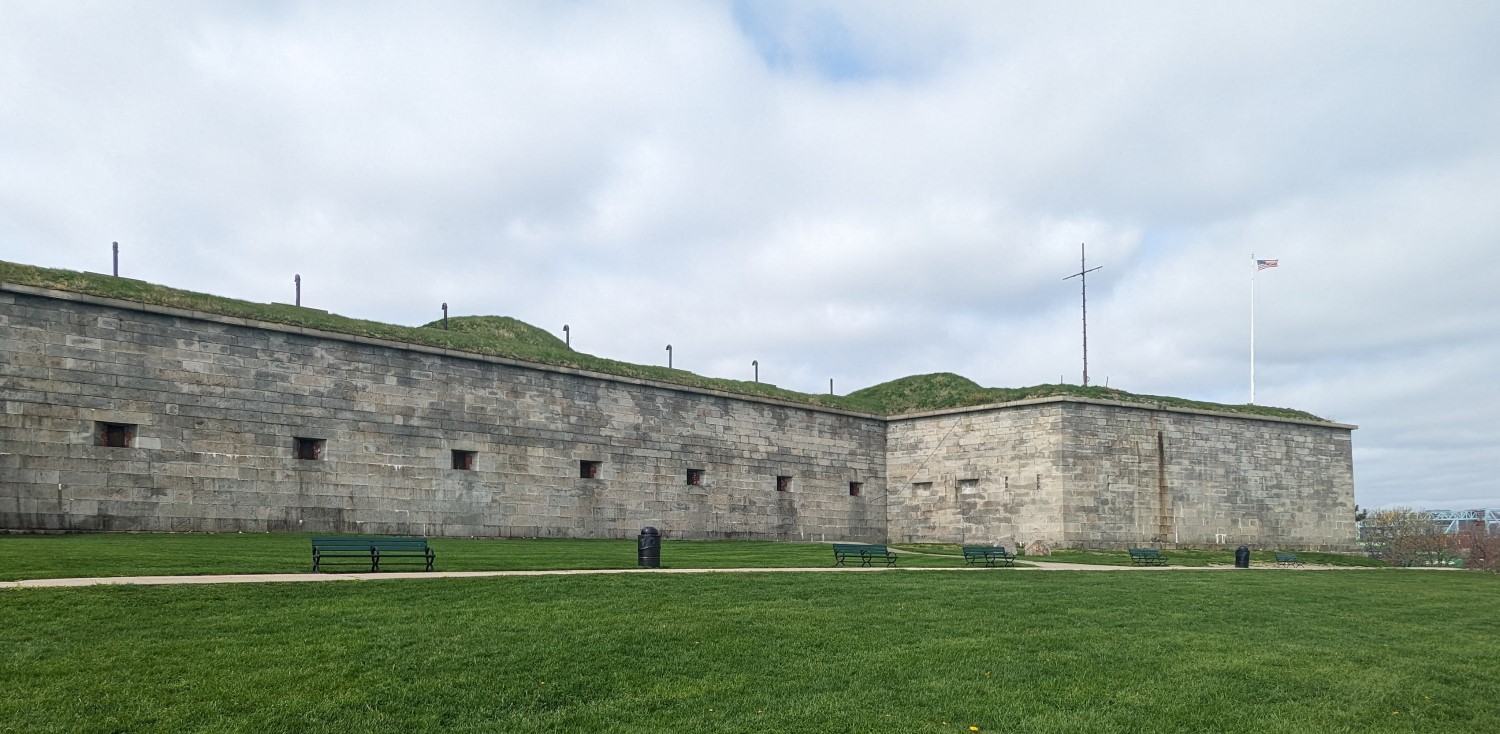
One of the casemated walls at Fort Independence

First, there was Fort Independence on Castle Island, the oldest continuously fortified site in British North America. Fort Independence is a fairly typical third system fort, a masonry star fort with casemates in the walls facing out to sea. These days, it's a public park, with easy access by car if you're on the south side of downtown (it's not an island any more), although public transit access seems to be lacking. Read more...

May 12, 2024

Museum Review - Bovington Tank Museum

Reader DampOctopus here, with a review of the Bovington Tank Museum, which I visited in April 2024. First, some context...

The tank was originally developed under wartime conditions, and the need for advantage on the battlefield naturally took precedence over preservation of the historical record. After the conclusion of WWI in 1918, Bovington Heath was littered with the debris of this development effort along with surplus tanks salvaged from the battlefields of France, abandoned to slowly rust. There they might have remained but for a visit in 1923 by Rudyard Kipling who suggested that they should be preserved for posterity. His suggestion prompted an effort in that direction over the following decades and today the Bovington Tank Museum is both the home of the earliest artifacts from the history of the tank and the largest collection of tanks in the world.


Achtung - Panzer!
Type: Tank Museum
Location: Bovington, UK
Rating: 5/5
Price: £21.50 (US$27) for normal adults

Website

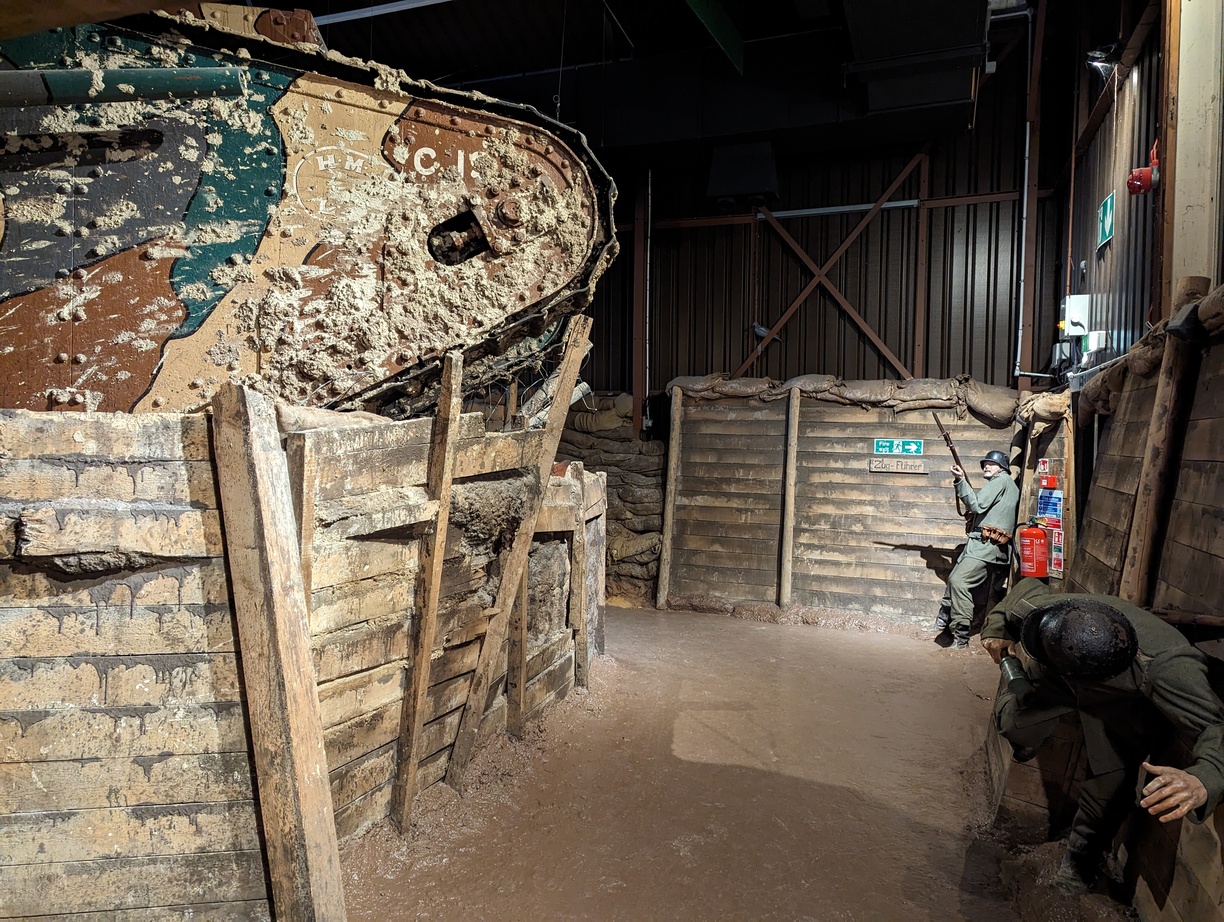
The curators of this museum have gone to considerable effort to display their collection to good advantage. Take the Trench Experience exhibition. It starts with a replica recruiting office and leads on through a recreation of a WWI trench system, with mannequins in period-appropriate costumes sheltering in dugouts and listening to background radio chatter. Then you turn a corner and see a soldier shouting in German and cowering away from a shape looming over the trench ... which turns out to be a Mark I heavy tank. Continue onwards and you see a series of examples illustrating the development of the classic rhomboidal British heavy tanks of WWI: the later Marks IV and V, a Mark IX armoured personnel carrier,7 a Mark V** with stretched chassis for crossing wider trenches and a Mark VIII of an Anglo-American design that didn't see service until after the armistice. Read more...