July 05, 2023

Thanks to Col G Hall Sebren Jr

Colonel G Hall Sebren Jr is the commander of the 72nd Air Base Wing and of Tinker AFB as an installation. He and those responsible for the recent airshow there have given me an opportunity I didn't think I would ever live to see. At last year's Miramar Airshow, it took about an hour and a half to get off base, and I had assumed that I would never encounter a worse line at an airshow (or possibly anywhere). This time, it took about 2 hours to get into the show, thanks to a very slow security line. Col Selbren should be proud of himself for achieving this.

I cannot emphasize how much of a mess this was. The gate opened at 8, and I arrived just before 9. It was 11 before I got through. So in the first hour the gate was open, at least 3 hours worth of people accrued. And when I finally got there, I found three lines through screening, each of which had about a dozen airmen to do bag screening, but laid out so that only 3 or so of them were actually doing anything. They could easily have moved I had initially suspected that they might have just had much higher attendance than they'd planned for (I saw more marketing this year than 4 years ago, and they skipped two years ago because of COVID) but once we got inside, it seemed barely more busy than the 2019 show. I later found out that they hit capacity at 12:30, presumably based on the number of people already in line, which explains both the state inside and the state outside. That said, it's possible that Col Sebren or someone else high in the ranks of the airshow simply likes making people stand in line. That would also explain the poor handling of the lines for the planes on static display, too. Although they did have two E-3s open this year, the rate of flow through any open aircraft was far too slow. How about instead of having crew conversations inside the plane, have them outside, with someone inside just to move people along? Read more...
July 02, 2023

The German Navy in the Americas

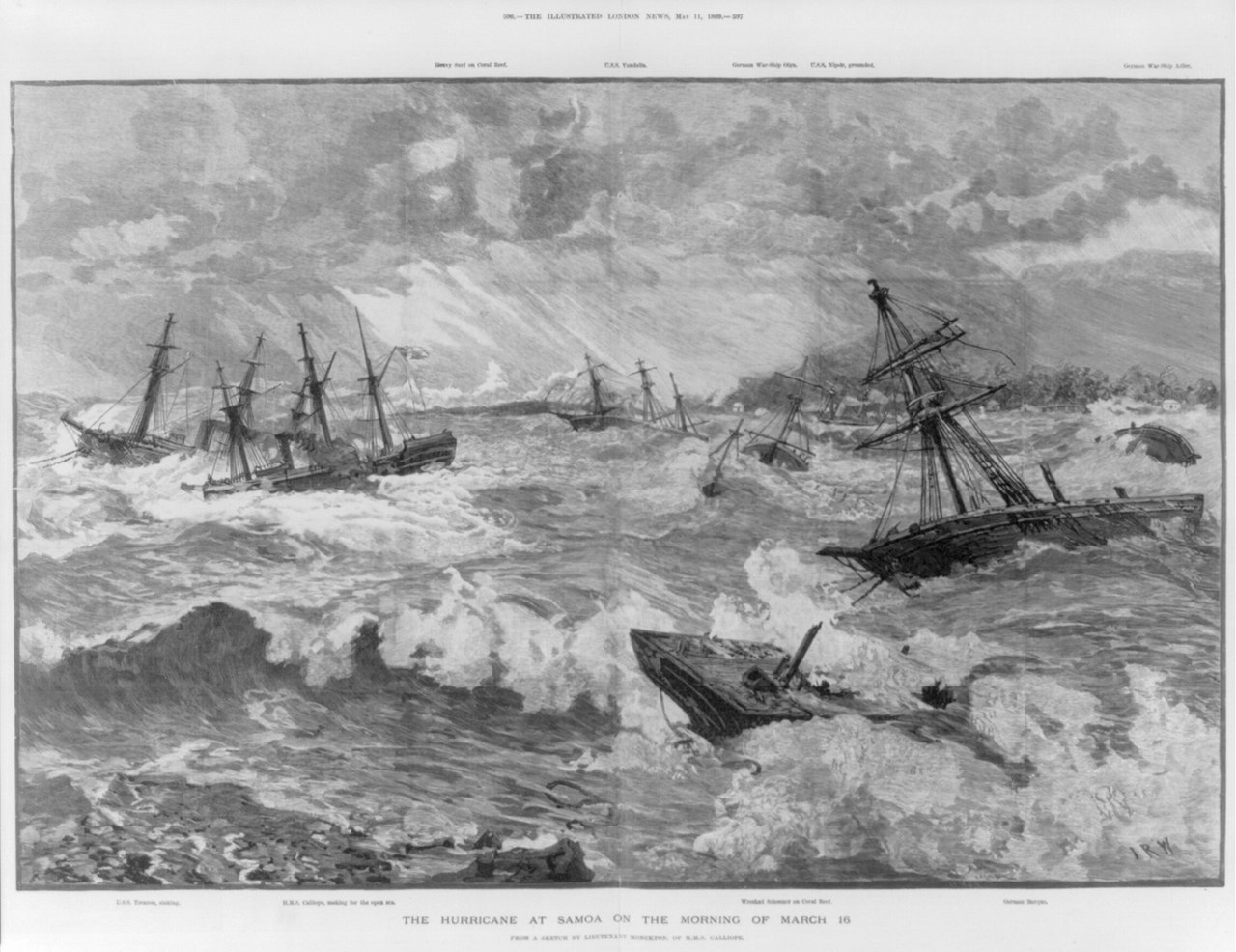
Before 1890, relations between Germany and America were fairly calm. Both had been busy at home, but in the last decade of the 19th century, they turned their eyes outward, entering the race for colonies worldwide.1 As they were late entries, there was obviously competition between the two for the remaining pieces of land, and after first clashing in Samoa, the two sides nearly went to war when the Germans showed up off Manila after Dewey's victory there, and made enough of a nuisance of themselves that the Americans on at least two occasions had to put shots across their bows. German hopes of securing the Philippines, or at least a part of them, were thwarted, and they were reduced to buying up the rest of Spain's Pacific Empire after the war ended.


The results of a hurricane at Samoa during the crisis

Many in Germany saw its humiliation in the Far East as the result of an insufficient fleet, and quickly turned the incident into yet another reason to support the naval buildup that Tirpitz had started early in 1898. But there was also the question of how to use said fleet, and that year, a number of junior officers were assigned to write evaluations of various elements of war with the United States. The plan that emerged imagined a battle with the USN to gain control of the sea off the Atlantic coast, followed by a landing to secure the Norfolk area. This would then become a base for a thrust up the Chesapeake towards Baltimore and Washington. For some reason, the plan gave no thought to the difficulties of supplying this force across the Atlantic. Read more...

June 25, 2023

Museum Review - Kansas Aviation Museum

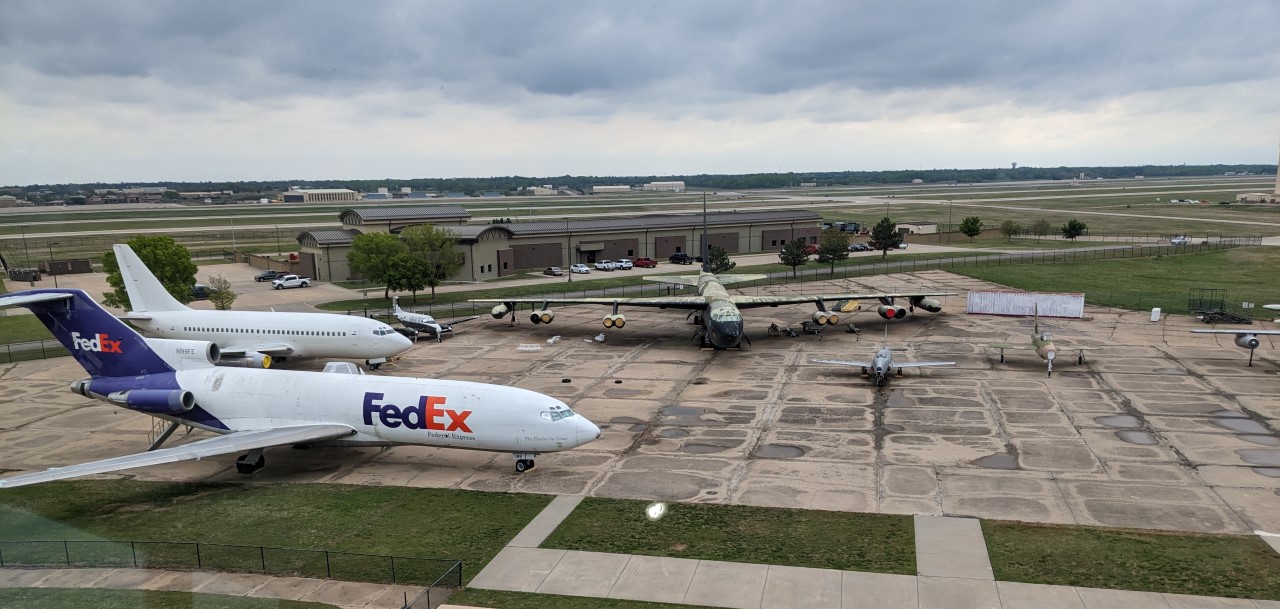
My parents recently swung through town, and on their way in, I went out to meet them in Wichita, where the Fatherly One and I took a look at the local air museum, based in the 1930s terminal on the edge of what is now McConnell AFB.


Some of the outside air park
Type: Regional air museum
Location: Wichita, KS
Rating: 4.0/5, A nice museum focusing on the history of aviation in Wichita.
Price: $10 for normal adults

Website

The museum focuses heavily on the history of aviation in Wichita, which is surprisingly rich for an otherwise rather obscure town in the middle of the Midwest. In the years immediately after WWI, three local engineers founded Travel Air, a pioneering manufacturer of general aviation aircraft. Their names were Clyde Cessna, Walter Beech and Lloyd Stearman, and although Travel Air itself would go under during the Great Depression, all three would set up companies in Wichita that survive in some form or another to this day. Read more...

June 23, 2023

Open Thread 133

It's time once again for our regular open thread. Talk about whatever you want, so long as it isn't culture war.

A couple of items of business to address.

First, a reminder that Naval Gazing has a discord, and it's probably the reason that the OTs have been fairly quiet recently. I've been having a lot of fun there. Link is in the sidebar.

Second, for any readers in the OKC area, we have the Tinker airshow coming up. I'm going on July 1st, and am more than happy to meet up with anyone else who is going. Send me an email at battleshipbean at gmail.

Third, I'm going to try to host another virtual meetup. Microsoft has sunsetted the Teams setup I was using, so I'm going to try the Discord again. Because of the airshow, I'm going to push this out two weeks, and do it at 1 PM Central (GMT-6) on the 8th.

Overhauls are Naval Rations Part 1 and for 2022 On the Border of Land and Sea and Museum Review - San Francisco Maritime.

June 22, 2023

Thoughts on the lost submersible

The news has recently been dominated by things of a nautical nature, thanks to the apparent loss of the Titan minisubmarine during a dive on a prominent wreck in the North Atlantic. I figured I should collect my thoughts (refined during discussions on the discord) and post them here.

First, a caveat. I am not an expert in deep-ocean operations, and I have no specific knowledge of OceanGate or this submersible beyond what I've read since this all started. That said, I've had some interest in this general field for a while, and have read several books on military deep-sea operations before all this blew up.

It's worth starting with a review of what we know about Titan. Most of this comes from a 2019 profile in Smithsonian. The sub's pressure hull is composed of a carbon-fiber cylinder with two titanium hemispheres on the ends. This is lighter than a conventional metal hull would have been, which in turn made it a lot easier to solve the basic problem of submarines: a fully-loaded submarine has to have the same density as water. With deep-diving submersibles, the hull is generally too heavy, and they have to attach additional flotation, something Titan was able to avoid. Read more...

June 18, 2023

Naval Gazing Meetup - Planning 2023

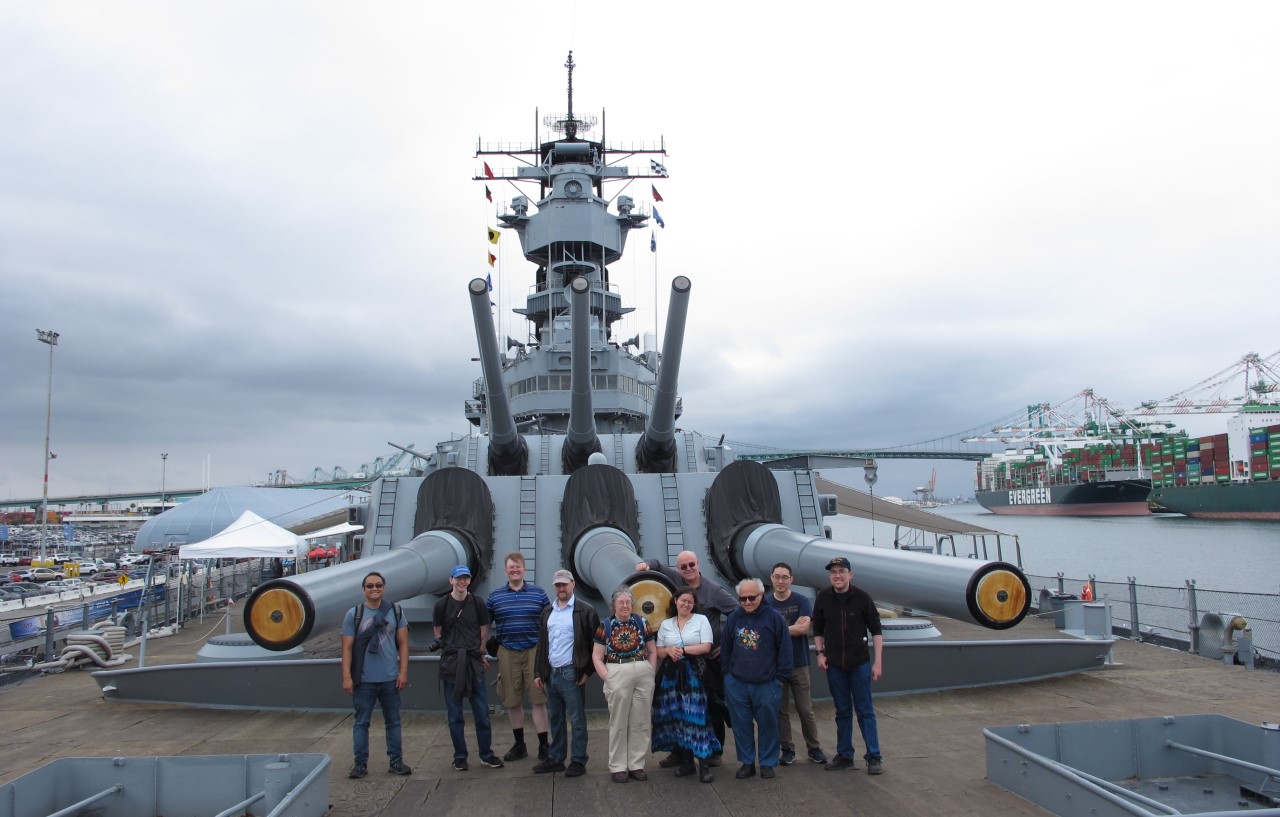
Last weekend was the 2023 LA Naval Gazing meetup, distinguished from previous meetups by being the first time that people (besides me) came in from far away to attend.2 And it was great. The tour went well, the Friedman family's cooking was excellent and the company was superb.

Which raises the obvious question of doing it again, and if so, where. The first and biggest question is if we want to go back to Iowa or go somewhere else. The case for Iowa is that she is at the heart of this blog, there were only 9 people on the tour this time, and I am sure there are lots of you who would like a chance to go. The logistics also worked pretty well, and we even liked the AirBnB well enough that I'd be likely to rent it again.

The case against is that everyone who went this time enjoyed it a lot, but most don't have John Schilling's astonishing tolerance for following me around Iowa and would rather do it all again, but somewhere else. Which then leads to the question of where we could go that would be impressive enough to be worth the trip and where I could find an appropriate catering team.3

One option is Midway. She's very nice, she's big enough to take pretty much a whole day just on the public parts, there's other stuff to do in San Diego (the Maritime Museum and the Air Museum spring to mind) and she's close enough to the Freidmans that they could drive down like they did this time.

The other is Massachusetts. Battleship Cove is also cool and big enough to take a whole day, and she's basically in a suburb of Providence, which has a decent airport. An hour outside of Providence is the Submarine Force Museum, which is even better, and Mystic Seaport is also in the area. The logistics seem feasible thanks to Sam Chevre, who lives not too far away and helped with cooking at last year's DSL meetup. This also has the (dubious) advantage of being on the East Coast, making it more accessible to those who live there.

So at this point, I will open the floor to comments on this. What is the general thought on Iowa vs Midway vs Massachusetts for next year? I'm vaguely leaning towards doing one of the other two next year, and then Iowa again in 2025.

(2025 edit: We did the East Coast in 2024, and it was equally great, followed by a return to Iowa in 2025 that also went very well).

And to show you all how much fun you missed out on, I offer a view of the meetup through the eyes of a Bulbasaur that Lord Nelson sent with me: Read more...

June 11, 2023

Warship Taxonomies

The discussion on my recent post on Cruiser-Killers largely revolved around the question of what a battlecruiser was and how we would define that. But that in turn raises the question of how we classify warships in the first place, which seems worth taking a closer look at.


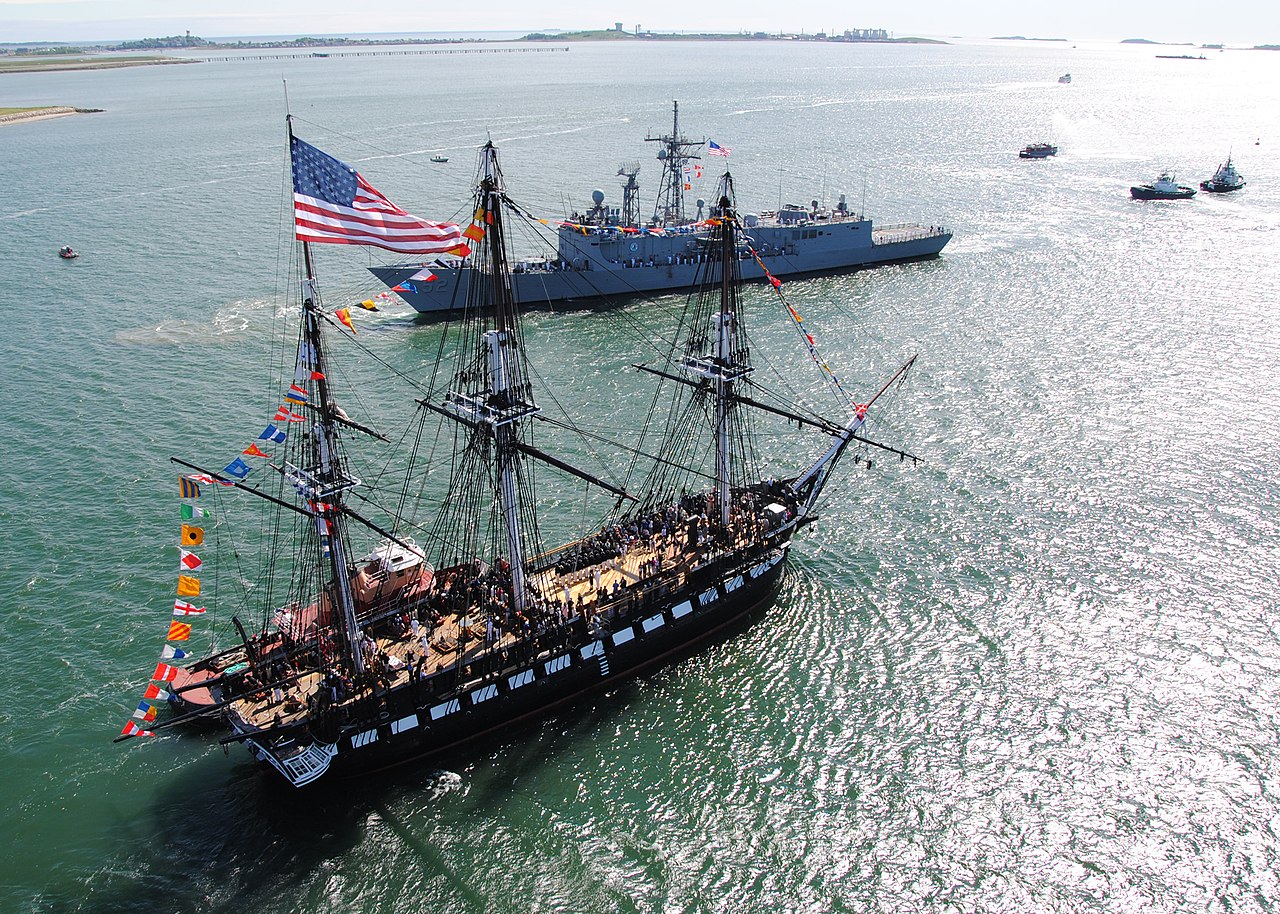
Two frigates pass each other

The most fundamental lesson of all warship taxonomies is that they are inherently messy things. Most of us here are nerds, with the nerd's compulsion to create neat, orderly classification schemes. Unfortunately, what we call warships today is the result of 150 years of evolution, with ships labeled on the basis of the nearest existing type, and old names sometimes brought back for new types. Any nice, clean scheme we come up with is likely to run into at least a few messy counterexamples, even before we get into the mess created by the fact that different nations describe their warships differently, and can't always agree on what to call them. Read more...

June 09, 2023

Open Thread 132

It's time once again for our regular open thread. Talk about whatever you want, so long as it isn't Culture War.

Overhauls are Jutland Parts two and five, Soviet SLBMs Part 2 and for 2022, Codebreaking and Jutland and Miramar 2016.

June 04, 2023

Rule the Waves 3 and Information

Games are an often underappreciated medium for learning historical concepts, and their ability to simulate things can lend extra power. After getting your dreadnoughts torpedoed a few times in Rule the Waves, a player is likely to be far more sympathetic to Jellicoe's decision to turn away at Jutland. So in the spirit of Bret Deveraux's Teaching Paradox series, I'm going to focus in on one element that the Rule the Waves series (particularly RTW2 and RTW3) handles far better than any other game I've ever seen. Specifically, how it confronts the player with the problems of limited information and uncertainty that navies faced on almost all levels throughout the period in question.


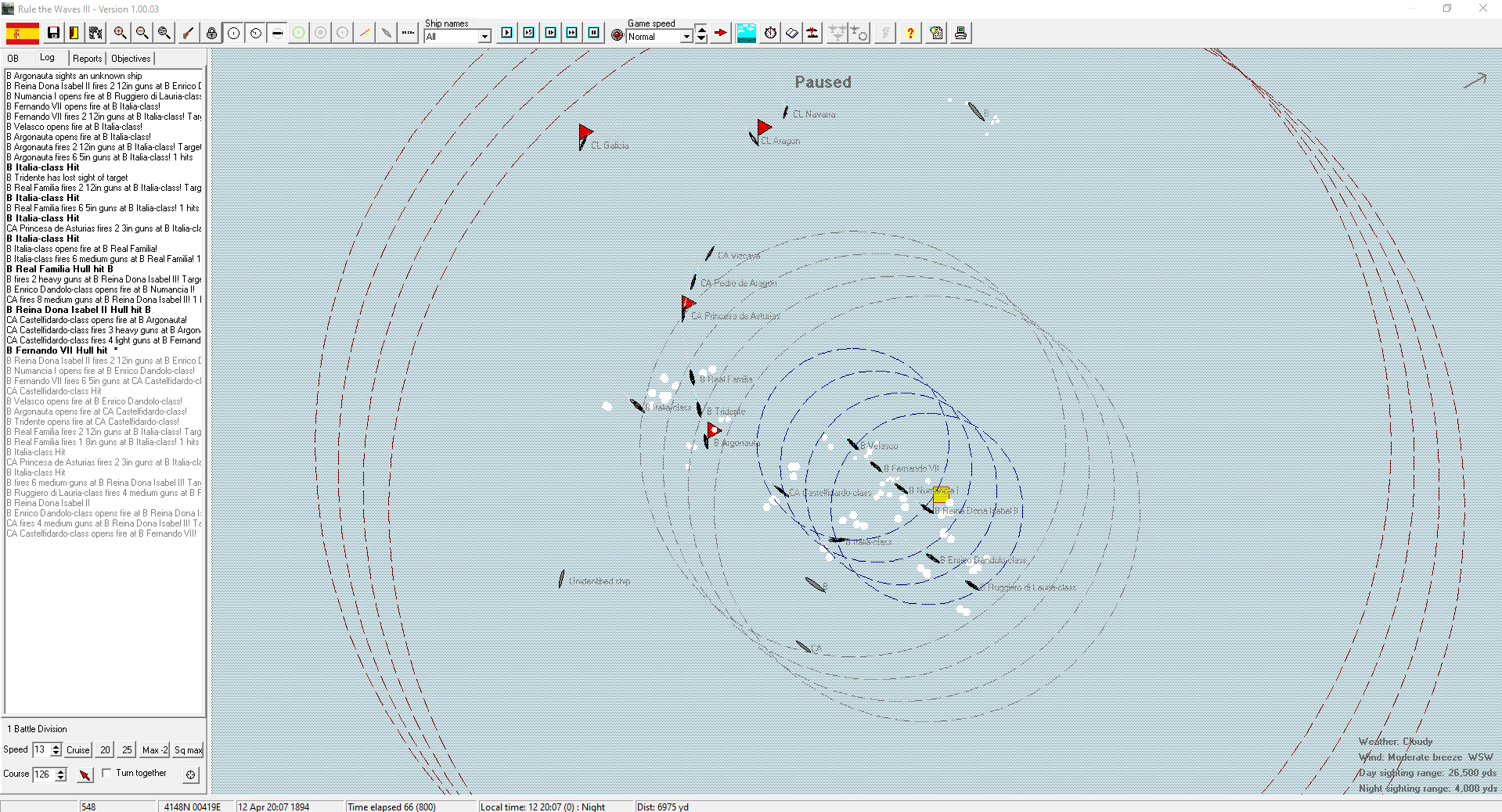
An early night battle in RTW3

This is most visible on the tactical level. Limiting visibility to what your units could realistically see is common, but RTW brings this to the foreground. There's a button that shows the visibility circle around your currently selected unit, and it frequently changes with weather and lighting. An action on a clear day is a chess match, while a pre-radar night action is a study in paranoia and chaos that will make the player much more sympathetic to the British at Jutland. Information is also quite limited within the visible area. Ships initially appear as "unidentified ships", and over time first the type and then the specific class are revealed. But even then, this information isn't necessarily true. It will often confuse battleships and heavy cruisers or light cruisers and destroyers, and occasionally will even label a ship with the wrong class. Nor are labels preserved as visibility drops. Even if the ship was clearly identified at close range, it will become unidentified again as it reaches the fringes of visibility. The player has to learn to keep track of that, and to identify likely types of ships based on how they act in combat. Read more...

May 31, 2023

Jutland - The Rules of the Game

In the search for material for this year's Jutland post, I read Andrew Gordon's The Rules of the Game - Jutland and British Naval Command. It's a massive book that grapples seriously with the question of why the British Admirals at Jutland acted the way they did, and it goes a lot of very interesting places. But ultimately, I didn't feel that I could do it justice with my usual method of drawing directly from sources without taking a lot of posts, so I will instead review it.

Rules of the Game is many things. It's a critical look at Jutland, a social history of the RN's late Victorian officer corps, an investigation of their signalling and command practices, a detailed account of the circumstances surrounding the loss of HMS Victoria, a biography of Hugh Evan-Thomas and a meditation on the sorts of flaws that military organizations tend to have in peacetime. It's also 600 pages, but Gordon does an excellent job of bringing his threads together in the last chapter, making the whole book possibly the best presentation I've ever seen of some of the deeper structures of military theory I've talked about before. Read more...