
Aircraft and submarines seem like strange bedfellows. Beyond each operating entirely immersed in a single fluid, they don't have much in common. But that hasn't stopped attempts to make them work together, usually with extremely limited results.
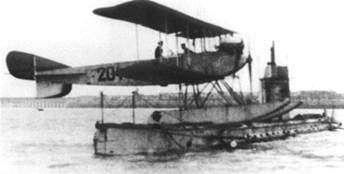
U-12 with an FF.29 aboard
The first collaboration between submarines and aircraft took place barely a decade after both entered widespread service. In the opening days of the First World War, after securing most of the Belgian coast, the Germans established a base at Zebrugge, where submarines could attack shipping in the North Sea. One of these scored an early victory, sinking three British armored cruisers, and they generally made the southern reaches of the North Sea untenable for the British. Soon, a small group of Friedrichshafen FF.29 floatplanes were added, almost as an afterthought, and their operators had to figure out what to do with them. In addition to the obvious (patrolling the North Sea), they fitted their planes to carry tiny bombs and began launching raids on the southeastern bits of England. The problem that these first aerial raiders over Britain faced was that their planes were still incredibly primitive, and it was often a struggle to make the 150 nm round trip to even the nearest portions of the UK before the fuel lines plugged or the igniters fouled.
The submariners and aviators, both operating new and untried weapons, decided to collaborate, On January 6th, 1915, U-12 went to sea carrying one of the FF.29s across its bow. The plan was simple. They would carry the aircraft out into the North Sea, then ballast down the bow and the seaplane would take off normally. Almost from the moment they left the breakwater at Zebrugge it was obvious that the swell, which had felt almost inconsequential to the U-boats, was a serious problem for its awkward, fragile burden. Despite this, the plane survived its ride to the launching point about 20 miles west of Zebrugge, and the pilot was able to get airborne, although he promptly decided that the second half of the plan, where he would land near U-12 and be carried back home, was too dangerous. After a brief flight over the coast of Kent, which nobody down below seems to have noticed, he returned to Zebrugge directly, followed a few hours later by the U-boat.
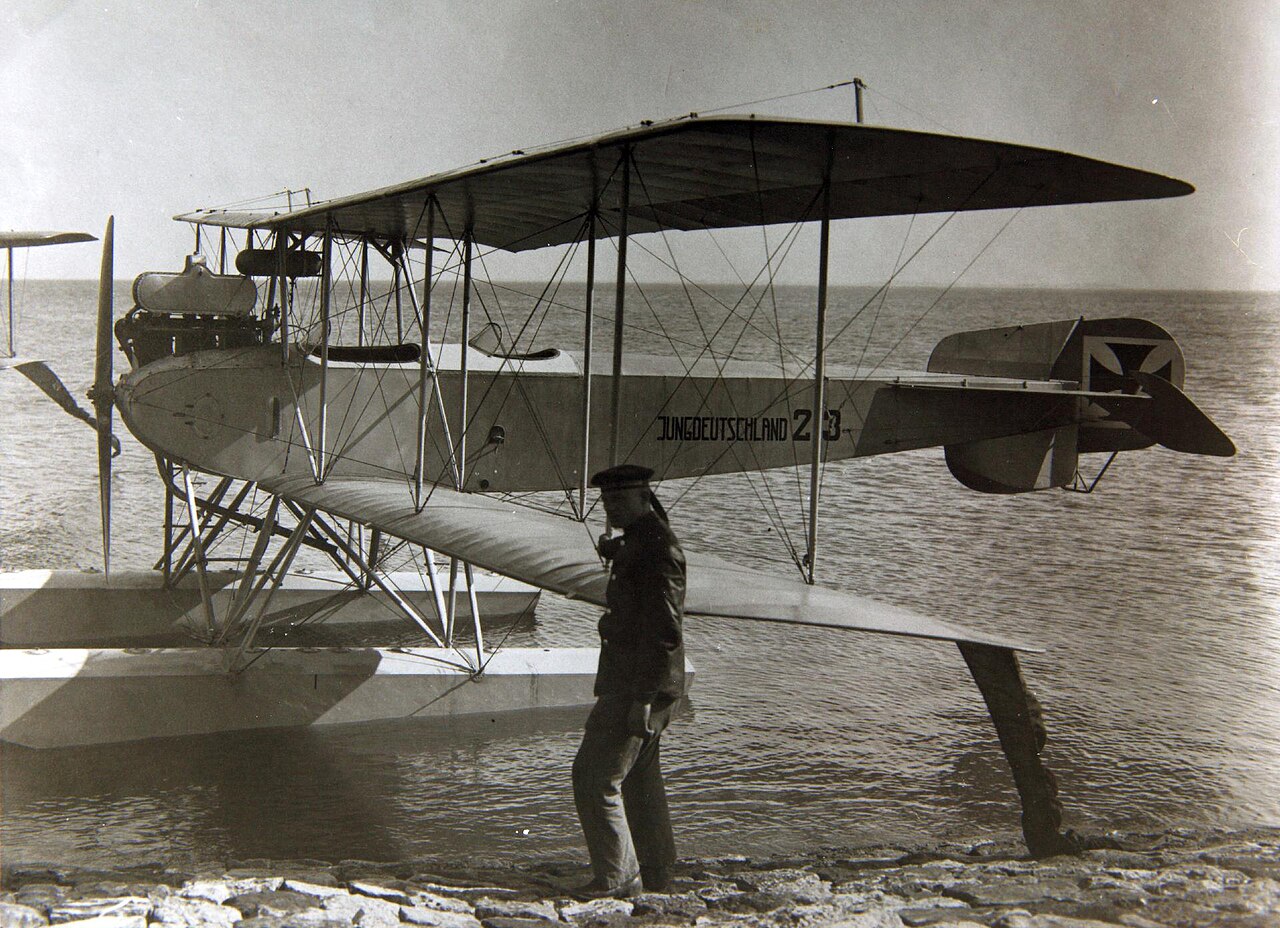
An FF.29
The response from higher-ups was about what might be expected given the degree of success. The order swiftly came down that "U-boats operate in the water, airplanes in the air; there is no connection between the two". And this was undoubtedly the right call given what had been attempted. The advantage of using a U-boat over a conventional boat was mostly its ability to float the plane on and off with the ballast tanks. Diving with the plane aboard would be effectively impossible, and the low U-boat suffered badly in any kind of sea. The British learned this lesson the next year when they tried unsuccessfully to use E-22 as the base for a pair of floatplanes intended to intercept raiding Zeppelins over the North Sea. But the idea of providing a submarine with a plane that could be taken under the surface would come up repeatedly over the next few decades.
But the basic logic was almost always very different from the wartime efforts. Despite certain claims, aircraft of the 1920s were pretty limited at delivering weapons, but still extremely useful at scouting, and most submarine aviation proposals involved using aircraft to extend a submarine's horizons. Despite the role that submarines played in both world wars, this was rarely driven by the desire to find merchant ships to sink. Instead, most of the work in the 20s, when interest in submarine aviation was at its height, appears to have been driven by the desire to use a submarine as a scout for the fleet. A big submarine had the range to operate far from the fleet and the ability to hide if the enemy came looking, but couldn't expect to see ships more than maybe 15 miles even in clear weather.1 Giving it an airplane could extend this to a hundred miles or more.
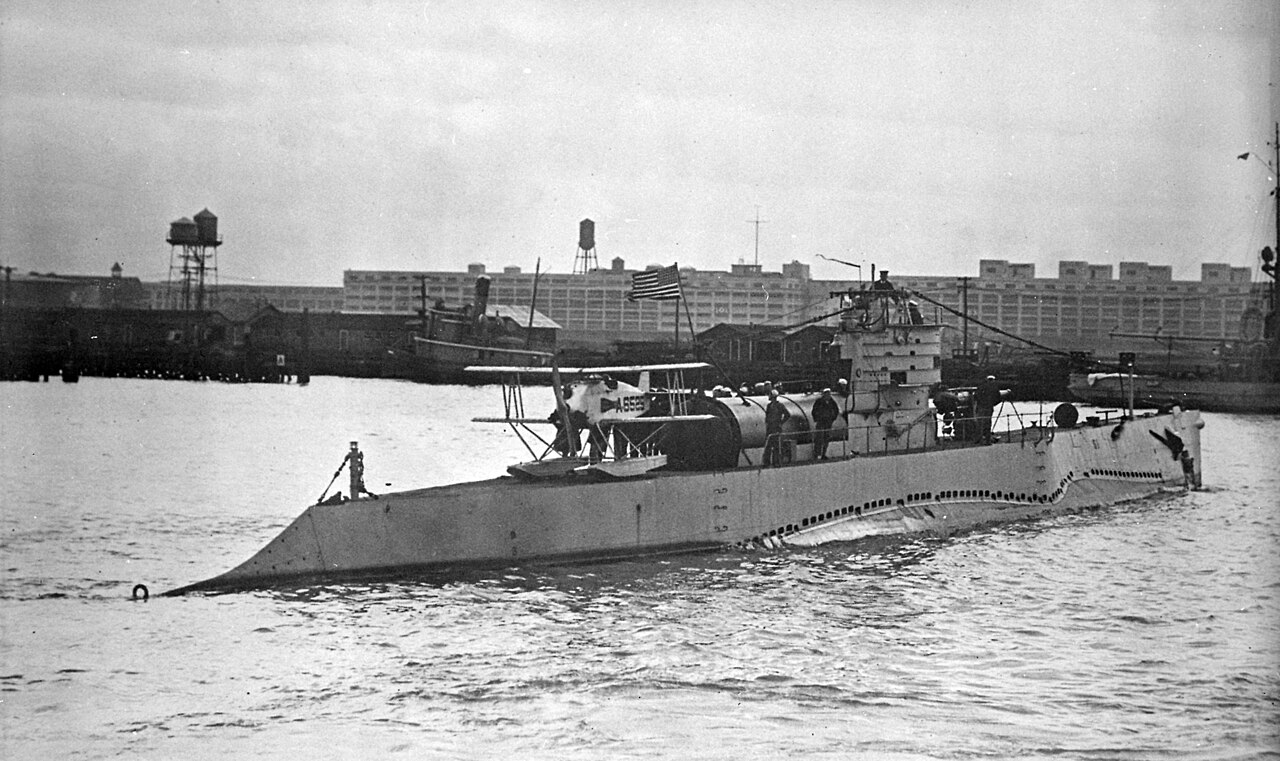
An MS-1 aboard S-1
A number of nations made reasonably serious investigations of this concept. Even before the end of the war, the Germans had developed two planes designed to fit aboard long-range submarines, the W.20 and V 19, but it was the USN that was the first to attempt something like an operational test, buying a dozen submarine-based scoutplanes of two different types, and trialing them aboard the submarine S-1 in 1923. But performance wasn't great, planes were still launched by ballasting down, which restricted operations to the calmest seas, and assembling and disassembling an airplane on the deck of a submarine was tricky and time-consuming. As a result, the US abandoned the project in the mid-20s. Italy, Poland and the Soviet Union all investigated the idea in the 20s and 30s, but abandoned it before actually sending a plane to sea aboard a submarine.
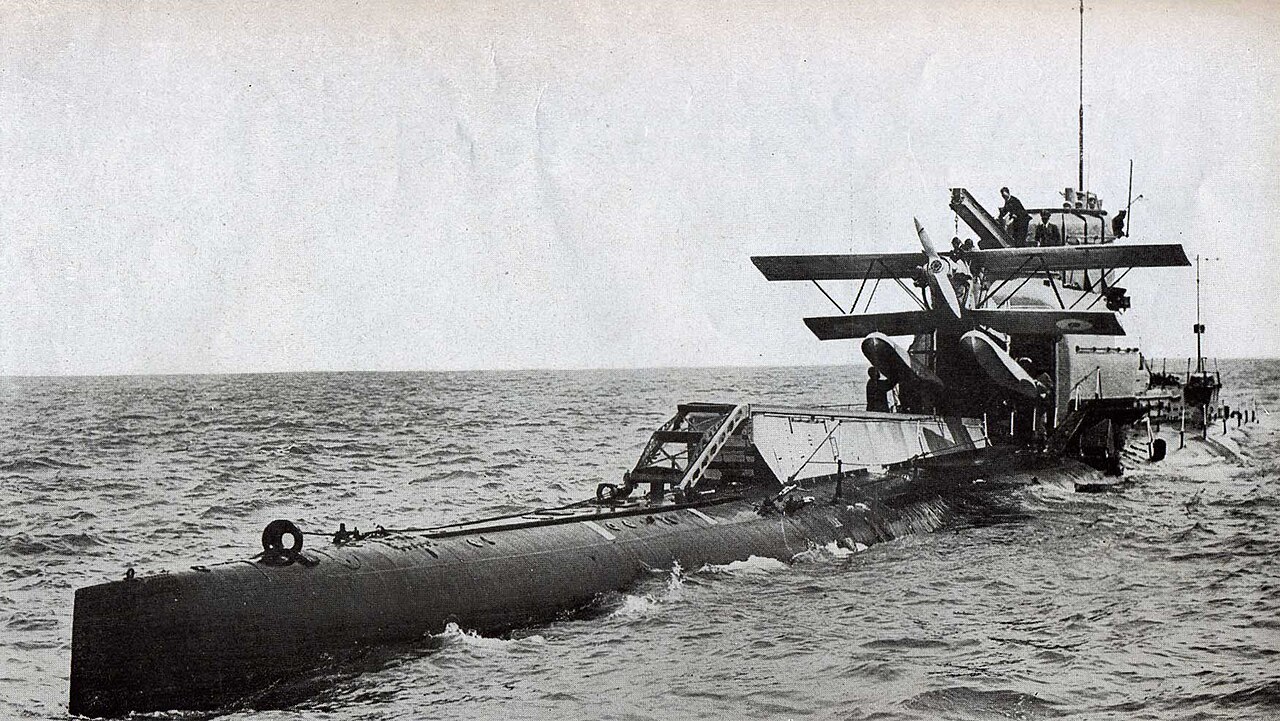
M2 hoists its floatplane aboard
Instead, it would be the British who were the first to make a serious attempt at implementing the idea, removing the 12" gun from the monitor submarine M22 and replacing it with a hangar for a small floatplane. A catapult3 was installed forward, allowing the plane to be launched in rougher seas, with the plane landing in the water alongside for a crane to bring back aboard. Unfortunately, the catapult was short and the plane, the Parnall Peto, was flimsy, so some natural wind was required to launch.
The launch process was simple enough. As the submarine surfaced, the five-man hangar crew would be at their stations, and oil heaters would ensure that the plane was ready for immediate launch, instead of needing to wait for the engine to warm up. Once surfaced, even if the ballast tanks weren't completely empty yet, the hangar door would be lowered, and the plane's trolley wheeled across the tracks built into it and connected to the catapult while the wings were unfolded and locked into place. The observer had a crank to rotate the engine, and once it was running smoothly, the Peto would be catapulted off.
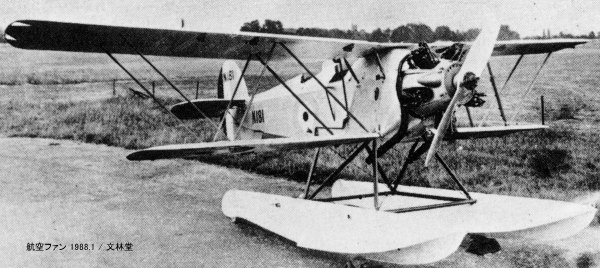
A Parnall Peto
The conversion was completed in late 1928, and for the next two years, trials went reasonably well. But on January 26th, 1932, M2 foundered with all hands. Salvage efforts revealed that the hangar was open, and a leading theory was that the practice of opening the hangar door before the ballast tanks were fully empty, with the submarine held on the surface by the diving planes, may have backfired. However, this was a known risk, and orders were to close the door from the hangar into the rest of the submarine to prevent it. That door was open, and a passing merchant ship saw M2 sink by the stern, which suggests that the hangar was not the main problem. Instead, the more likely case is that the aft ballast tank valves were left open, allowing that tank to refill after the submarine surfaced. Ironically, the hatch from the hangar into the submarine was probably opened to pass the order to close the valves, but it was already too late, and the flooding through it doomed the submarine. Several salvage attempts were made, recovering the wreck of the Peto and several bodies, but the hull itself was eventually abandoned, and remains a reasonably popular dive site today.
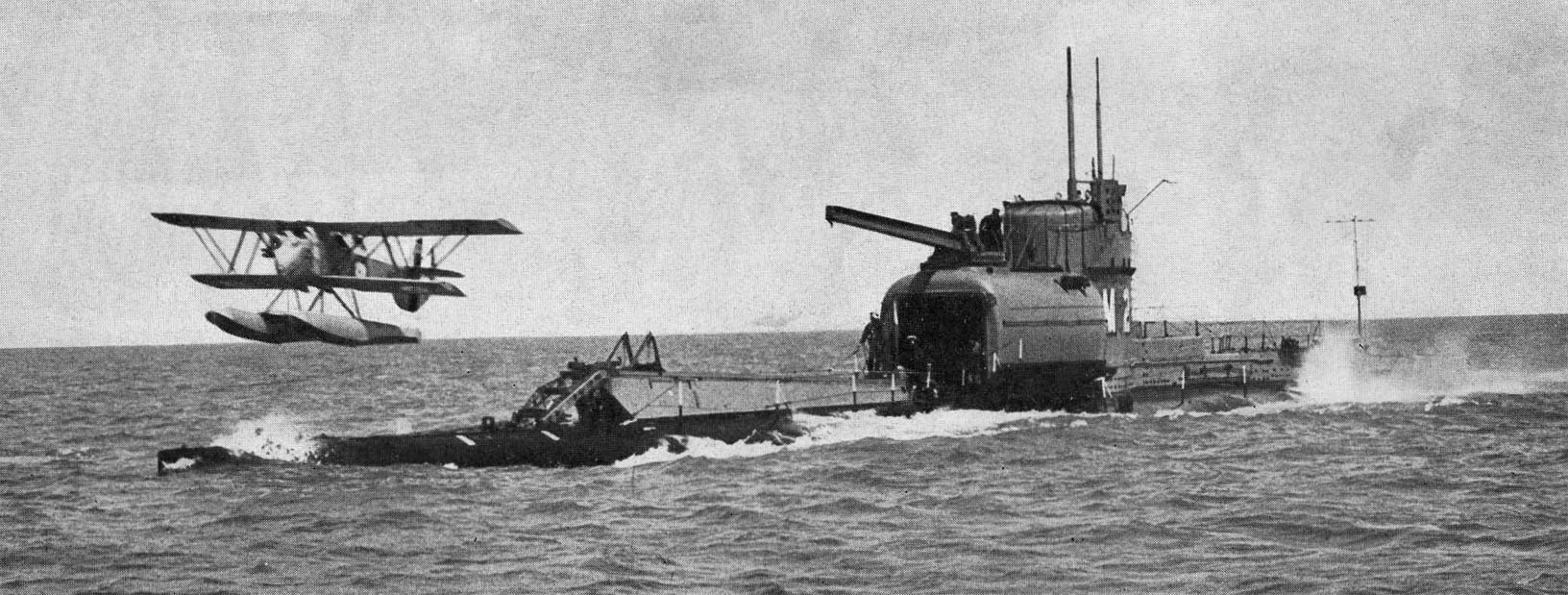
M2 catapults off a Peto
And for most nations, interest in submarine aviation dried up in the 30s. One of the big drivers was the 1930 London Naval Treaty, which limited submarines to 2,000 tons, a bit too small to effectively operate airplanes. We'll look at other drivers of the decline of the concept, and at the two nations which soldiered on, France and Japan, next time.
1 This is not 100% true. The smoke from coal-burning ships could frequently be seen much farther away, but by the 20s, it was obvious that coal was on its way out. ⇑
2 The M class were very weird boats. The original proposal was for shore bombardment, but this was swiftly shelved on the grounds that it was crazy. Instead, the idea was that the gun would be far better at hitting moving targets such as warships, which were effectively impossible to torpedo beyond 1,000 yards or so at the time. The submarine would aim with a special periscope, surface enough to expose the muzzle of the gun, then dive again, hopefully before any escorts could intervene. The 12" shell, fired from a gun previously used aboard the Formidable class pre-dreadnoughts, should be enough to devastate anything short of a battleship, and the submarine would withdraw to reload and find a new target. The gun had to be reloaded on the surface and it was difficult to bring the exposure for a shot under a minute, so only three were completed. ⇑
3 It appears this catapult could be driven by either compressed air or powder, which is a weird combination. ⇑
Comments
The mental immage of a submerged boat towing a floatplane on a cable across the North Sea like a kite is pretty funny.