The 9/11 attacks shook America to its core. Someone was responsible, and they would have to pay. The only questions were who and how. Who was surprisingly easy to figure out. A check of the passenger manifests revealed that several were known members of Al Qaeda, and intercepted communications between members of the group talked about a successful operation. But that made how extremely difficult.1 Since Sudan had kicked him out under diplomatic pressure back in 1996, Osama bin Laden and most of his network had been based in Afghanistan, a country that was going to be as difficult to access for the US military as almost anywhere on the planet. Direct access from the sea was impossible, and the shortest route from US bases in the region ran through Iran, which was unlikely in the extreme to grant overflight rights. Coming in from the south would mean overflying Pakistan, the major sponsor of the Taliban, while access from the north meant going through Turkmenistan, Uzbekistan or Tajikistan, all former Soviet republics that the US wasn't particularly close to.
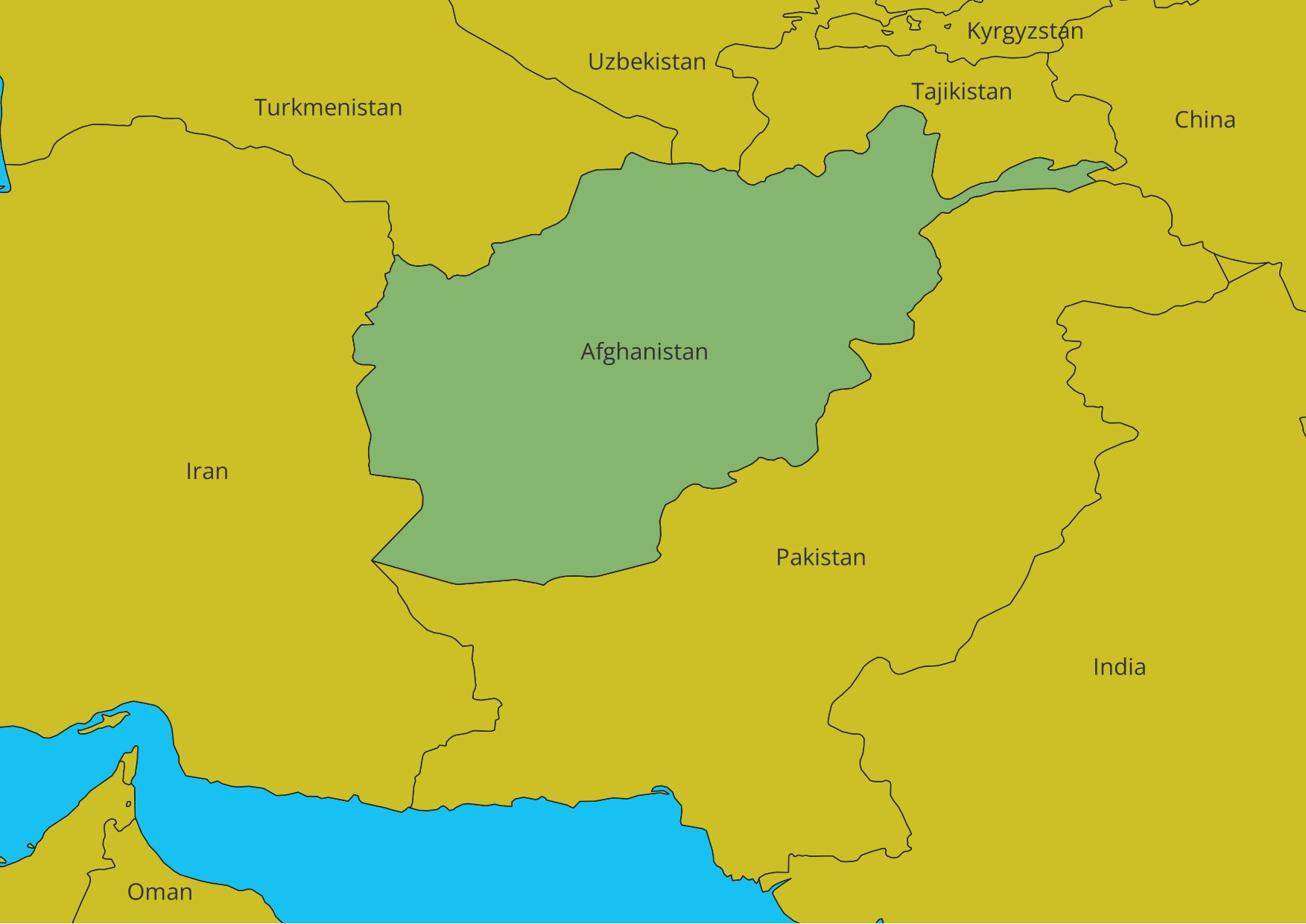
The last time the US had gone after bin Laden, in retaliation for the attacks on the US embassies in Kenya and Tanzania, it had used Tomahawk cruise missiles, flying through Pakistani airspace. But cruise missiles alone were clearly an inadequate response if the Taliban refused to hand over bin Laden, and a plan was put together under the codename Operation Enduring Freedom (OEF).2 Fortunately for the US, there was an active civil war in Afghanistan, with the so-called "Northern Alliance"3 still holding onto a significant corner of the country. Both sides were poorly equipped, but with US air support, coordinated by CIA and special forces teams, there was a good chance the Northern Alliance could rout the Taliban with minimal American presence on the ground.
But that was a very different thing from "minimal American presence", and planners and diplomats quickly set to work assembling the basing and overflight rights necessary to support this campaign, as well as the units required to execute it. The most important problem was Pakistan. The bulk of any US air effort would clearly come in from the south, either from carriers operating in the Arabian Sea or bombers flying out of Diego Garcia in the Indian Ocean, and that would mean transiting Pakistani airspace. But while Pakistan had been an American ally during the Cold War, most prominently when America was providing support to the mujahideen fighting against the Soviets, relations had grown frosty in recent years, particularly after Pakistan first tested a nuclear weapon in 1998 and a military coup a year later. Making matters worse, Pakistan had been the Taliban's major sponsor, seeing it as a way of ending the anarchy that had gripped Afghanistan,4 and public opinion in Pakistan was fairly hostile to the United States. The Bush administration gave Pakistani President Pervez Musharraf a clear choice: either support the US in its new "War on Terror" and be rewarded with sanctions relief and increased aid, or be added to the enemies list. Despite all of the problems, Musharraf officially chose to side with the US, and American airpower had its route into Afghanistan.5
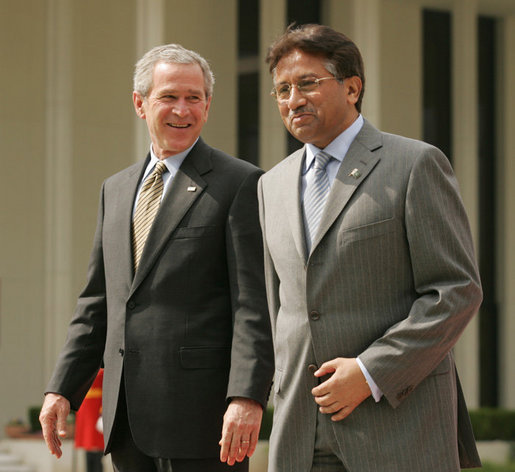
Bush and Musharraf
Pakistani support alone wouldn't be enough to enable the campaign that Central Command (CENTCOM)6 wanted to fight. Sending American aircraft over Afghanistan without CSAR7 support was risky, and while units based in Pakistan, Oman or on aircraft carriers in the Arabian Sea could provide cover in the southern portion of the country, the operations in the north would need support from CSAR units based somewhere in one of the former Soviet republics. And because all of the organized opposition was in the north, an air campaign limited to the south wouldn't be all that effective relative to one where the US could embed CIA and special forces teams with the Northern Alliance and provide air support for troops on the ground. Tajikistan was quick to offer a base, but getting into Afghanistan from there would involve navigating high and treacherous mountains, while the Uzbek-Afghan border was relatively flat.
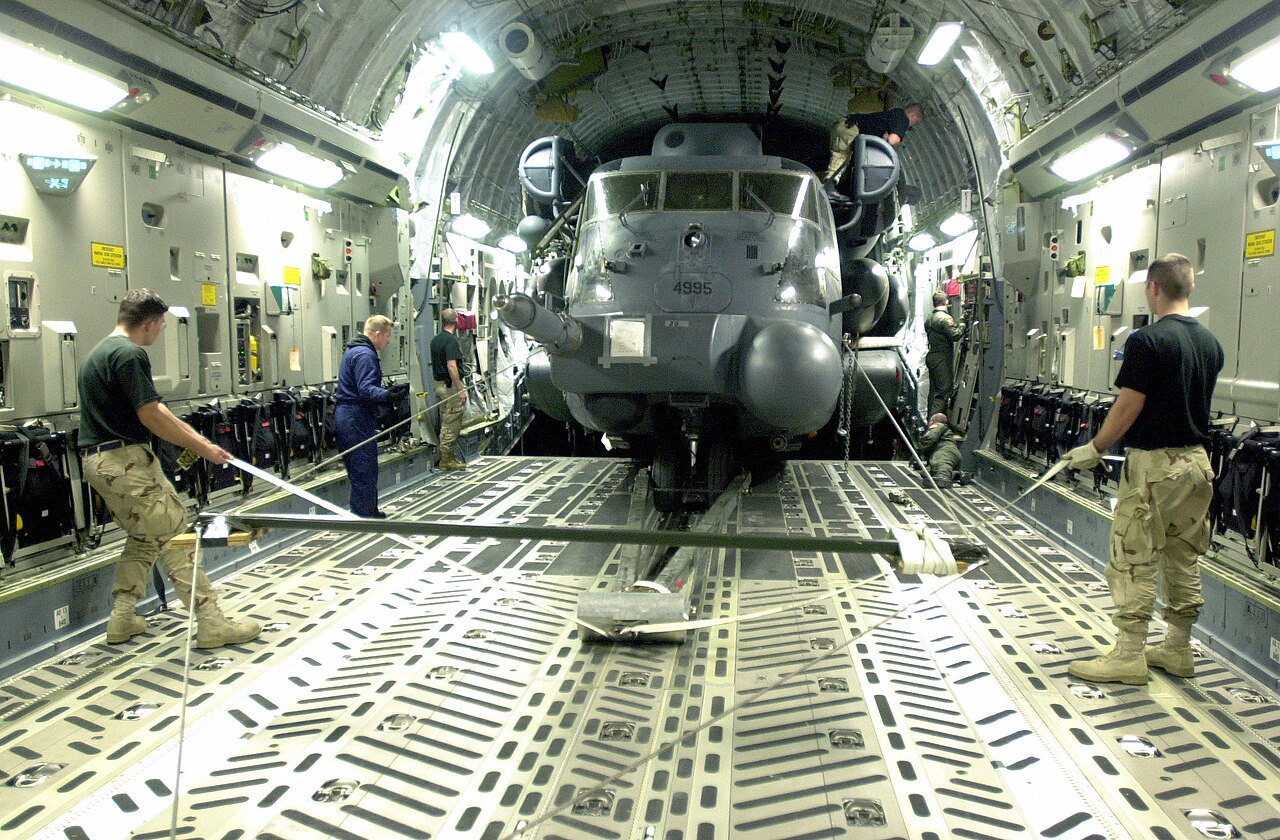
A CSAR MH-53J is offloaded during OEF
But even though Uzbekistan had hosted a secret CIA Predator base for several years, the government was being difficult, holding out for increased US aid, including against its own homegrown Islamist movement. Some of this might have been because it was not on good terms with Russia, whose new President, an obscure former KGB officer named Vladimir Putin, had offered Russia's full support to the war on terror.8 Uzbekistan finally agreed to allow CSAR to be based in its territory on October 1st, although getting the unit ready in time for the anticipated kickoff on the 7th would be difficult, given the primitive facilities and the need to send in 67 C-17 flights to set up the CSAR team there.
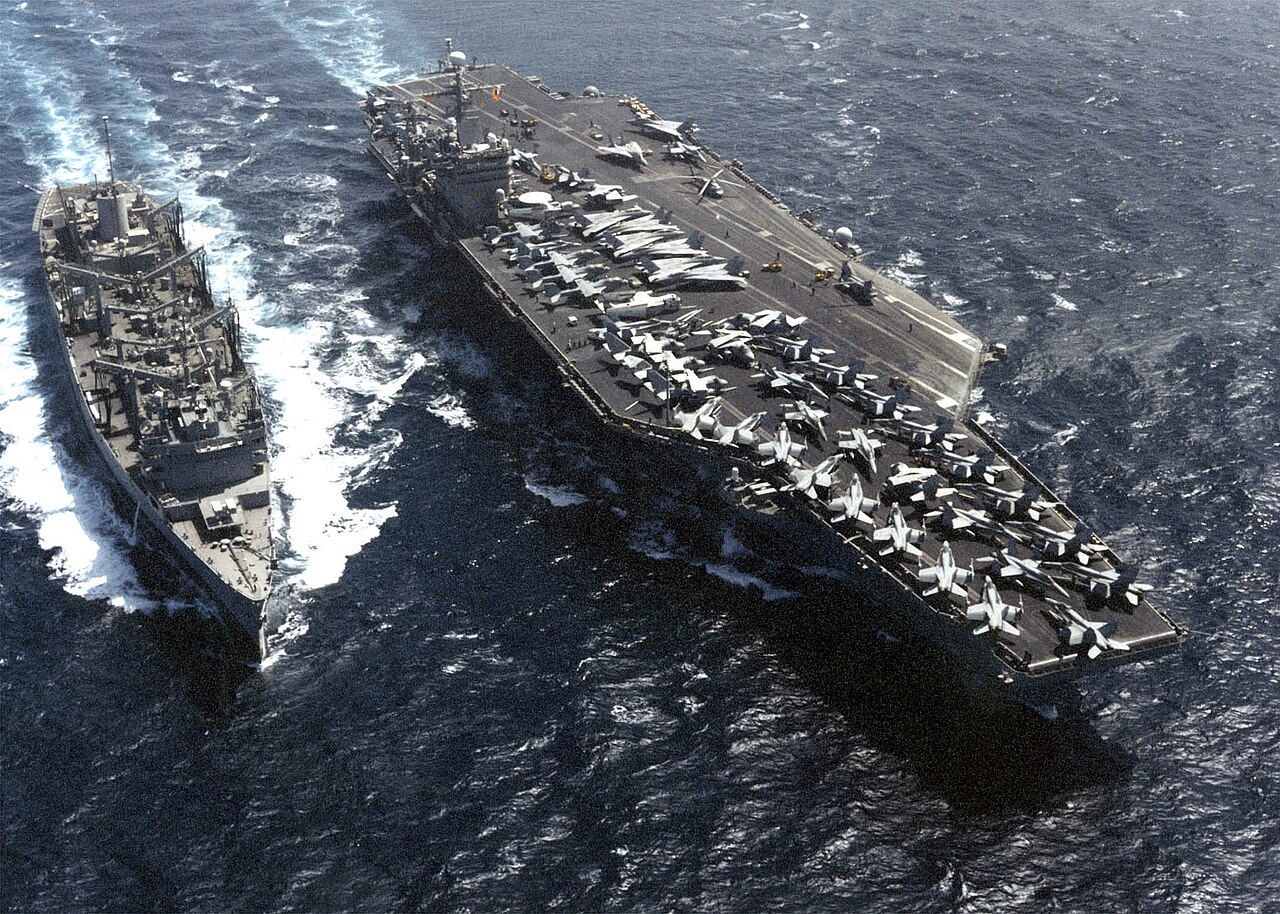
Carl Vinson replenishes during Enduring Freedom
The logistics situation was slightly better in the south. The Enterprise group had been just about to head home when the attacks happened, while Vinson was on her way to take over in CENTCOM, and both carriers were ordered to stay on station in the Arabian Sea. The Roosevelt group had been preparing to deploy, and was ordered to join them from Norfolk, while Kitty Hawk, stationed in Japan, was ordered to CENTCOM sans air wing, to be used as a "lily pad" for special forces operating in southern Afghanistan. But they'd need a base further forward for good CSAR coverage, and a place to divert if any of the aircraft had serious problems. Musharraf agreed to allow the Americans to use an airfield near Jacobabad, halfway between the coast and Kandahar. Security there would be provided by a detachment of Marines from the 15th MEU(SOC),9 aboard the Peleliu Amphibious Ready Group, which had rushed to the area from Australia.
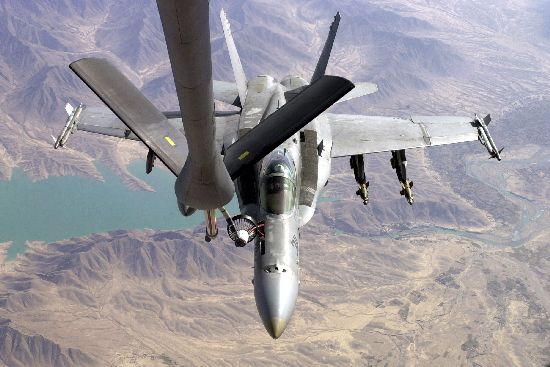
A Hornet refuels over Afghanistan
If the Navy was going to contribute to the air campaign, it was also going to need quite a bit of help from the Air Force. Much of the fleet's striking power was provided by short-legged Hornets, which were going to struggle to get past 250 nm on internal fuel, so multiple aerial refuelings would be required to reach targets in Afghanistan, which were at least twice that far away. To maintain safety margins, at least two refuelings were needed each direction, requiring an elaborate plan to make sure nobody had to land in Pakistan or Afghanistan. Some of the fuel could be provided by S-3 Vikings off the carriers, but the bulk would need to come from land-based tankers, flying either from Diego Garcia or the various nations on the shores of the Arabian Gulf. The US had an extensive network of bases there, heavily used in the campaign against Saddam, although the Saudis, concerned about domestic reaction to Americans bombing a Muslim country from their territory,10 came close to refusing to allow CENTCOM to use the new air operations center that had opened at Prince Sultan Air Base just months before. The other Gulf States were more cooperative, and Kuwait, Bahrain, Qatar, the UAE and Oman all played host to tankers and other support aircraft.
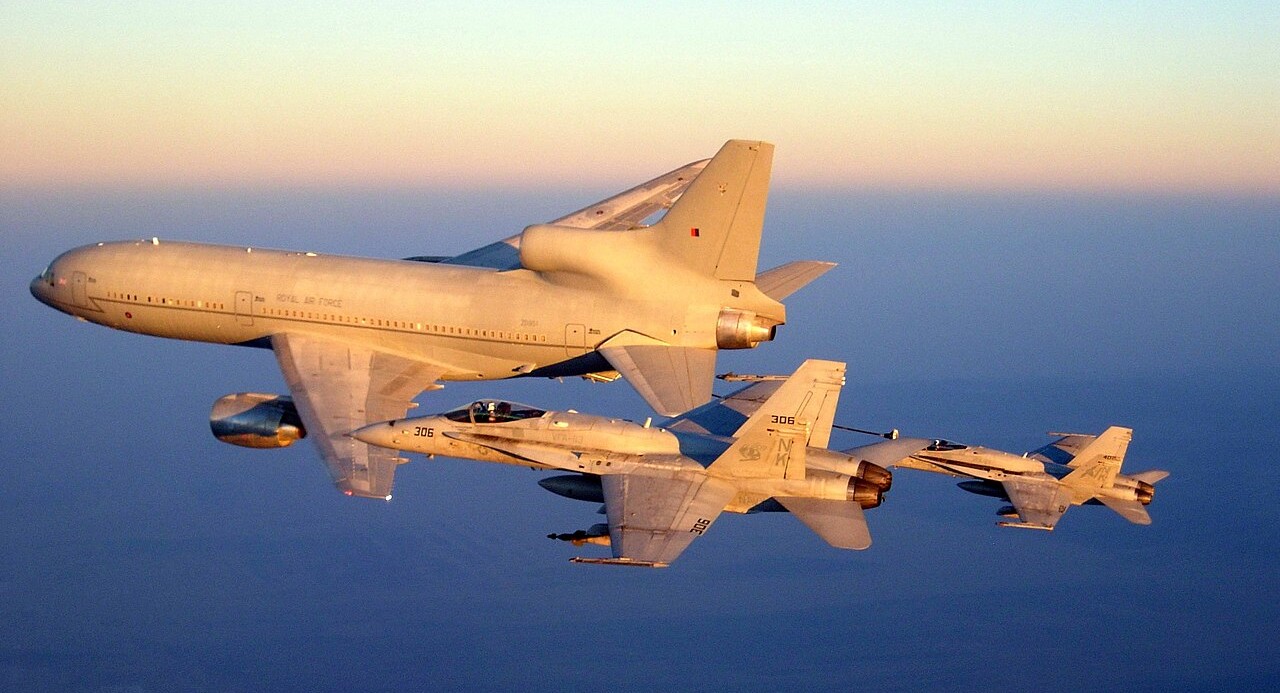
An RAF Tristar passes fuel to Hornets
And it was here that international support for the US showed itself beyond simply basing and overflight rights. There was no way the British could stay out of such an insane aerial refueling plan, and RAF VC10s and Tristars served alongside KC-135s and KC-10s, providing about 20% of all tanking for the Navy's effort. The RAF also contributed Nimrods and Canberras to gather information for targeting purposes, while Australia sent fighters to defend the base at Diego Garcia, home not only to tankers but also to B-52 and B-1 bombers, the Air Force's way of making sure it didn't feel left out from the fun.
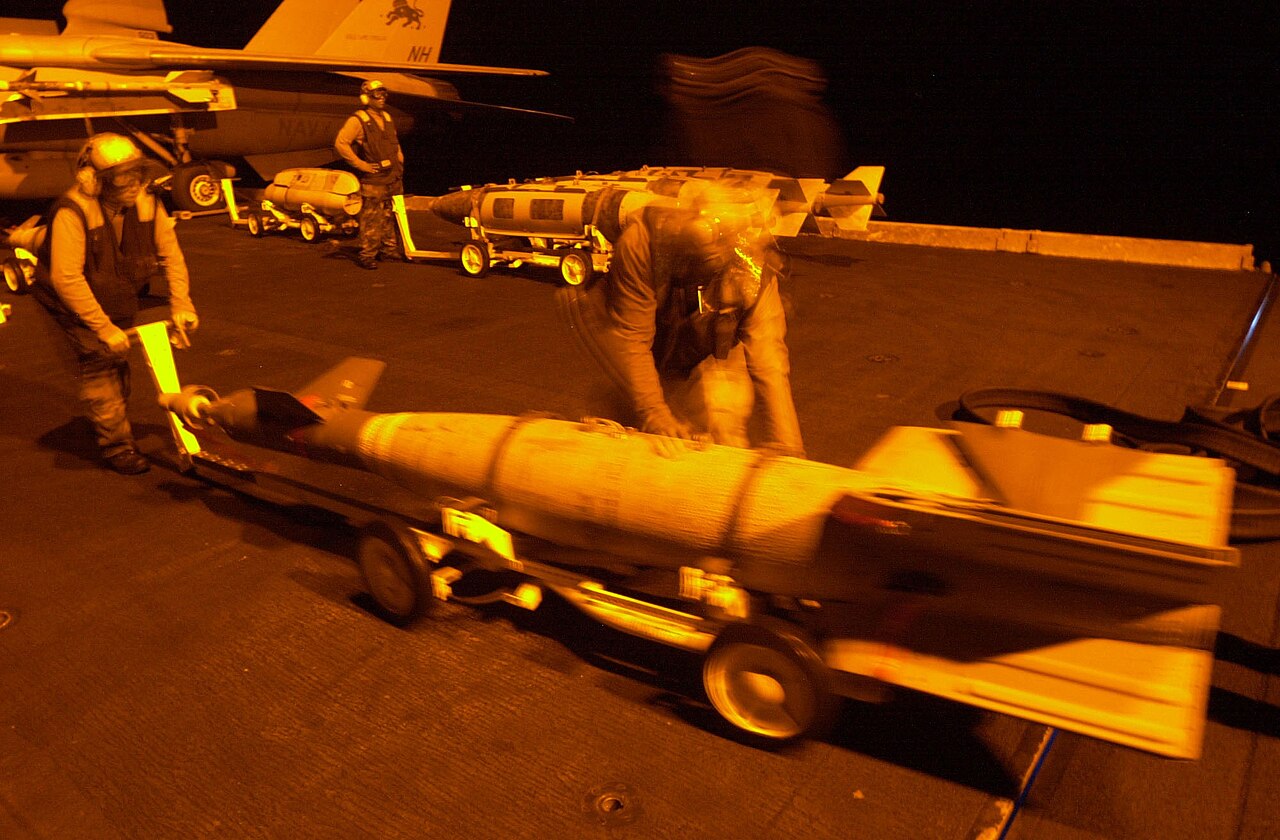
Bombs are readied aboard Vinson
Things began to kick off in late September, when the CIA started infiltrating members of the secretive Special Activities Division into the country to meet up with the Northern Alliance and prepare for the arrival of uniformed special forces units, which would first arrive in mid-October. Before they could get there, the air campaign began, with the first bombs falling on October 7th. The initial targets were what passed for the Taliban's air defenses, mostly systems inherited from the Soviet-backed government that had fallen in 1992. About 100 MiG-21 and Su-22 fighters were in the country, although only half were even vaguely operational, and there weren't enough pilots even for those. The same could be said of radar and SAM systems, with only a few SA-3s near Kabul and Kandahar that could pose any threat to US aircraft at medium or high altitude. Lower down, AA guns and shoulder-fired SAMs were more dangerous, but easy enough to avoid. Still, there was no point taking chances, and the highest-risk targets would be dealt with by a pair of B-2s flying direct from Missouri carrying 32 JDAMs between them, with numerous aerial refuelings during their 44-hour mission. Other targets, including tank concentrations and Al Qaeda training camps, were hit by 5 B-1s and 10 B-52s from Diego Garcia, as well as 25 fighters from the carriers. All told, the attacks on the first night, which also included 50 TLAMs from destroyers and submarines (including the British SSNs Triumph and Trafalgar), went after 31 targets with 275 individual aimpoints, destroying about 85% of them.
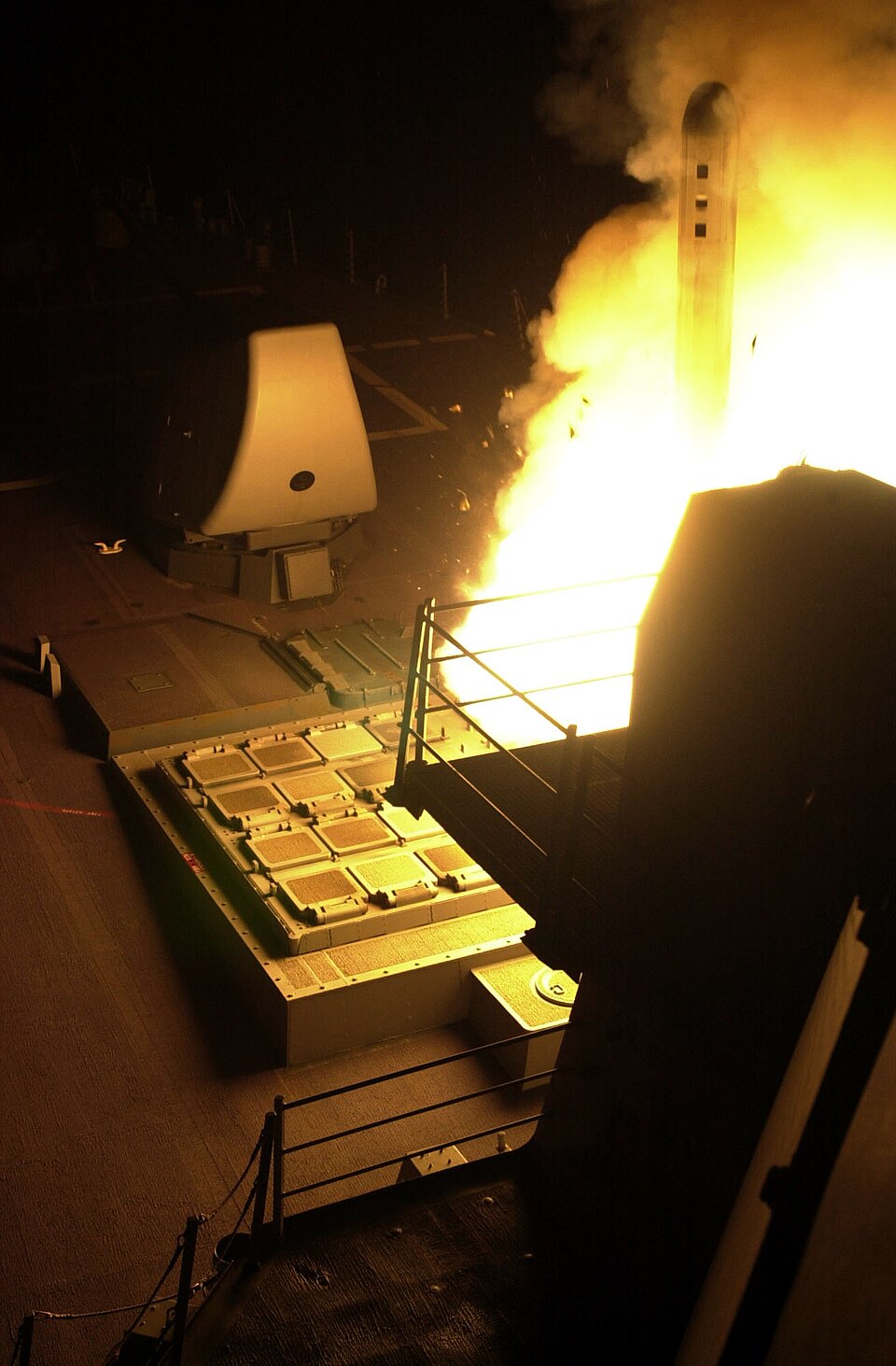
John Paul Jones launches a Tomahawk into Afghanistan
But taking out the Taliban's air defenses, and even some strategic targets, would not be enough to topple their government. That would take American soldiers on the ground to provide air support for the Northern Alliance, and ultimately a wholesale occupation of the country, a topic we will turn to next time.
1 I'm going to ignore the diplomatic, intelligence and financial efforts made to fight terrorism in favor of studying the military campaign. This isn't to underrate the importance of these, particularly the financial aspects. ⇑
2 The original codename had been "Infinite Justice", but this was changed when it was pointed out that many Muslims think that only Allah can deliver infinite justice. ⇑
3 Afghanistan is split between different ethnic groups, and the Pakistan-backed Taliban was largely Pashtun, who made up about 40% of the population, while the Northern Alliance was largely Tajik and Uzbek, and received a lot of support from Iran. ⇑
4 And of getting rid of the Afghan refugees that had flooded over the border starting with the Soviet invasion. ⇑
5 Unofficially, I trust we all remember where they finally found bin Laden. ⇑
6 The US combatant command responsible for the Middle East and Central Asia. ⇑
7 Combat Search and Rescue ⇑
8 This wasn't out of the goodness of his heart. He was still something of an international pariah thanks to Russia's brutal suppression of a revolt in Chechnya, and, fortunately for him, there were significant ties between the Chechen rebels and Al Qaeda. ⇑
9 A reinforced Marine battalion, with its own aircraft and logistics. ⇑
10 The presence of American forces in the home of Islam's holy sites was one of bin Laden's cited grievances, after all. ⇑
Recent Comments