September 11, 2022

The DP Gun Problem

I've recently been thinking deeply about the question of dual-purpose secondary batteries in the treaty era. Until recently, I've basically bought the line that DP is the obvious solution thanks to superior weight efficiency and the fact that you can build one gun which fills both roles. But further research has left me unsure of this, at least for most countries.


Vittorio Veneto displays portions of her secondary battery

The logic that Japan, Germany and Italy used in selecting their secondary batteries was all fairly similar. Basically, they thought that they needed a 6" weapon firing ~100 lb shells to be able to effectively counter destroyers. France also bought this logic on the Richelieu, although they chose to make those guns DP. They then discovered the problem with this, that a 6" shell is far too heavy to load rapidly, particularly at high angles, and were forced to join everyone else in fitting their ships with dedicated AA guns of around 4", which seems to have been the ideal AA caliber early in the war, with only the US not making use of it. Read more...
September 04, 2022

Nuclear Weapons At Sea - Trident Part 2

Despite the rather tortuous process that led to its authorization, the travails of the Trident I missile continued as the detailed specifications were worked out. The design brief was essentially to maintain the capability of Poseidon in a missile of the same size, but with twice the range to counter potential advances in Soviet ASW. This would require substantial changes in both the design of the missile and the guidance system, changes which proponents of hard-target capability would use to launch an attack on the Air Force's monopoly on the counterforce role.


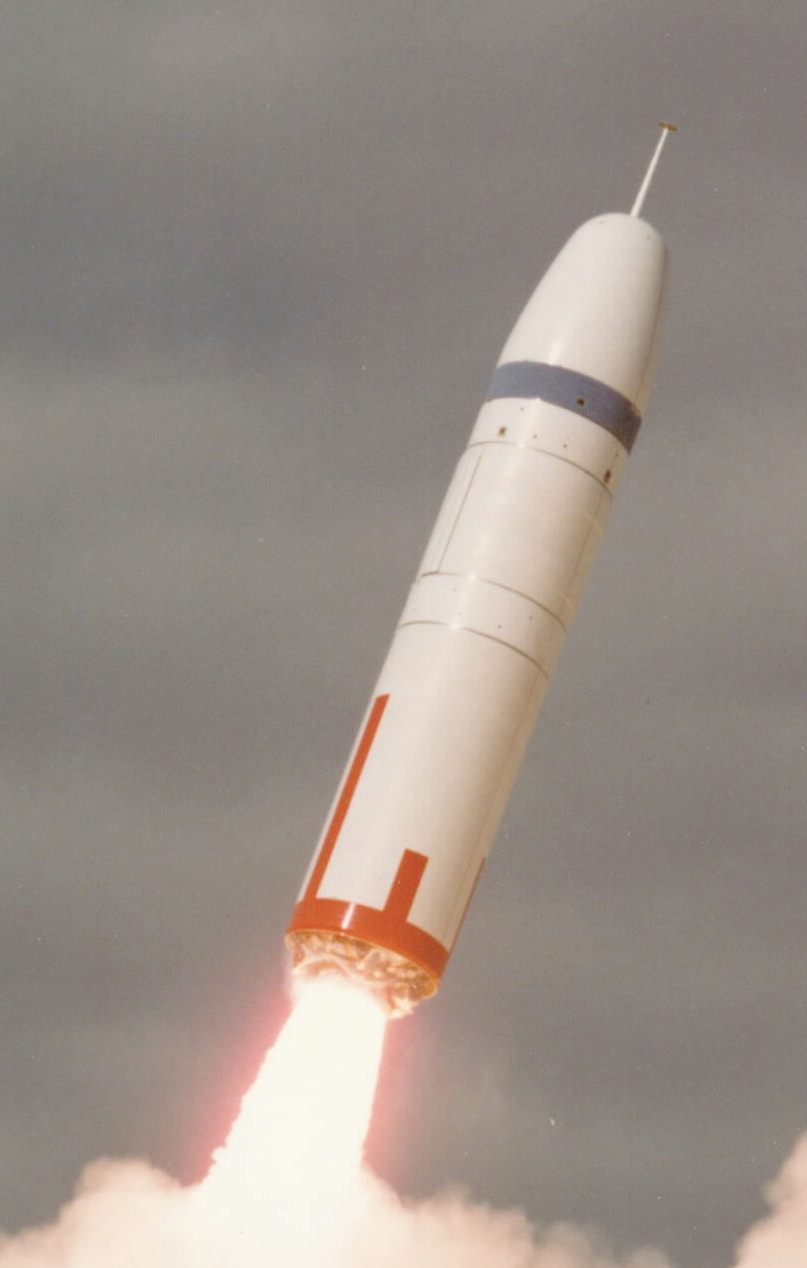
A Trident C4 demonstrates its aerospike

Getting a range of 4,000 nm out of a missile that had to fit in the same tubes as Poseidon required extensive technical development. A third stage would be needed, and to keep length down, the designers wrapped the bus and warheads around it. This posed a serious problem when it came time to shut down the third stage. The normal strategy of venting the motor would impose unacceptable shocks on the bus, while flying the motor out the front would bathe it in rocket exhaust. An ingenious solution was found that removed the need for thrust termination. The guidance system was programmed to fly the missile on a trajectory that would use up all of the fuel in the third stage. The motor would then be ejected at 1 G, which allowed the ejection system to be tested on the ground instead of in flight, and the bus could begin releasing its warheads. The third stage required an extremely blunt nose, which would normally have increased drag when low in the atmosphere, and the designers came up with another solution, the aerospike. This was a rod that protruded from the nose on launch, and essentially tricked the air into acting like the nose was much longer than it was, giving an extra 300 miles of range. Read more...

September 02, 2022

Open Thread 112

It's time once again for our regular Open Thread. Talk about whatever you want, so long as it isn't Culture War.

A couple of interesting things lately. For anyone who owns the game Stormworks, there's a recent full-scale Iowa that is just gorgeous. It's not completely perfect, but there are a lot of truly wonderful details. I used it to give the friends I play with a tour yesterday, and we all had a great time.

Second, I wrote up an entry criticizing some of the details on the EA evaluation of nuclear war.

2018 overhauls are my reviews of Constitution and Battleship Cove, The Battleship of the Future?, Underwater Protection Part 2, Understanding Hull Symbols and Lunshunkou and Weihaiwei. 2019 overhauls are Falklands Part 17, Pictures - Iowa Medical, A Brief Overview of the United States Fleet, Cool Facilities - David Taylor Model Basin, Riverine Warfare - North America and Spanish-American War Part 9. 2020 overhauls are Powder Part 4, Merchant Ships Tugs and Offshore Support and Falklands Part 22. 2021 overhauls are Lasers at Sea Part 3, Naval Radar - More Advanced Stuff and Norway Parts five and six.

August 28, 2022

Submarine Espionage

Methods of gathering intelligence can be broadly divided into two categories: those where the target knows that you're watching, and those where he doesn't. Most modern methods of intelligence-gathering, such as satellites, airplanes and the internet, fall into the former category, and have the advantage that they're generally pretty effective and straightforward to implement. But they have one big downside. Because they know they're being watched, the enemy will try to control what you see. They can't do this perfectly, which leaves those as useful sources of information, but there are some things where you really want to know what the other side is doing when they don't think you're looking.

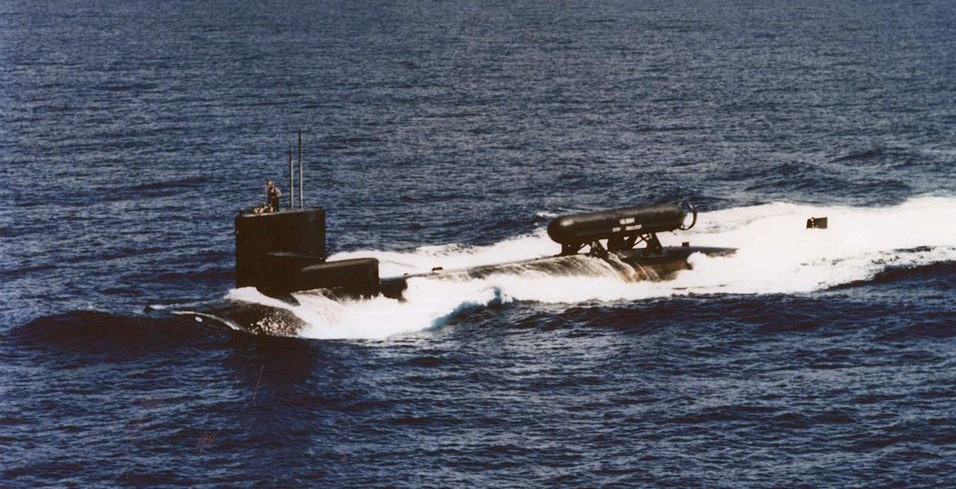
Human spies are of course the best-known example of this, but there is another, which has been almost as important over the last three-quarters of a century: the submarine. From the earliest days of the Cold War, NATO used these stealthy platforms to gather information the Soviet Union would rather it not have, doing everything from listening to communications off Russian bases to shadowing missile submarines and learning their patrol routines, plucking pieces of missile off the seabed and even tapping cables inside Soviet territorial waters.1 The ability of a mobile platform to get in close while undetected and then leave again proved vital to victory in the Cold War, and these missions, shrouded in secrecy, continue to this day. Read more...

August 21, 2022

The American Secrecy System

There has been a great deal of discussion about classified information in the US lately, and it seemed worth taking some time to explain the system to those who don't normally have much cause to deal with it.2 I occasionally do, although not on a particularly high level, and most of what follows is based on research, not personal experience.

The US has two parallel systems for defense information that the government would like to keep secret. For nuclear matters, mostly relating to the design and production of nuclear weapons, the system is based on the Atomic Energy Act of 1954, and run by the Department of Energy. Everything else uses a common set of clearances, governed not by law but by a series of Executive Orders dating back to the 1950s, the current authority being EO 13526, issued in 2009. We'll primarily focus on this system, as it covers the vast majority of classified documents. Read more...

August 19, 2022

Open Thread 111

It's time once again for our regular open thread. Talk about whatever you want, so long as it isn't culture war.

The biggest news lately is that I made a second visit to Russell Hogg's Subject to Change podcast, this time with John Schilling, to talk about Doctor Strangelove and nuclear war.

Slightly smaller news is that C# Aurora V2.0 dropped recently, with lots of new tweaks. I look forward to spending some time with it this weekend.

Book has been going reasonably well, as I'm now at 122,000 words and mostly done with the chapter on the Treaty Battleships. On a related note, does anyone know why the Italians never seem to have looked at a successor to the Littorios? I find it strange that there's no trace of one anywhere.

2018 overhauls are Missouri Part 2, Nautical Measurements, Falklands Part 5, Underwater Protection Part 1, my review of the International WWII Museum and The Standard Type. 2019 reviews are Spanish-American War Parts six, seven and eight, Turret Designations, Naval Weddings and Wedding Decorations. 2020 overhauls are my review of the Hanford Site and Powder parts one, two and three. 2021 overhauls are Lasers at Sea Parts one and two, Weird British Anti-Ship Weapons of WWII and Naval Radar - Some Advanced Stuff.

August 14, 2022

Southern Commerce Raiding Part 7

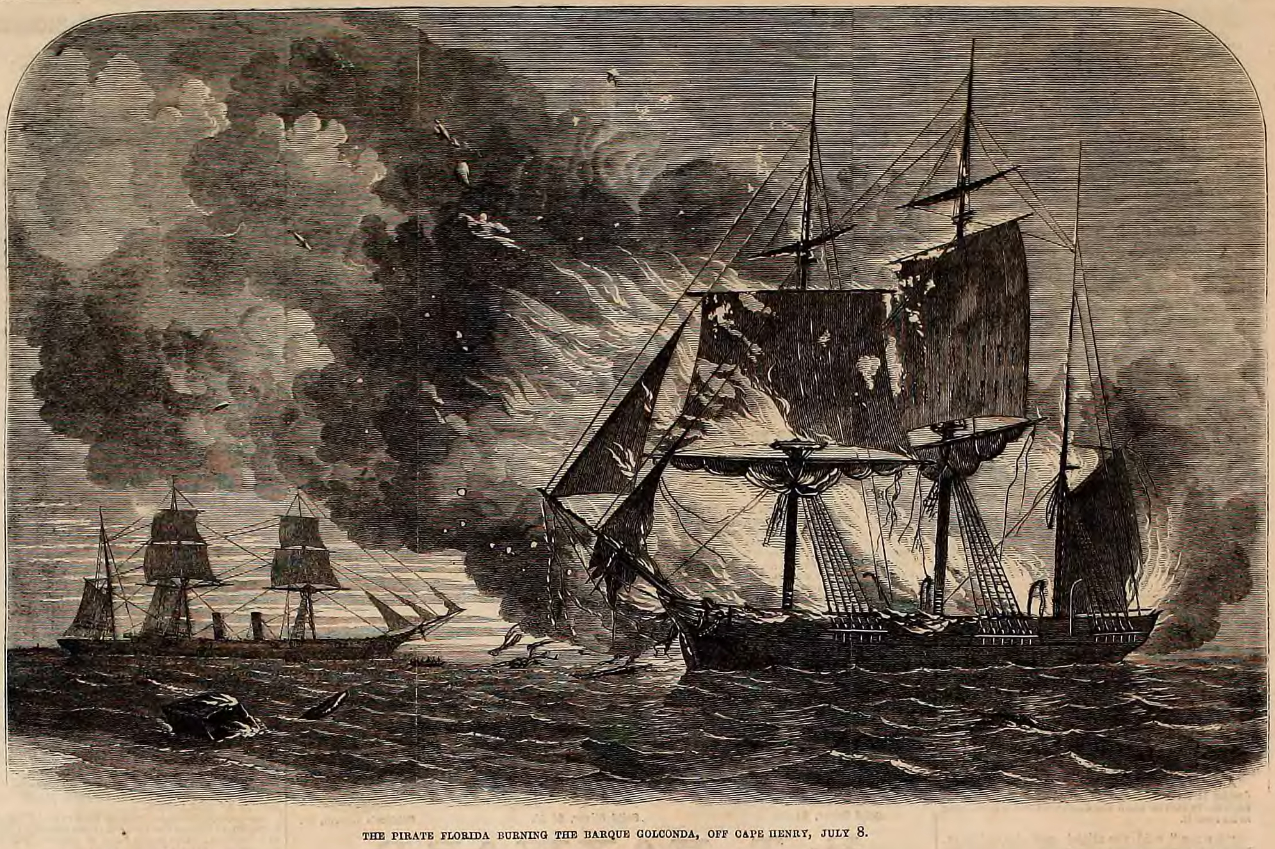
In our prior installment, we covered the Alabama’s fight with the Hatteras – a rare example of a Confederate raider fighting anything remotely resembling a proper warship. But, while the Alabama is probably the most famous of the Confederate raiders, the first of the Confederacy’s purpose-built raiders, the Florida, had slipped out of Mobile and past the Union blockade.


Florida burns a prize

This escape, along with Semmes’ defeat of the Hatteras, compelled Welles to remove several ships from the blockade in an attempt to capture or sink the commerce raiders, but to no avail. The Florida left a trail of burned prizes across the Atlantic, keeping several ships as prizes and outfitted them as makeshift commerce raiders in their own right, multiplying its impact. These ships, the Lapwing and the Clarence, had their own bizarre adventures: the Lapwing captured a ship full of guano, while the Clarence, commanded by Charles Read, set out to attack the ports of Hampton Roads or Baltimore. Taking a string of prizes, Read transferring the rebel flag from ship to ship as he captured more suitable vessels before sailing into Portland, Maine, and stealing the revenue cutter Caleb Cushing. The Cushing was quickly overtaken by an impromptu pursuit fleet and set alight by Read, who then surrendered. The Lapwing suffered the same combustible fate when she became unseaworthy. Read more...

August 07, 2022

Speed and Range in Battleships

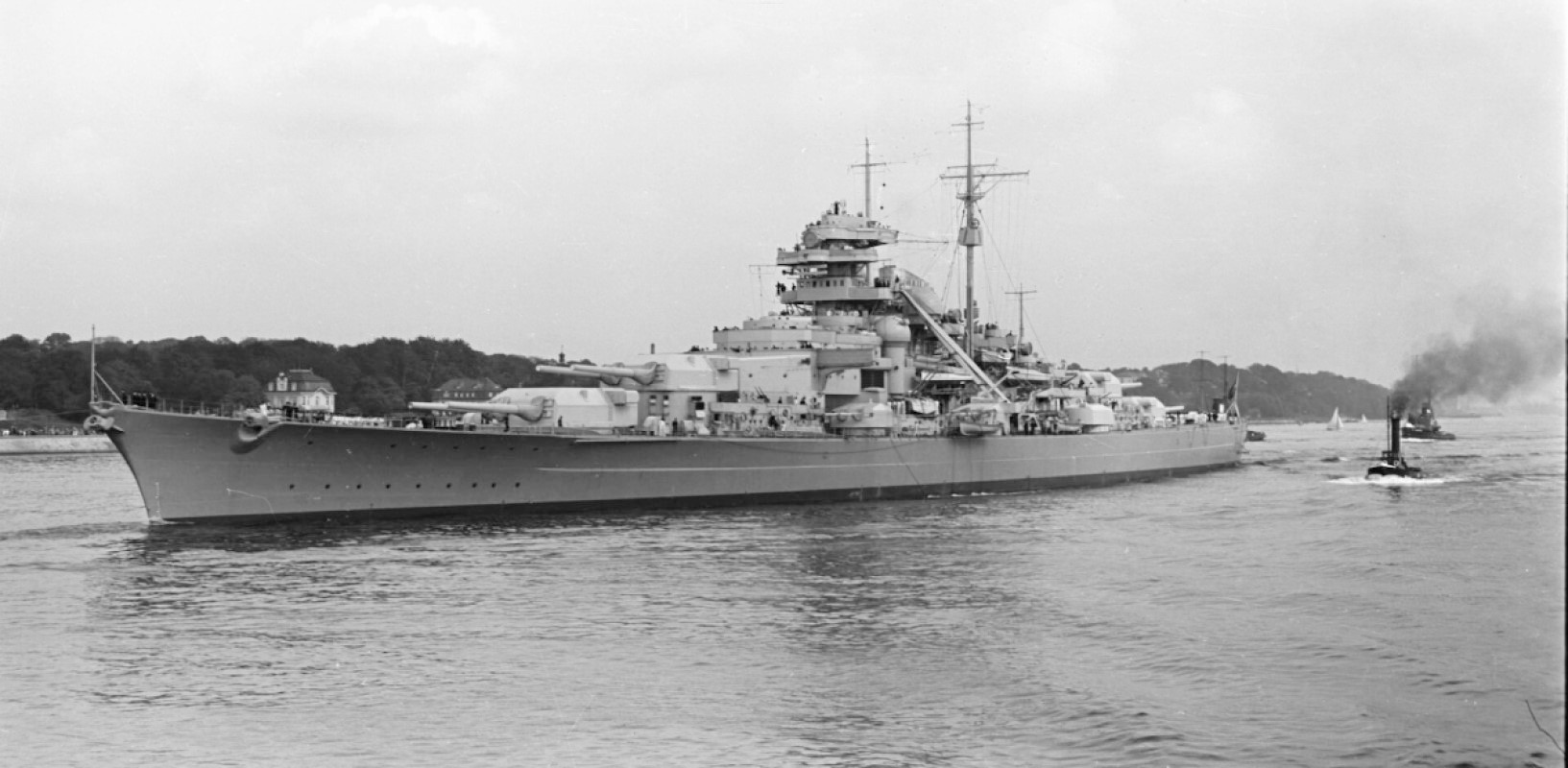
While working on my section on Bismarck, I decided to look more deeply into the details of battleship range and the impact it had on designs. It's undoubtedly the most important obscure figure in battleship design, with many references not including it because the values available are so variable. Unfortunately, I quickly ran into a mess. A surprising number of ships I looked at, even in quite comprehensive sources, had only 2 or maybe 3 data points, spaced widely enough that it wasn't really possible to get a good sense of the shape of the curve involved.


The culprit behind all of this

In the end, I had only five reasonably good sources of data on the treaty battleships: data on Bismarck spread across two books, Raven and Roberts with Howe and FTP 218 covering the American battleships, along with a report on trial results from Iowa and New Jersey.3 Only the last actually had speed, fuel consumption and power in the same place and without suspicion that there was significant rounding involved in the data I was seeing. And when plotted, the numbers for the American ships were reasonably consistent, both between the two sources and between different classes, although while they were all around 15,000 nm at 15 kts, Iowa had an advantage at higher speeds thanks to her longer hull. But the same was not true of the curves for the European ships, which were much shallower. Bismarck in particular went from having approximately half the endurance of the American ships at 15 kts to about the same endurance as the SoDak/North Carolina at 24 kts, and more above that. Read more...

August 05, 2022

Open Thread 110

It's time for our regular open thread. Talk about whatever you want, so long as it isn't culture war.

A few items of business. First, if you're interested in going to Miramar, please RSVP on the stickied post. Second, Johan Larson is setting up a military reading group on DSL, and for the first month, the book is the excellent Blind Man's Bluff, about submarine espionage during the Cold War. If anyone has been looking for an excuse to read it, now is the time. Third, I'm at 113,000 words on the book, currently working on the technical sections for the treaty battleships, and starting work on the Iowa chapter.

2018 overhauls are The 15" Battleships, Museum Ships - United States, LA Fleet Week 2016, Information, Communication and Naval Warfare Part 1, SYWTBAMN - Aviation Part 3 and The OIC. 2019 overhauls are Lion and Vanguard, Wolverine and Sable, Italian Battleships in WWII, SYWTBABB - Trials and Commissioning, How to Build a Battleship - 1942 and The Maximum Battleship. 2020 overhauls are NWAS ASW Parts one and two, Coastal Defenses Part 5 and Spotting. 2021 overhauls are The Under Siege Review, Pictures - Iowa Turret One, NWAS Nuclear SAMs and Confederate Raiding Part 5.

July 31, 2022

Naval Gazing Meetup - Miramar 2022

As I mentioned back in June, I'm going to the Miramar airshow this year. The plan is that the Fatherly One and I will attend Saturday, September 24th, and would be interested in meeting up with anyone else who wants to attend. Feel free to bring friends/family who don't read the blog, too. We plan to get grandstand seats ($19 online), which based on my experience last time are well worth the price. If you're going, or at least interested, RSVP and we'll try to meet up at the show. Looking forward to seeing everyone there!