
I've previously covered the development of naval steam propulsion systems, focusing on those used aboard battleships. But from the dawn of the 20th century, other systems were developed to push ships through the water, and today, variants of these systems dominate the marine propulsion landscape.1
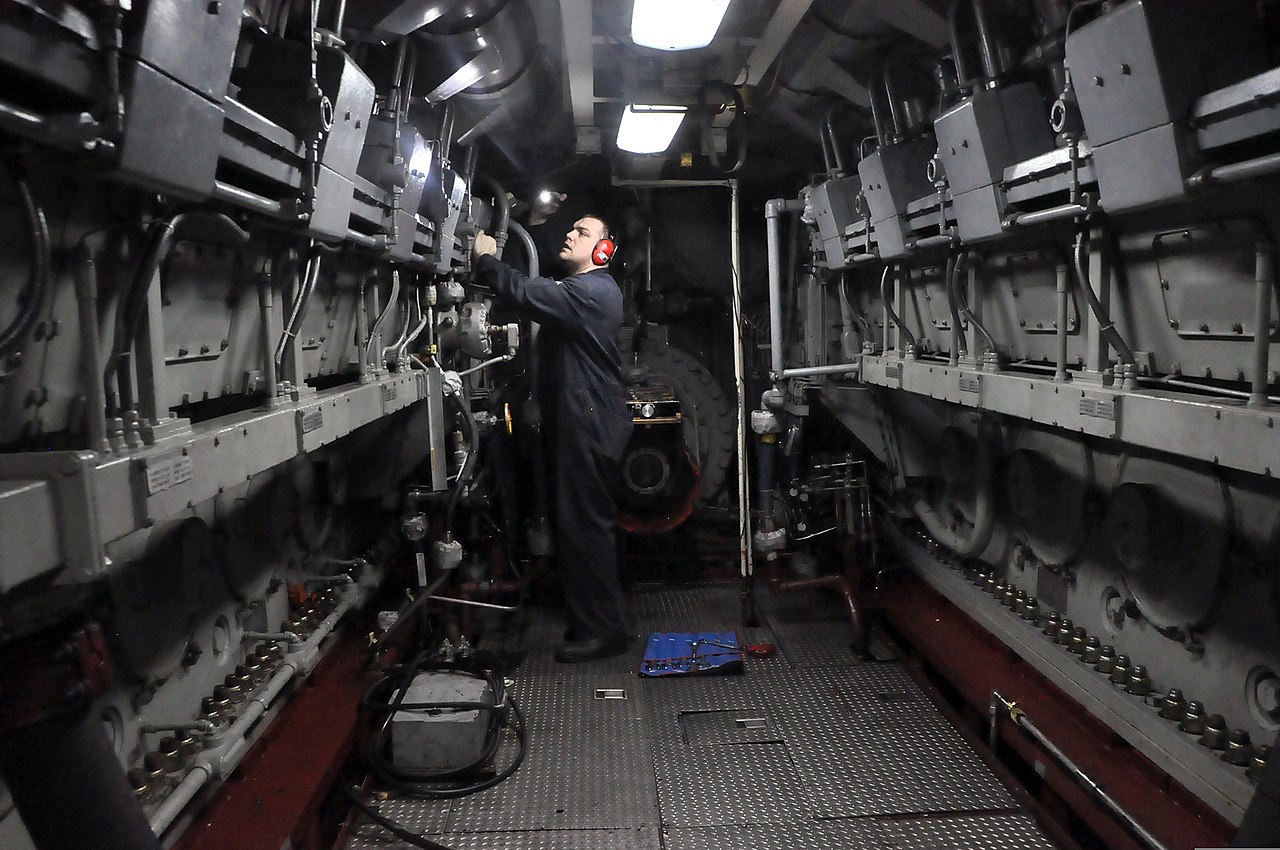
Diesel engines are checked aboard USS San Antonio
The first serious challenger to steam was the diesel engine, which began to go to sea even before WWI. It had three major advantages over steam. First, it was significantly more efficient at turning the energy of the fuel into rotation, with diesels having two to three times the horsepower per unit weight of fuel per hour as contemporary steam engines. Second, they were easier to run and maintain, requiring fewer crew. These two advantages made diesels attractive to merchant ships, although adoption wasn't universal until after WWII. And third, they were far faster to throttle. A boiler could take an hour to produce steam from a cold start if another boiler on the ship was available, and far longer if the entire plant was cold. This often meant that warships had to operate inefficiently, with more boilers online than they needed at the moment in case demand for steam increased. Diesels could be turned on and reach full power almost immediately, then shut down just as rapidly. Read more...

Recent Comments