
While the Coast Artillery Museum at Fort Worden may be closed, the batteries in the area are under the care of the Washington State Parks system, and remain open to visitors. Across the channel on Whidbey Island, Fort Casey is home to the only remaining heavy coastal guns from the Endicott period installed anywhere in the US. Between them, it's one of the best collections of Endicott/Taft period fortifications in the US, certainly eclipsing what I've seen around LA and San Francisco.1
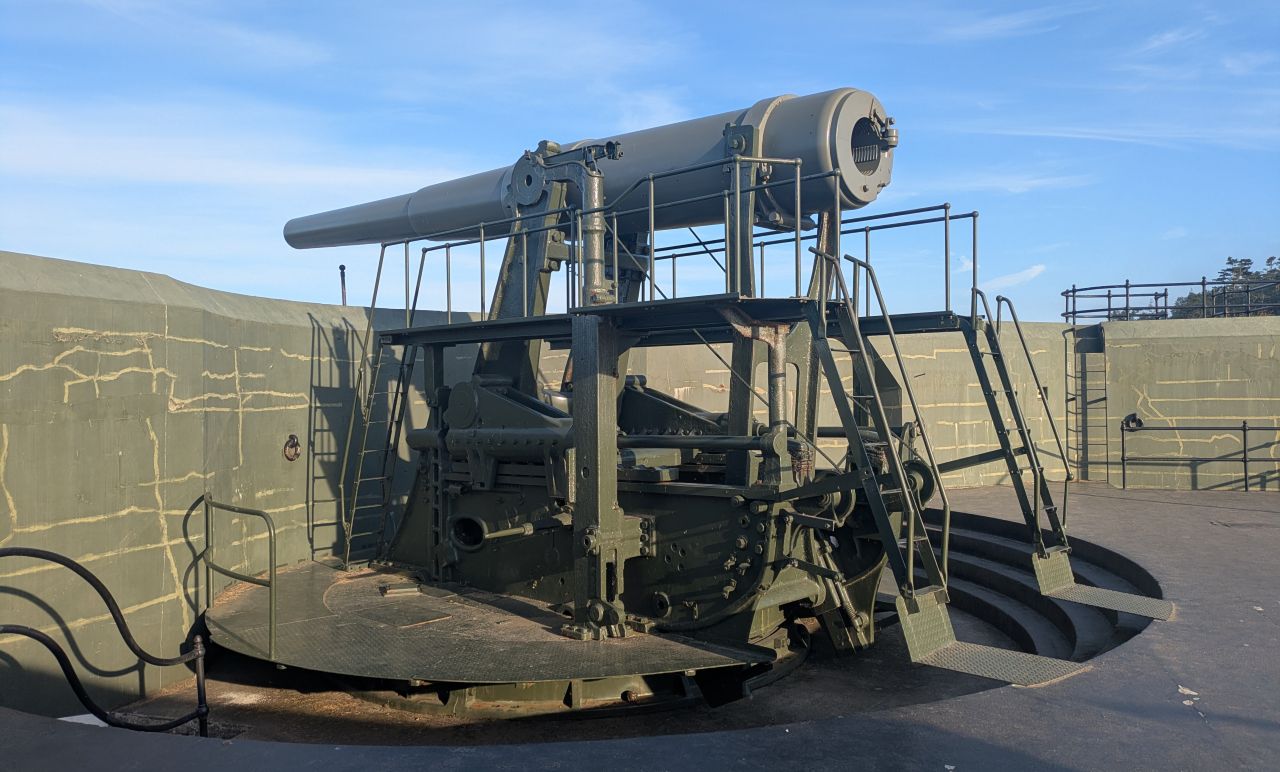
A 10" gun at Fort Casey
Fort Worden is right next to Port Townsend, Washington, a small, touristy town on the northeast tip of the Olympic Peninsula. The State Park itself has made extensive use of the barracks and administrative buildings, turning them into everything from vacation rentals to arts spaces to a woodworking school. I can't really speak to the quality of any of it, but they've more or less left the batteries alone, apart from basic maintenance and a few signs, and they're mostly intact. You can drive right up to them, but you'd need a $10 vehicle access pass, or you can park near the main office and the old museum building and hike in for free. The only downside to this is that most of the batteries are up on the hill overlooking the park, and it's a fairly steep climb to get up to them.
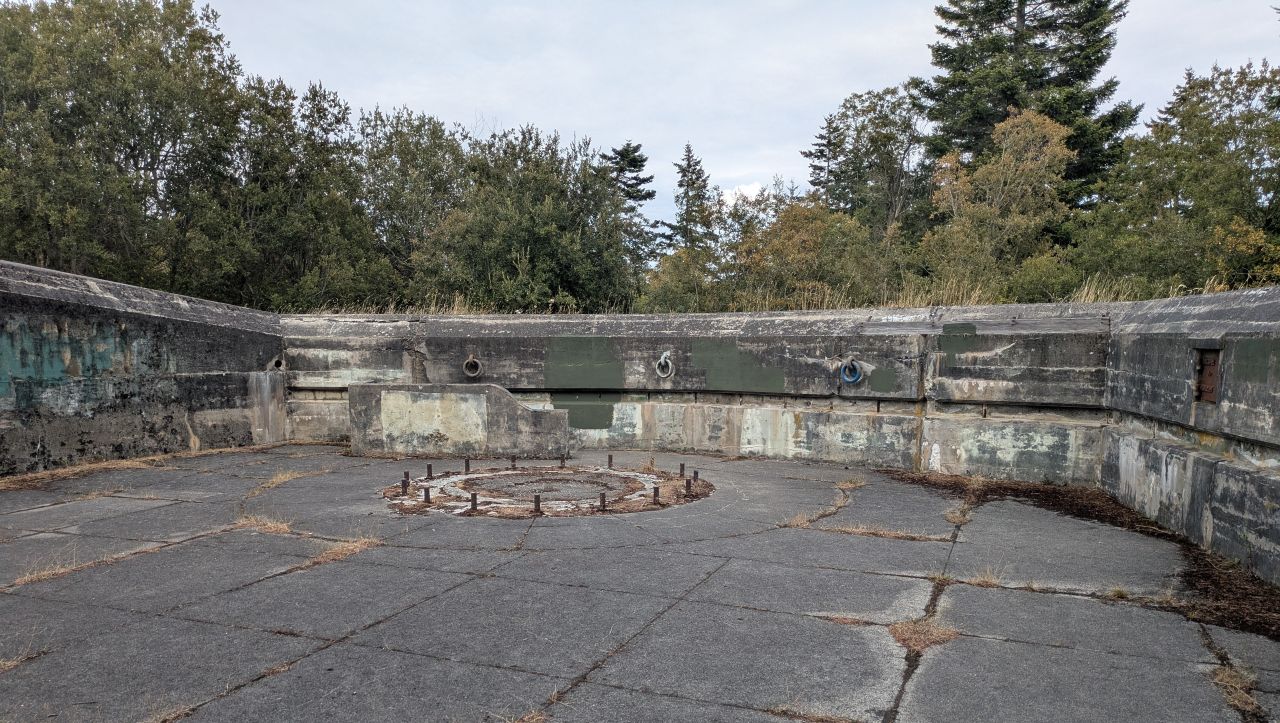
One of Fort Worden's barbette mounts
But if you decide you don't want to climb, or you just want to start off easy, there are two batteries, Putnam and Stoddard, near the main buildings. These were equipped with 3" and 6" guns respectively, intended to stop destroyers and small vessels from passing through or attacking the minefields that were an integral part of the defensive scheme for Puget Sound. A trail from Stoddard leads up the bluff, to some lovely views and the main line of guns. This is a continuous set of batteries that mounted five 10" and two 12" guns on barbette mounts and another pair of 10" weapons on disappearing mounts. It's a cool place, particularly because the rooms inside/under the batteries are open, unlike the ones in California. If you want to explore them, bring a good flashlight, because my cell phone wasn't really cutting it. There's also a couple of mortar pits, which are in considerably better shape than the one I saw back in San Francisco, as well as various other remnants of the defenses scattered around the landscape.
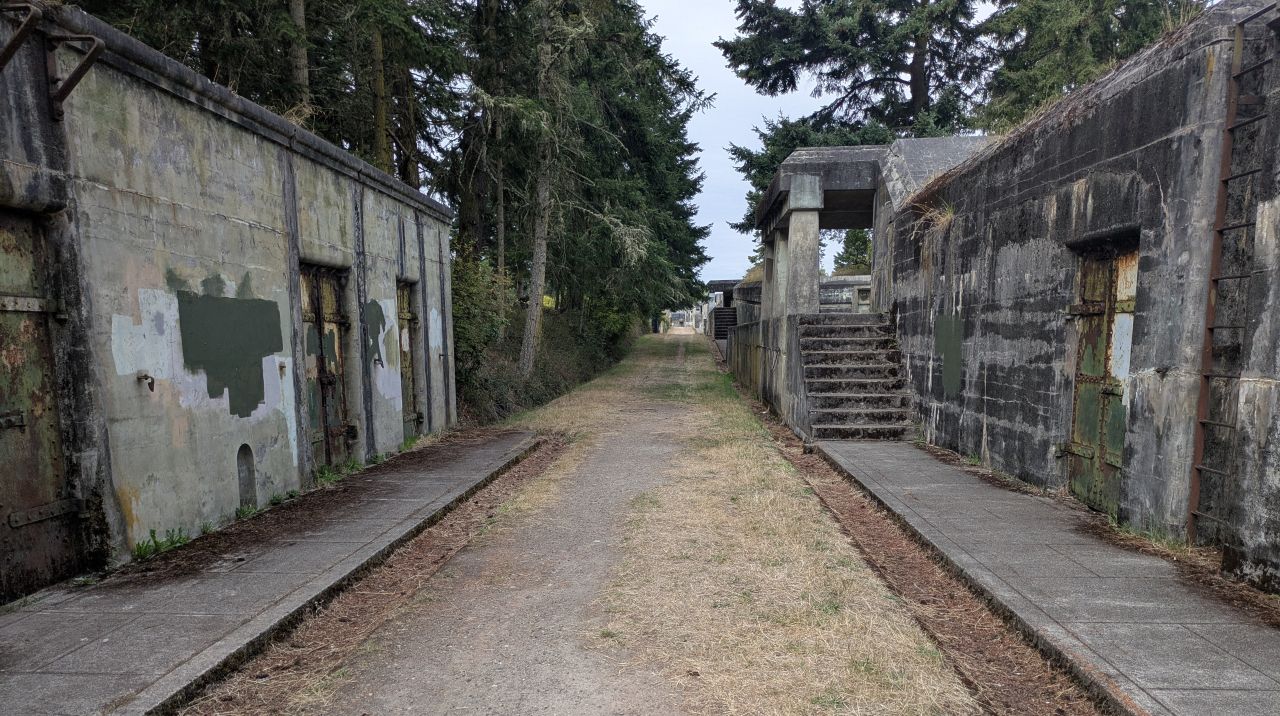
The main guns at Fort Worden
But this feels like it's underselling what's there. The batteries are kind of isolated on top of the bluff, and it's been long enough since they were abandoned that a lot of the trees have grown back. This is bad if you want to appreciate the full field of fire available, but makes it a cool place to explore. Even if you aren't interested in coastal defenses directly, it's just a neat place, and feels a bit like poking around the ruins of an ancient civilization. It took me an hour or so to get a quick look at almost everything up there, and it could easily have been two if I'd had a better flashlight and didn't have early plans the next morning.
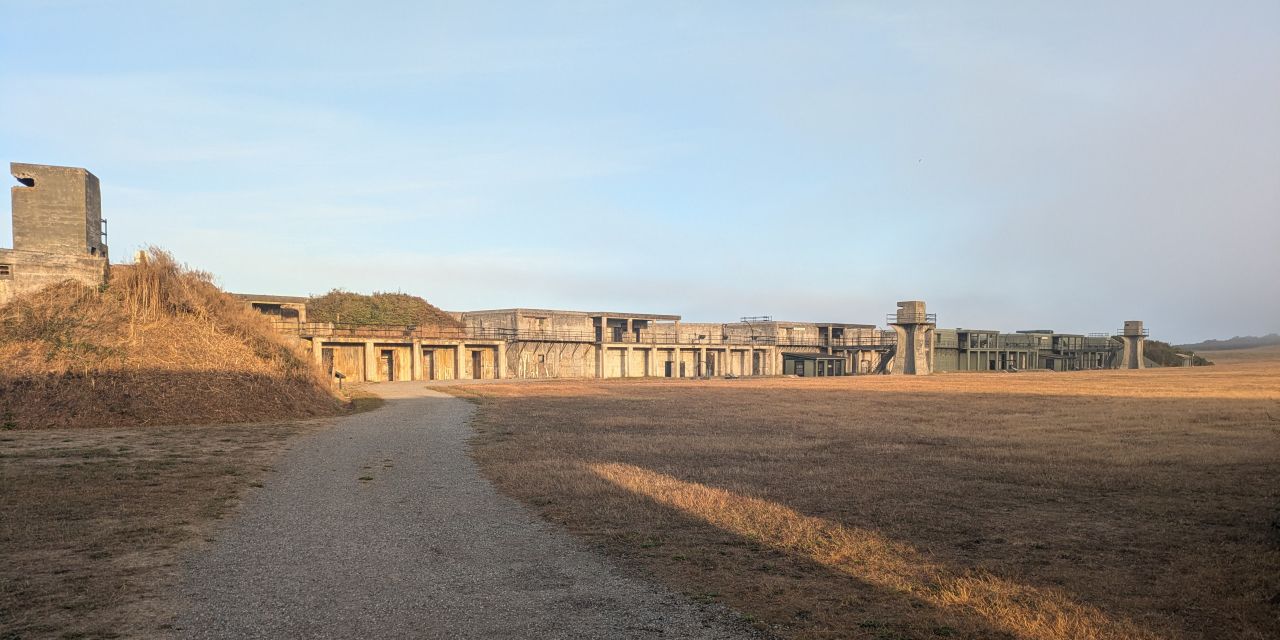
The gunline at Fort Casey
Speaking of early plans, I was on the first ferry from Port Townsend across to Whidbey Island, and Fort Casey. As mentioned at the top of the review, this is the only site with large-caliber guns from the era mounted in the emplacements, although the guns themselves are not original. Almost all of the Taft/Endicott era guns in the US were scrapped in 1942 because they were thought to have minimal remaining value (probably true given how vulnerable they were to air attack), and the guns here were brought over from the Philippines in the 60s, where they had been inaccessible during the scrapping binge. Fortunately for anyone who is staying in Port Townsend, Fort Casey is right next to the Coupeville ferry terminal, with regular service from Port Townsend. I'd recommend just going on foot, because it's cheaper and you don't have to worry about the ferry running out of spots. You can either go up the park service road or through the campground to the left, and either way will relatively quickly bring you to the batteries. Much like at Fort Worden, there's a solid line of 10" batteries on the (much lower) bluffs, flanked by 6" and 3" batteries. The restored guns are two 10" weapons on disappearing mounts in Battery Worth at the far end of the site from the ferry terminal, as well as a pair of 3" weapons in Battery Trevor overlooking the ferry. There's also a pair of mortar batteries, much like at Ford Worden, but I needed to make the return ferry and gave them a miss.
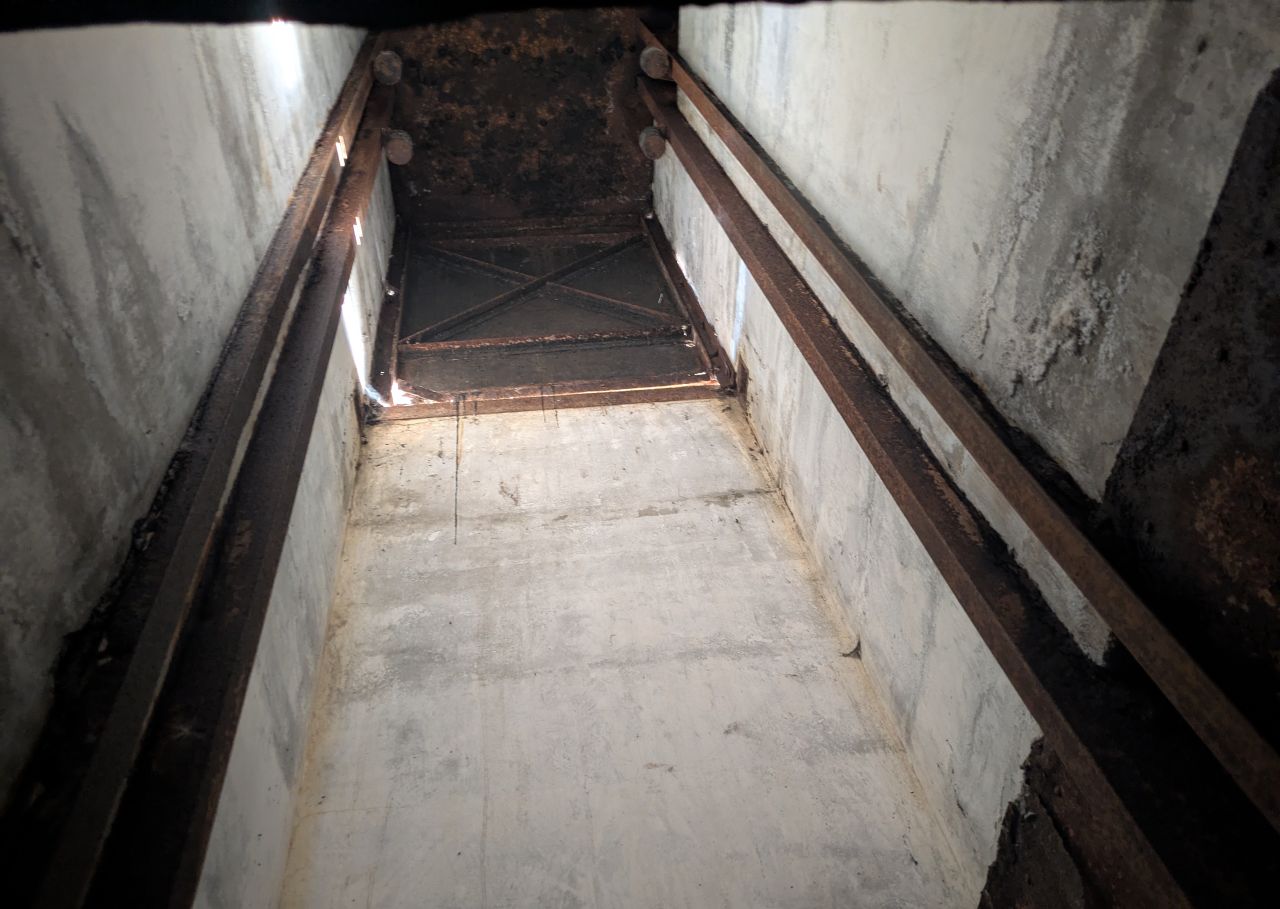
The remains of a hoist at Fort Casey
Other than the actual installed gun mounts (which are cool to see, but surprisingly simple, and not really supported by other artifacts), a restored plotting room (closed when I visited, although they may open it up later in the day) and slightly better signage, Fort Casey is pretty similar to Fort Worden. They've done a better job of keeping it in roughly the form it was in when it was in service, and the views out over the channel are impressive (and fully explain why the battery was built here), but at the same time, the fact that the site isn't overrun by forest means you don't get the same "ancient civilization" vibe you do at Fort Worden.
On the whole, I enjoyed both forts, and if you're interested in seeing coastal defenses up close, I can't think of a better place to do so. At the same time, with the loss of the museum, these clearly fall into the category of regional attractions. Fun to see if you happen to be out on the west side of Puget Sound anyway, but not necessarily worth traveling long distances for on their own.
Comments
...I truly wish someone had been able to spring for some mock-up guns at Monroe and/or Moultrie. Even just one gives you a good idea of what it was like in the Old Days. (In fairness, Monroe does still have two 3" at Battery Irwin and a single 90mm at Battery Parrott...but it's not the same.)
Mike