March 05, 2023

Museum Review - Fort Leonard Wood

On a recent trip to St. Louis, I found myself with some time on my hands in central Missouri, and decided to visit the museums at Fort Leonard Wood, an Army base that serves as the home of the Corps of Engineers, the Chemical Corps and the Military Police. Each of these has a museum, and I was curious what I would find, given the very high bar set by the Field Artillery.


The vehicle park across the street
Type: Branch museums for Engineering, Chemical and Military Police
Location: Fort Leonard Wood, MO
Rating: 4.3/5, A deeply weird and fascinating collection of museums.
Price: Free

Getting on base was pretty easy. It's not far off I-44, about 2 hours southwest of St. Louis. I just went to the visitor center, told them what I wanted, and was directed to the self-service kiosks. The Navy desperately needs something like this to ease access to the Washington Navy Yard. Just make sure that you're a US citizen, and you shouldn't have issues. (That said, I have a security clearance, so I was presumably in the system. No idea how long it will take if you're not.) Then I drove down to the museums. The route to get there isn't well-signed, but Google Maps worked just fine. Read more...
March 03, 2023

Open Thread 125

It's time once again for our regular Open Thread. Talk about whatever you want, so long as it isn't Culture War.

In news, I am going to be in Tucson this coming weekend for a DSL meetup. I plan to go to Pima on Friday the 10th and the whole group is going to the Titan silo on the 11th. Anyone who wants to is free to join, although Cassander demands his traditional fee, so be sure to think up some good insults for him. Email me or reach out on the discord for more details.

Also, I was wondering if any readers have access to Warship 2006, and would be willing to scan/photograph the article on the Stalingrad class battlecruisers and send it to me. My local library isn't filling my interlibrary loan requests.

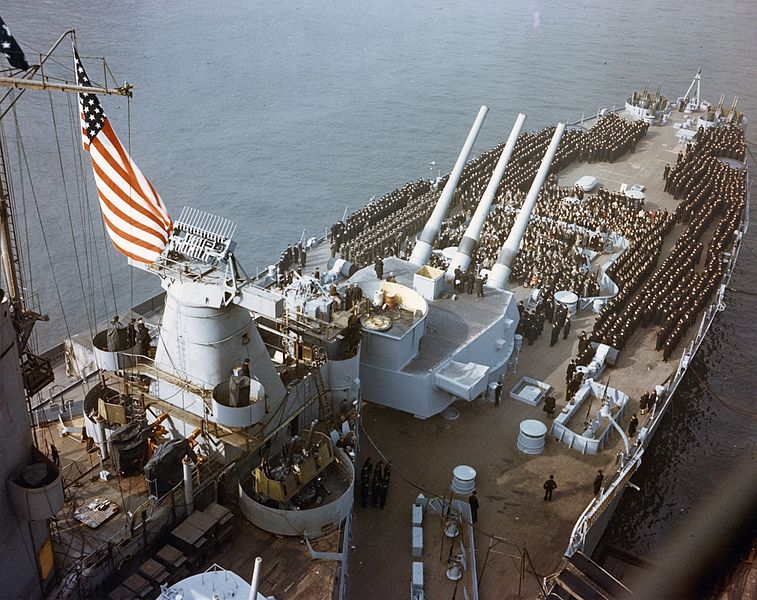
I have been busy, and forgot to wish Iowa a happy 80th on February 22nd. I have to say that she looks good for her age.

Overhauls are Strike Warfare, A Brief History of the Cruiser, The Designation Follies and for 2022, A Brief Overview of the British Fleet and The Battleship Review.

February 26, 2023

The Gerald R. Ford Class

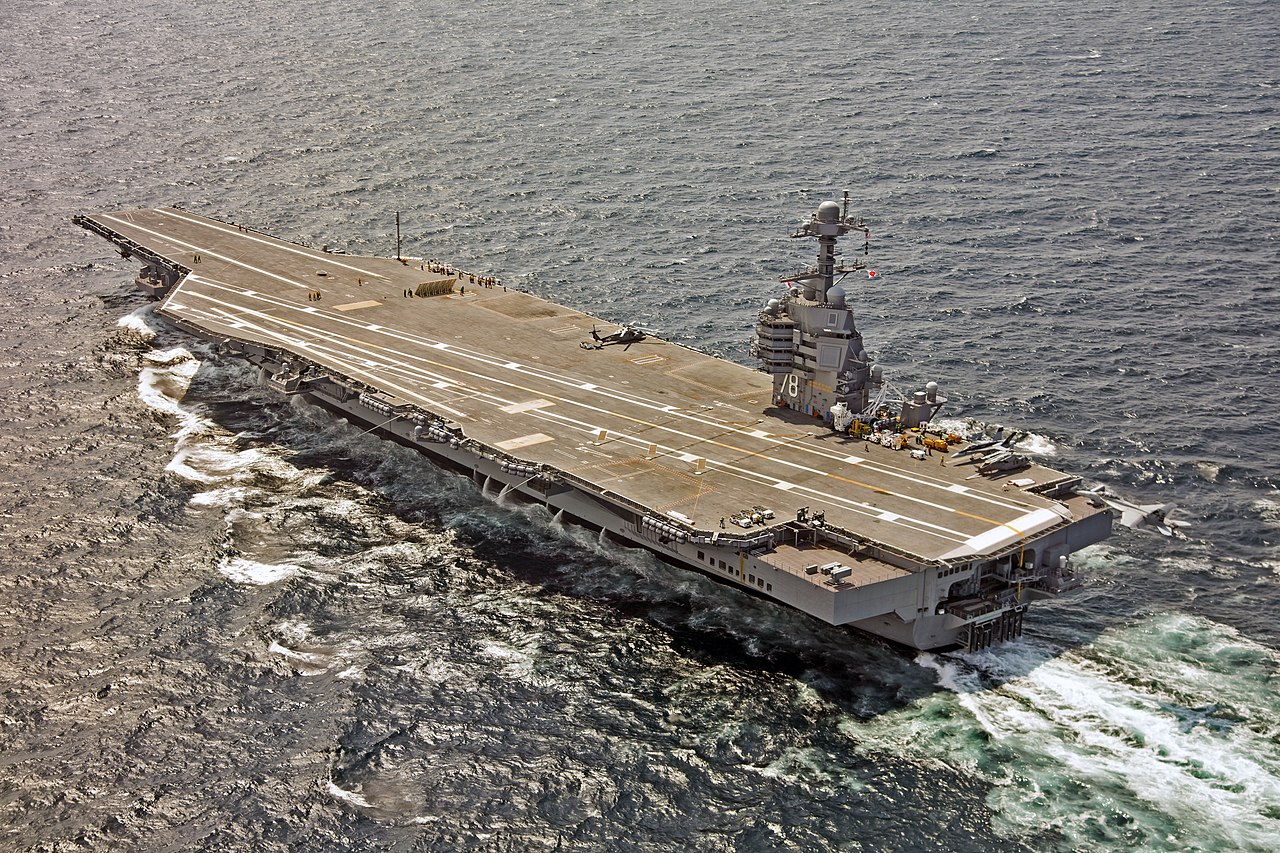
As of today, the US has 11 carriers in commission. Ten are of the Nimitz class, a design dating back to the late 60s. The last is the USS Gerald R Ford, the first ship of a new design that will take American Naval Aviation through the 21st century. She promises to bring significant new capabilities to carrier operations, as well as lower operating cost, but the addition of new technologies has made her development difficult even by the standards of new warships. But it appears that things have finally settled down, with her maiden deployment planned for later this year.1


Gerald R. Ford takes aboard a Super Hornet

But before we turn to the sordid history of the Ford class, it's worth taking a look at the changes that have been made to make them the most capable aircraft carriers ever built. While the basic hull is very similar to the Nimitz class, a result of the need for the new ship to fit into existing drydocks, the internals are quite different. In line with general trends in warship engineering, the new ship would make considerably greater use of electrical power for its systems, which generally means greater reliability, lower maintenance, and better resistance to damage. This is most notably seen in the new Electromagnetic Aircraft Launch System (EMALS), which replaces the traditional steam-powered catapults with a linear induction motor to fling the aircraft off the deck. This offers the possibility of finer control of the catapult shot, as the existing steam catapults have no feedback and are not well-suited to dealing with very light aircraft, such as potential future UAVs. Concerns about reliability, weight and the ability to trap light aircraft prompted a similar redesign of the arresting gear. Read more...

February 19, 2023

The Nimitz Class

Today, the ten ships of the Nimitz class are the backbone of the US Navy's carrier groups, the most fearsome collections of naval firepower ever created. They operate what are essentially medium-sized independent air forces, and the fact that the last unit will leave service close to a century after planning began for the leader is a testament to the quality of the design.


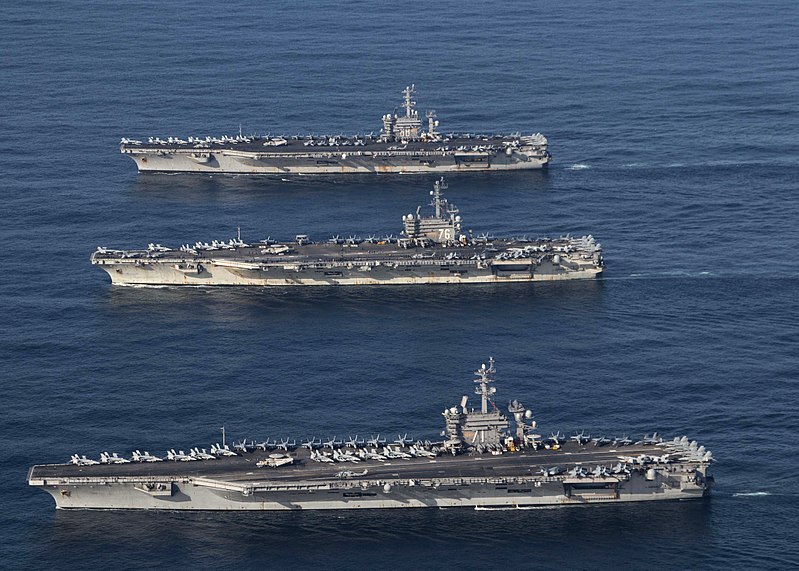
Three Nimitzs operate together

The Nimitz class has its roots in the mid-60s, as questions were asked about the shape of the future US carrier force. From the late 40s onward, the main mission of the US carrier fleet had been nuclear strike, but the arrival of Polaris meant that this was no longer enough to justify the budget for such expensive ships. Instead, the experience of Vietnam would provide the basis, as carriers operating in the South China Sea provided a significant fraction of the air effort during the war. But that would mean a rather different kind of carrier, optimized for a sustained conventional war instead of a short nuclear one. This was most visible in the magazines planned for the new carrier design, which were considerably larger (and thus more vulnerable) than those of their predecessors, but which would allow the new ship to operate for longer between replenishment. Read more...

February 17, 2023

Open Thread 124

It's time once again for our regular Open Thread. Talk about whatever you want, so long as it isn't Culture War.

Apologies for getting this up late. This is what happens when I play Aurora.

Overhauls are Classes, Aerial Cruise Missiles, Modern Propulsion Part 1, and for 2022 Norway Part 10 and Victory Ships.

February 12, 2023

Thoughts on the Chinese Balloon

Last week, the media was captivated by the story of a Chinese surveillance balloon floating across the US. Questions were asked about how we could let this happen, and many were extremely indignant about the affront to US sovereignty, so I thought I'd weigh in with a longer perspective.

First, the idea of sending a balloon over your enemy's country isn't new. In WWII, the British launched almost a hundred thousand balloons at Germany to short out the power grid and start fires, while the Japanese sent thousands of balloons into the jet stream, hoping they would cross the Pacific and set fires in North America. One of these bombs, found by a group on a church picnic, caused the only fatalities from enemy action on the US mainland in WWII. Later, the US used camera-carrying balloons to photograph the Soviet Union before the U-2 entered service.2 These balloons were responsible for many early UFO sightings, with a related project to detect nuclear testing with microphones on high-altitude balloons being responsible for the Roswell Incident. More recently, US fighter pilots have reported encountering "UFOs" that sound a lot like balloons over the last 5-10 years. Read more...

February 05, 2023

The Top Gun: Maverick Review

In honor of our recent discussion of the Hornet family, it seems worth discussing the type's recent outing on the big screen, which I watched on a recent flight. I found Top Gun: Maverick to be a confusing movie. On one hand, it's very much more of the same Top Gun formula. There's a fairly absurd story and lots of pretty aerial scenes. In a lot of ways, Maverick could almost be a remake of the first, with some updates for modern sensibilities, but with a plot involving the son of Goose (the RIO from the first movie) and the addition of the Death Star run to the film's climax.

But the weird thing is that while I loathed the original Top Gun, I didn't actually hate this one. Yes, it's extremely silly, but it seems to have passed through what I will refer to as the Battleship Transition. Instead of my brain insisting on taking it seriously and thus tearing things apart, I can basically sit back and enjoy it. At best guess, this is because the plot is clearly more ridiculous from the beginning. We see the movie open with Maverick as a test pilot at Edwards (he is not the type of person who ends up as a test pilot), working on a new hypersonic plane. As befits his callsign, he takes it out just before the local Admiral can shut the program down and takes it to Mach 10.4, which results in the plane blowing up, and Maverick walking into a bar. John Schilling's theory is that he actually died at this point and the rest of the movie is the way his life played out afterwards. It makes as much sense as anything else to explain what happens in the rest of the movie. Read more...

February 03, 2023

Open Thread 123

It's time once again for our regular Open Thread. Talk about whatever you want, so long as it isn't culture war, or go to the Naval Gazing discord (link in the sidebar) if you want to converse in real time.

A non-naval recommendation this time. Netflix just released Cunk on Earth, a mockumentary on world history that is the funniest thing I have seen in quite a long time.

Overhauls are Basics of Naval Strategy, Carrier Doom Part 4, The Mk 23 Katie, Operation Crossroads, SYWTBABB - Leftovers Part 3 and from 2022, The Pre-Battlecruisers and Norway Part 9.

January 29, 2023

The Hornet Family Part 3

We've spent the last few weeks looking at the program history and technical details of the F/A-18 Hornet family, but that overlooks a third aspect of the story, the airplane's service record both with the US and outside of it.


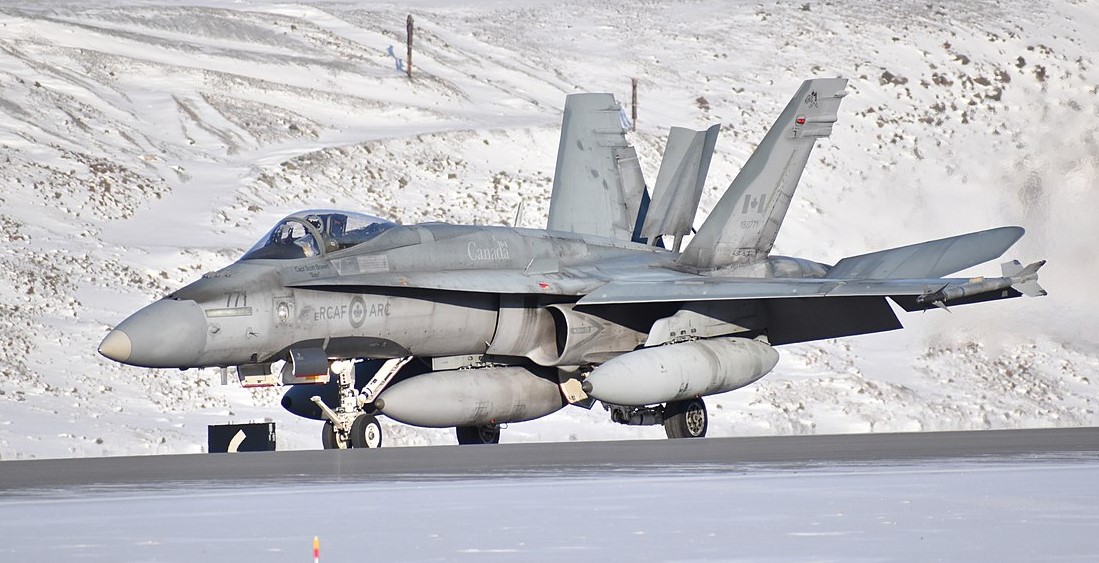
A CF-188A in a typically Canadian environment

Even as the Hornet was just beginning to enter service with the US, it was starting to rack up export orders. Initially, the plan had been for Northrop, who had built the YF-17, to handle those for land-based air forces with the F-18L, customer concerns over buying a design that wasn't actually in production and aggressive salesmanship by McDonnell Douglas saw the carrier-based version selected by a number of nations. The first buyer was Canada, who purchased 96 CF-188As and 40 CF-188Bs starting in 1980. These were used to replace a number of older aircraft, and remain the mainstay of the RCAF today, after several attempts to replace them with F-35s have failed. Hopefully, the most recent decision for the JSF sticks. Read more...

January 22, 2023

The Hornet Family Part 2

The F/A-18A Hornet was the first of the true modern multi-role fighters, equally able to take on air and ground targets, and later versions of the aircraft have continued that legacy. But as flight is a prerequisite to being able to fill either role, it first bears looking at the Hornet family as aircraft.


An F414 engine undergoes maintenance

Visually, all Hornets are quite similar, high-wing jets with twin tails canted outward, although they differ considerably in size. The Legacy Hornet is 56'1" long, has a wingspan of 40', and weighs 23,000 lb empty and 51,900 lb fully loaded. The Super Hornet is 60' long, has a wingspan of 44'8", and weighs 32,000 lb empty and 66,000 lb fully loaded. Propulsion comes from two General Electric engines, F404s for the Legacy Hornet, and F414s for the Super Hornet. These have been upgraded several times, but in general each F404 puts out about 12,000 lb of thrust, while the F414 has 14,000 lb of thrust. This is enough for most normal purposes, but for supersonic flight or rapid acceleration, afterburner is used. The afterburner dumps raw fuel into the exhaust of the jet engine, and boosts thrust to about 17,600 lb and 20,700 lb respectively. Even with afterburner, all Hornets are limited to about Mach 1.8, as the inlets for their engines (rounded on Legacy Hornets, square on Super Hornets) are fixed, instead of having variable ramps as used on faster airplanes. Read more...