January 20, 2023

Open Thread 122

It's time once again for our regular Open Thread. Talk about whatever you want, so long as it isn't Culture War.

The Naval Gazing Discord (link in sidebar) continues to go well, with over two dozen people on it and regular discussion of...a bunch of stuff. I think I'm going to see how it works for a virtual meetup next weekend, 1/28 at 1 PM Central (GMT-6).

Overhauls are Carrier Doom Parts two and three, Missile Guidance and for 2022, The Drone Revolution?* and The Virginia Class.

January 15, 2023

The Hornet Family Part 1

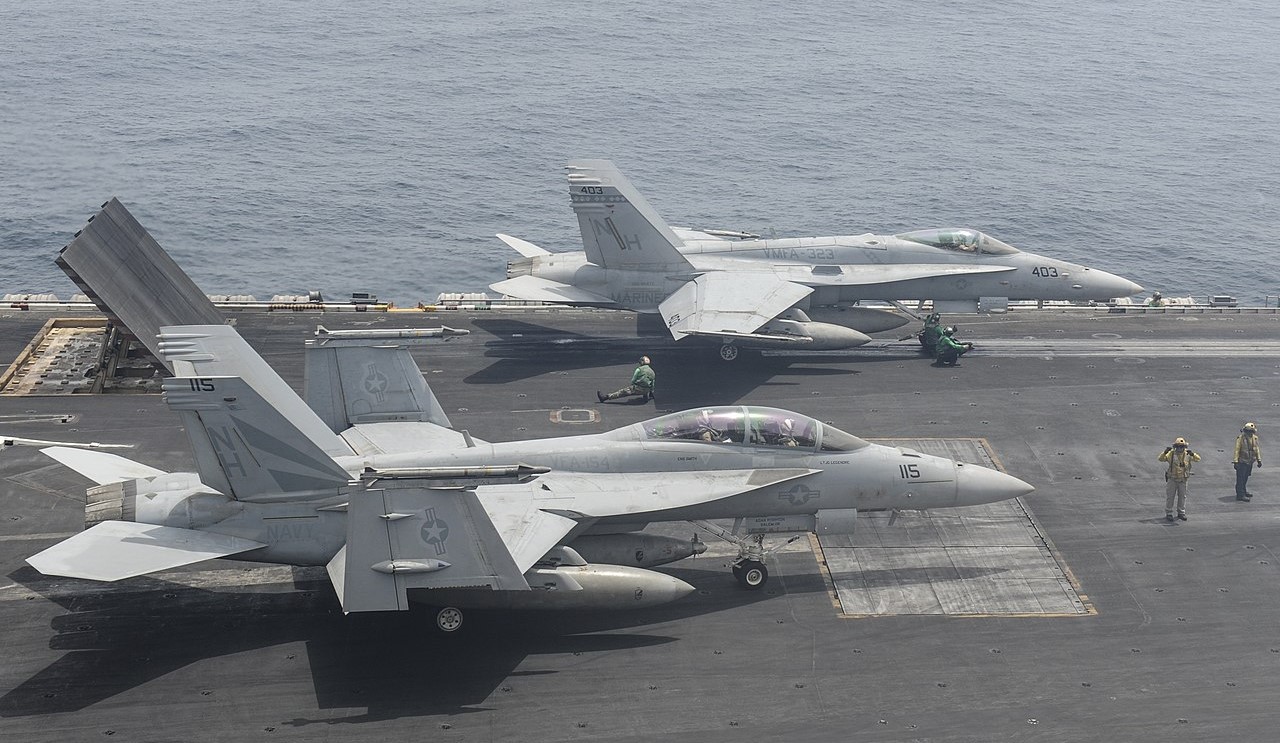
Today, the F/A-18 Hornet and Super Hornet form the backbone of American naval aviation, as well as serving in the air forces of seven other nations. Even though the F-35 is beginning to replace it in service, it will remain important for decades to come.


An F/A-18F Super Hornet (front) and an F/A-18C Hornet on the deck of a carrier

The F/A-18 story began not with the Navy, but with the Air Force. One lesson that many took from the Vietnam War was the continued importance of dogfighting, and pressure began to build for a light day fighter to fill that role in a future war, resulting in the Lightweight Fighter program in the early 70s. General Dynamics and Northrop were chosen to build prototypes for a competitive flyoff, producing the YF-16 and YF-17 respectively. The YF-16 was eventually selected, thanks to slightly superior performance and its use of a single engine, which provided commonality with the new F-15. As it developed, it gained more multirole capability, eventually emerging as the very successful F-16 Fighting Falcon. Read more...

January 08, 2023

Miramar 2022

Back in September, the Fatherly One and I ventured to San Diego to attend the Miramar Airshow, and invited Naval Gazing readers to join us. Five people showed up, and a great time was had by all, although I personally failed to use enough sunscreen, which made the next few days rather uncomfortable. Still, it was worth it to see a great airshow.


John Schilling and the Fatherly One in the bleachers1

Read more...

January 06, 2023

Open Thread 121

It's time once again for our regular Open Thread. Talk about whatever you want, so long as it isn't Culture War.

With 2022 behind us, it is time for the William D. Brown Memorial Award, for the biggest naval screwup that didn't kill anyone. This year, the jury decided to give the award to a non-naval party, Evergreen Marine, for the Ever Forward grounding, on the basis that they have broken William D. Brown's record for the worst grounding ever in Chesapeake Bay, managing to run a bigger ship aground and keep it there for twice as long. For the second year in a row, the runner-up was the US Navy, this time for the disaster that was the prosecution of the sailor eventually acquitted of setting fire to the Bonhomme Richard. It looks like NCIS is up to its old tricks again.

Also, a reminder that Naval Gazing now has a discord, which has seen some interesting discussions over the last two weeks, including Johan's aliens and me complaining about various aspects of the writing process.

Overhauls are New Year's Logs, Naval Bases from Space - Hawaii and for 2021/2022 NWAS - British Polaris, Naval Video Games and Coastal Defenses and the Battleship in the 19th Century.

January 01, 2023

ESSM

From the early 70s onward, the Sea Sparrow was the primary point-defense missile used by the USN. But it had always suffered from a fundamental handicap. It was a derivative of the AIM-7 Sparrow air-to-air missile, and the Navy's desire to maintain commonality between the two had limited what they could do with the Sea Sparrow. But by the mid-80s, it was obvious that the air-launched Sparrow would soon be superseded by the new AIM-120 AMRAAM, opening the way for a version of the missile entirely dedicated to the naval point-defense role.


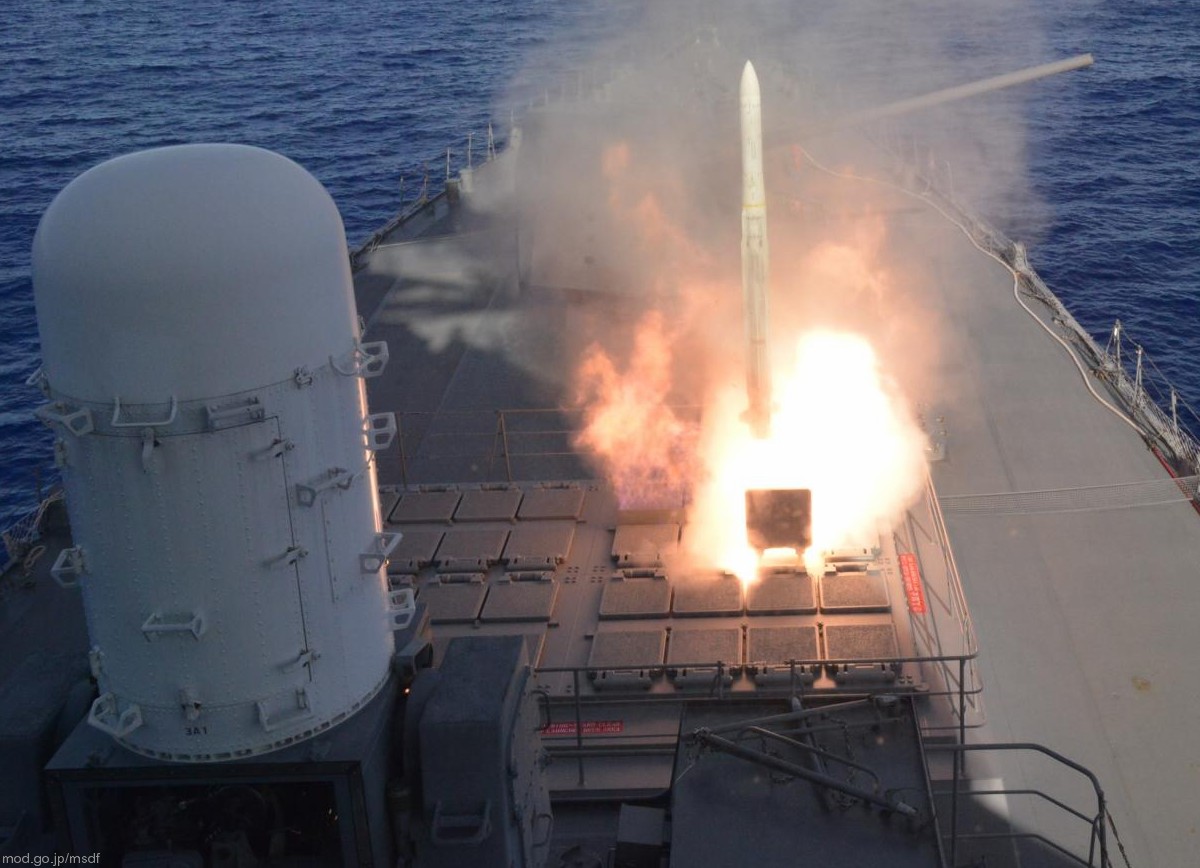
A Japanese destroyer launches an ESSM

The result was the RIM-162 Evolved Sea Sparrow Missile, generally known as ESSM. It was designed to be more or less a drop-in replacement within the various environments where the existing Sea Sparrow missile was used, although the designers, freed from the form factor of the existing missiles, chose to completely redesign the aerodynamics, replacing the big fins, useful at altitude, with small fins and strakes optimized to work near sea level. The result resembled a miniature version of the SM-2MR, and the reduction in the size of the fins allowed the missile to be packed much more densely, with four fitting into one cell on the Mk 41 VLS. Even with this, the 8" motor previously used could be replaced with a 10" model optimized for the task, which not only gave the missile far more energy, doubling range, but was also optimized to burn quickly. This got the missile up to maximum speed (around Mach 4) early on, helping performance, and reduced how much the smoke from the motor interfered with optical tracking of incoming targets. To enable VLS launch and improve close-in maneuverability, a thrust vector control system is fitted. The design goal for the missile is to be able to maneuver at 50G, giving it the capability to take out a supersonic missile maneuvering at 4G.2 Most of the guidance system was taken from the late-model Sea Sparrow, easing integration with Aegis, NATO Sea Sparrow systems, and other fire-control systems designed for the earlier missile, although the autopilot was upgraded and the warhead was fitted with insensitive explosives, less likely to go off in case it was caught in a fire. Read more...

December 25, 2022

Museum Review - Musée de l'air et de l'espace

My parents recently went to France, and the Fatherly One has agreed to review what is, for for those who did not study French: the Air and Space Museum
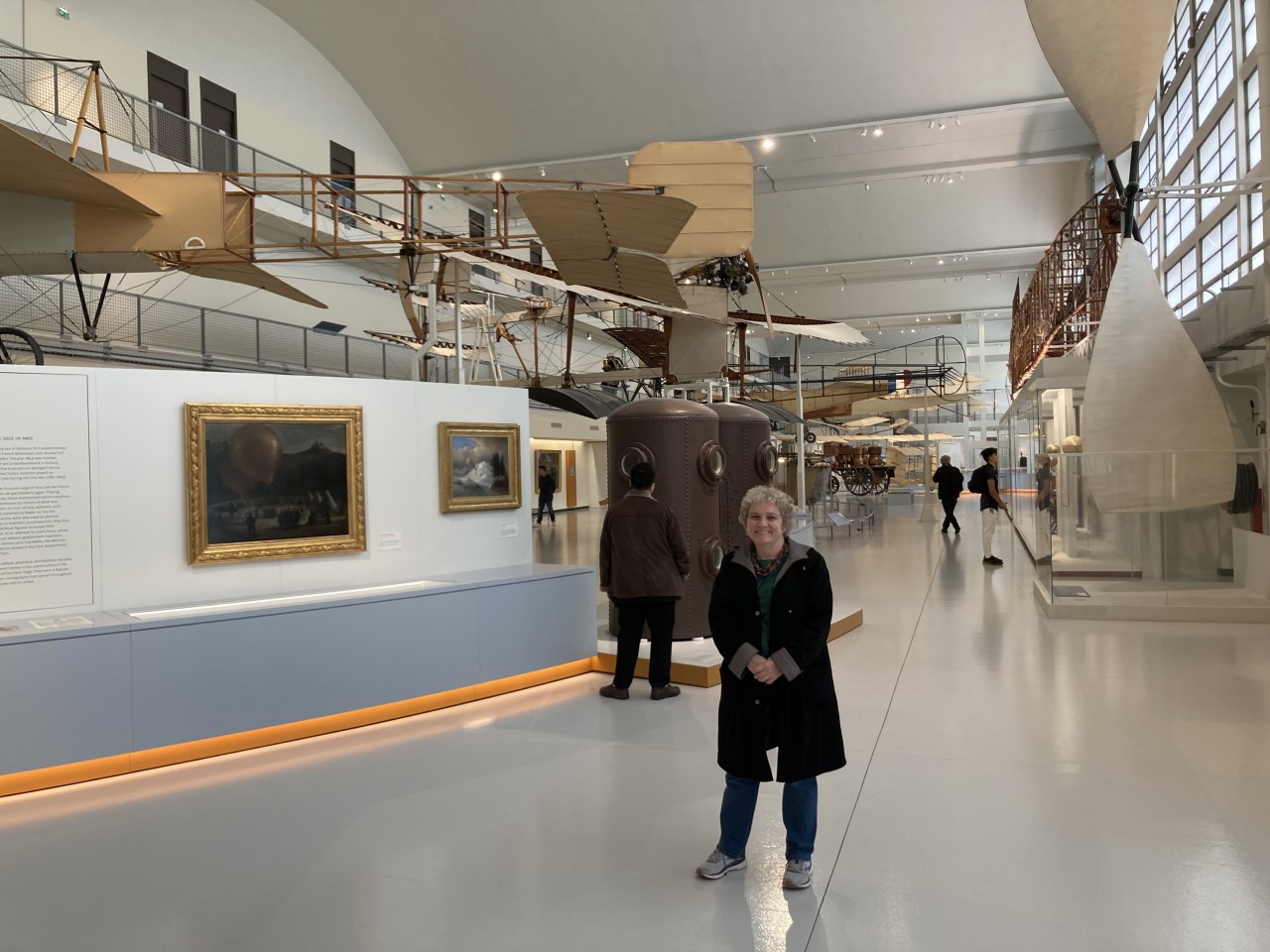


The Motherly One in the Pioneers of Aviation Hall3
Type: Air and Space Museum
Location: Paris – Le Bourget Airport, France
Rating: 5/5 – Probably the best I have been to in my travels…4
Cost: 16 euro for complete access to all exhibits.

One of the oldest aviation museums in the world, it is in the Le Bourget terminal opened in 1937. The museum is predominantly divided into sections by era with sections devoted to Pioneers of Aviation, the Great War, the Interwar era, WW II. Other areas are Space Exploration, Helicopters, Prototypes, the Cocarde Hall (French military aviation), the Children’s Area, a Library and the Concorde Hall. You could easily spend two days in this place if you were the type to read every placard and consider every exhibit. We (The Motherly One and I) did not view Helicopters, Prototypes, The Children’s Area (too old!), the Museum Library (prior permission needed) and the Cocarde hall as 5 hours on premises was enough! There is also an outside airpark with some tired looking examples of 1960s era Soviet aircraft and in another part of the airpark several examples of current French military and civilian aircraft. Read more...

December 23, 2022

Open Thread 120

I'd like to wish everyone a Merry Christmas (or other solstice-adjacent holiday, as appropriate) and a happy New Year. Other than that, rules are as usual. Talk about whatever you want, so long as it isn't Culture War.

As an experiment, I've set up a Discord server. I make no promises about what I'll do with it, but expect at least some behind the scenes/off the cuff stuff from me.

Overhauls are The Death of Force Z, along with Phalanx and The Two-Power Standard Today.

December 18, 2022

The Norway Campaign Part 12 - The Second Battle of Narvik

On April 9th, 1940, Hitler unleashed his military machine on Norway, breaking that country's neutrality and overwhelming the unprepared defenders at cities including Oslo, Kristiansand, Stavangar, Bergen and Trondheim using troops carried aboard warships. The British had their fleet in the North Sea, and Renown had fought Scharnhorst and Gneisenau off the mouth of the fjord leading into the strategic city of Narvik, but the Germans had gotten 10 destroyers into the town ahead of them. The first attempt to drive the Germans out with a destroyer force had failed with casualties on both sides, but on April 13th, the British returned to try again with a heavier force.


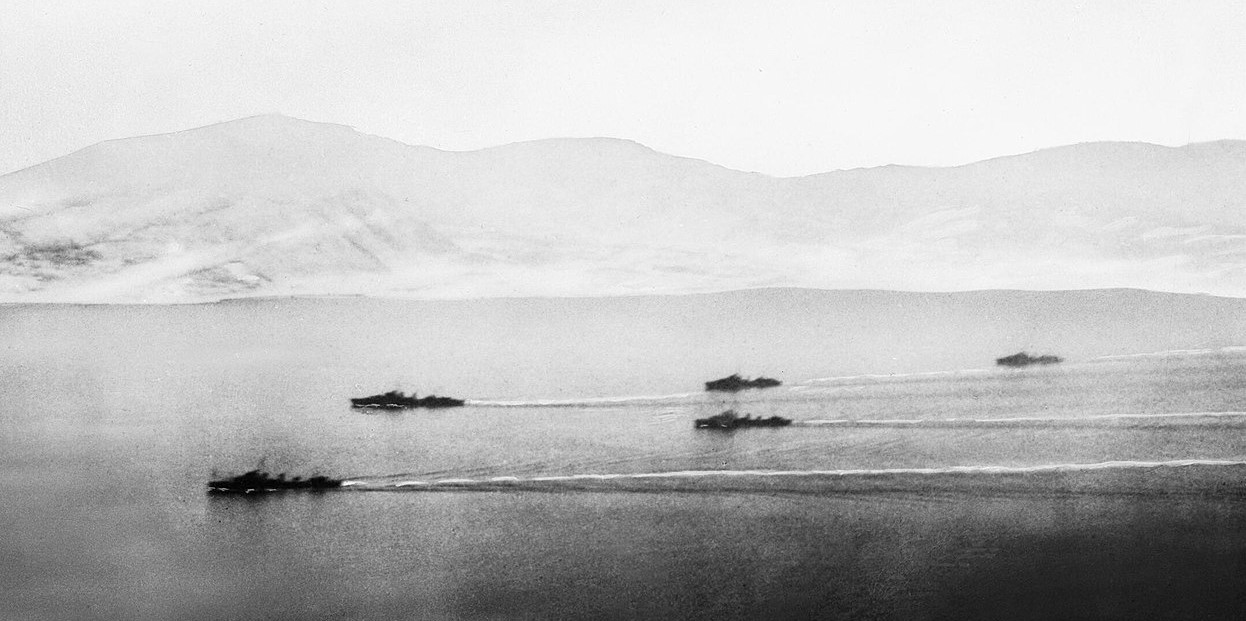
British destroyers approach Narvik for the second time

Despite the imagined risk of coastal guns and mines, this force would be built around the battleship Warspite, escorted by nine destroyers. The very real risk posed by five U-boats in the area was almost entirely ignored, even after the force ran across U48 at the entrance to the Ofotfjorden. Destroyer Eskimo depth-charged the submarine without success, and her crew recovered in time to fire a full salvo of torpedoes at Warspite, but without success.5 A second submarine, U46, managed to slip undetected inside the destroyer screen, but ran aground just before firing and missed her opportunity. Read more...

December 16, 2022

More Missiles!

The compromise National Defense Authorization Act has just been released, bringing with it a better idea of where Congress is sending things. And in a shocking development, they appear to have actually been paying attention to the war in Ukraine. One of the lessons (entirely predictable by anyone who has been paying attention for the last century or so) is that war goes through a lot of munitions very quickly, and nobody has enough laying around. This showed even quite early, as we saw the rate of Javelin expenditure, and has become even more apparent in recent days, as Russia has seen its stocks of cruise missiles dwindle to almost nothing. And Congress has responded by...significantly increasing munitions procurement pretty much across the board.

They're embracing multi-year buys covering the next 5 years, and doubling or tripling the planned procurement rates. LRASM goes from 3816 to 950 missiles. SM-6 is going from 744 to 1500. NSM is set to rise to 1250 weapons, and while there isn't clear planning in the FY23 budget request (the FY22 budget lists numbers in the 30s), 250 missiles/year is listed there as the cap on production. Read more...

December 11, 2022

The Norway Campaign Part 11 - The First Battle of Narvik

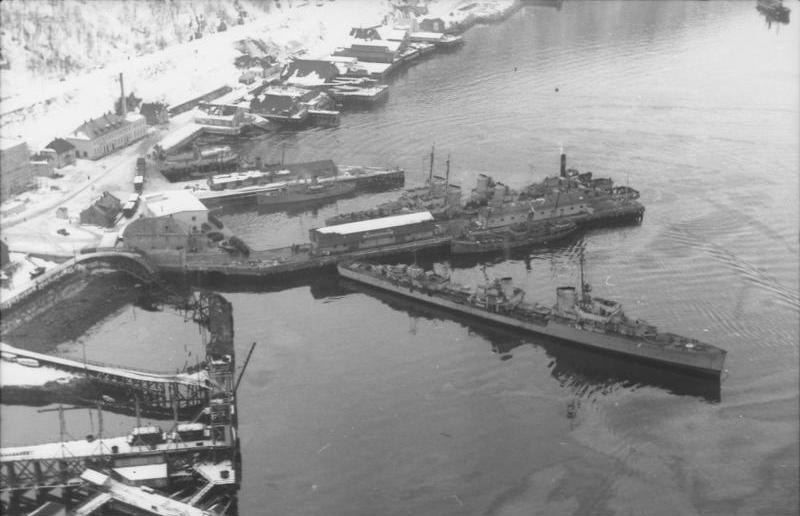
On April 9th, 1940, Hitler unleashed his military machine on Norway, breaking that country's neutrality and overwhelming the unprepared defenders at cities including Oslo, Kristiansand, Stavangar, Bergen and Trondheim using troops carried aboard warships. The British had their fleet in the North Sea, and Renown had fought Scharnhorst and Gneisenau off the mouth of the fjord leading into Narvik, but they had been unable to intervene and prevent the Germans from running 10 destroyers into that strategic town and securing it with minimal struggle.


German destroyers anchored in Narvik

The scale of all this was unclear to the British offshore, even as a force under Admiral William Whitworth assembled off Narvik during the 9th. While most of Home Fleet was well to the south, he had not only Renown, but also her sister Repulse, cruiser Penelope and a number of destroyers. Among them was 2nd Destroyer Flotilla under Bernard Warburton-Lee, who at noon received orders from the Admiralty indicating that the Germans had sent a ship to Narvik, and ordering him to take his ships in and see what was going on. If possible, he was to retake Narvik, or at the very least capture the mythical batteries protecting the city. Warburton-Lee complied, bringing with him destroyers Hardy, Hotspur, Hunter, Hostile and Havock, although more ships were available and probably would have been dispatched if the Admiralty had contacted Whitworth instead of going directly to Warburton-Lee. The casual tone of the order was baffling given the ongoing German invasion, and it left the men on the spot with the impression that the Admiralty knew far more than they did. This was often the case, but here it would prove tragically wrong. Read more...