On April 9th, 1940, Hitler unleashed his military machine on Norway, breaking that country's neutrality and overwhelming the unprepared defenders at cities including Oslo, Kristiansand, Stavangar and Bergen using troops carried aboard warships. Offshore, the British fleet was in the North Sea, but they had missed even the task forces headed for the northernmost cities, such as Trondheim and Narvik.
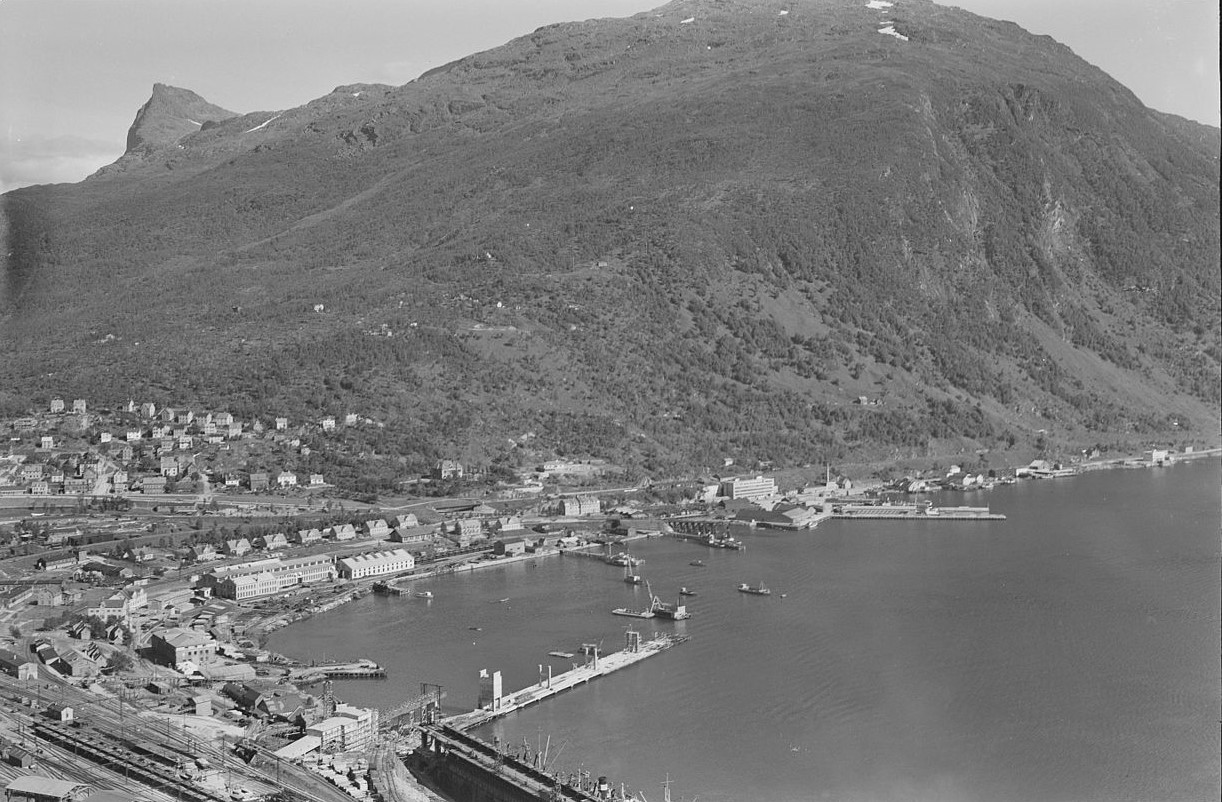
Narvik in the 1940s
Narvik, 200 kilometers north of the Arctic Circle, was one of Norway's busiest ports, the terminus for a railroad bringing iron ore from Sweden. When the Baltic froze in the winter, it was the only link from the mines to the outside world, and the city had grown rapidly to support the shipping in the area. Because it had been a tiny village of a few hundred people in the 1890s, when Norway's coastal defenses were built, it had not made the list, and while work on fortifications had started in 1914, it had been shelved postwar and never restarted. In the early months of 1940, Narvik had been the center of a great deal of diplomatic maneuvering, as the Allies tried to cut iron ore exports to Germany and use the railroad to reinforce Finland, under assault from the Soviets. That plan had been abandoned, and the British didn't actually take action until April 8th, when they laid mines on the Norwegian coast in an attempt to interdict traffic to Narvik. Read more...
Recent Comments