December 26, 2021

Nuclear Weapons At Sea - British Polaris

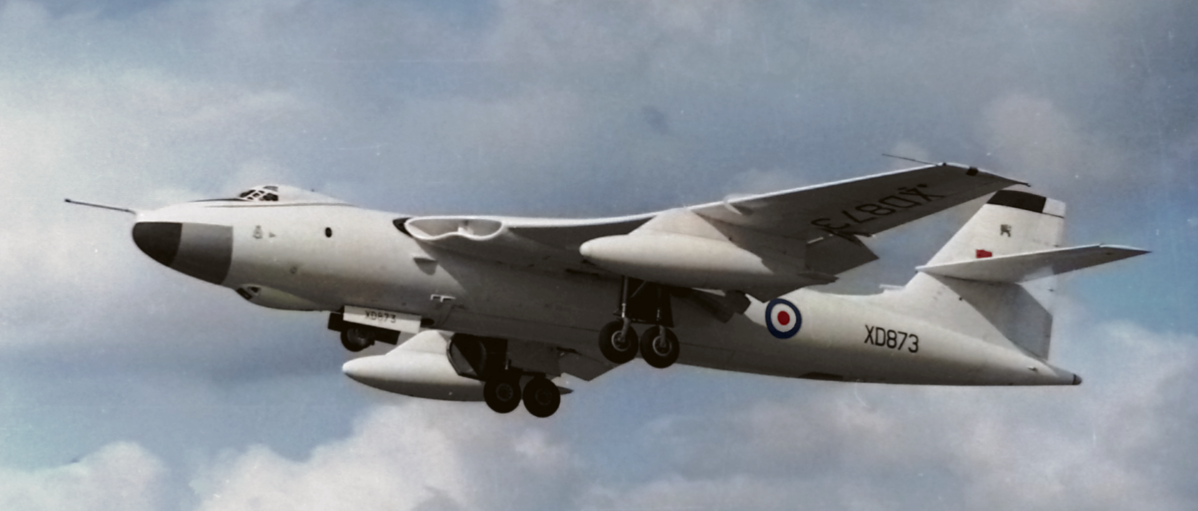
Britain decided to acquire nuclear weapons almost as soon as their existence became public, rightly seeing that they would be necessary to be seen as anything approaching a great power. Initially, the only possible deployment mechanism was the manned bomber, and the British developed three, collectively known as the V-bombers, in the early 50s to deliver their weapons to targets in the Soviet Union.1 But by the early 60s, this force was seen as increasingly inadequate and vulnerable thanks to developments in missile technology.


Vickers Valiant, one of the V-bombers

The V-bombers faced two separate problems. First, surface-to-air missiles had apparently rendered the high-altitude bomber obsolete, and while a shift to low level could preserve the viability of the deterrent in the short run, the future was seen as belonging to ballistic missiles. The British were working on a land-based missile known as Blue Streak that would replace the V-bombers, but it shared the second problem with the earlier force. Britain was simply too close to the Soviet Union, which meant that it would have only a few minutes warning of any attack. Bombers on ground alert wouldn't have enough time to get safely away, and Blue Streak would have to be on a hair trigger, opening the very real possibility of starting World War Three by mistake and going against all doctrine around nuclear weapons. Britain's geography posed another problem, in that the relatively small size of the country meant that any Soviet attack would do massive collateral damage, particularly if it was targeted at the hardened silos planned for Blue Streak. As a result, the missile was cancelled in 1960. Read more...

December 24, 2021

Open Thread 94

Merry Christmas, everyone. Open thread rules are as per usual, talk about whatever you want that isn't culture war.

Also, a reminder that the USNI sale ends on the 31st. There's a lot of good stuff there, and you should check it out before the sale ends.

2017 overhauls are Huascar Parts one and two, The South American Dreadnought Race, Dreadnoughts of the Minor Powers and Armor Parts one and two. 2018 overhauls are The First South Dakota Class, Commercial Aviation Part 3, Electronic Warfare Parts one, two and three, and Spot 1. 2019 overhauls are Billy Mitchell parts two and three, Aircraft Weapons - Short Range Missiles and Riverine Warfare - Southeast Asia Part 2. 2020 overhauls are Watches, Alsadius' review of Portsmouth, SYWTBABB Leftovers Part 1 and NWAS Cruise Missiles Part 1.

December 19, 2021

The Two-Power Standard Today

There's a criticism of the USN's strength that I've heard several times. It's based around the idea that in 1900, Britain could control the seas with a navy twice the size of the next two largest fleets combined.2 Today, it's hard to dispute that the USN is larger than that, and this obviously leads to the question of why we need such a big fleet. Is it extravagance and empire-building by the Navy? Is it because we're using our ships inefficiently? Could we cut back substantially without compromising the vital command of the sea?

I believe the answer to all of these questions is no, and the entire theory is based on a fundamental misunderstanding of both the roots of the two-power standard and the changes in the roles and capabilities of seapower throughout the 20th century. Read more...

December 12, 2021

Phalanx

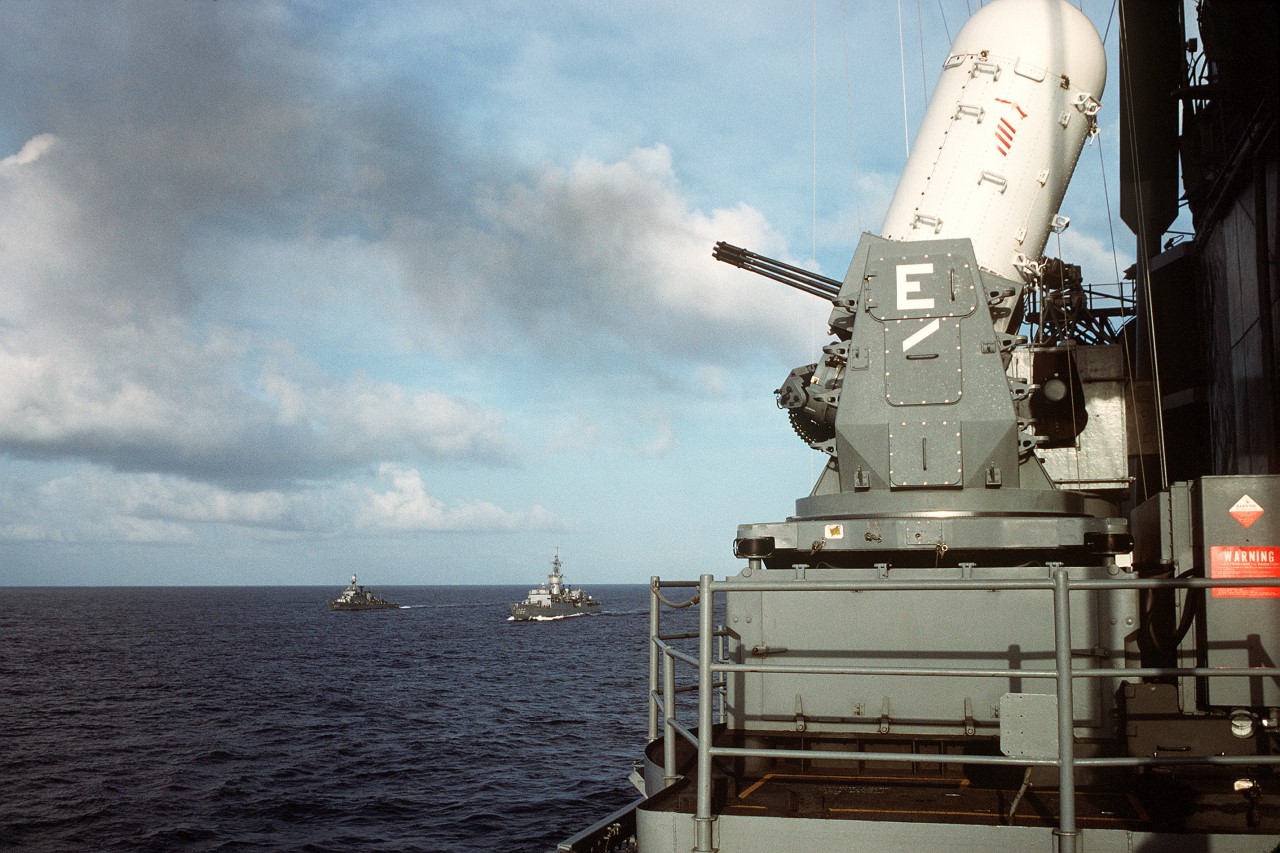
In the aftermath of the sinking of Eilat, western navies struggled to find solutions to the new threat of anti-ship missiles. Much of the effort focused on electronic countermeasures and missiles, such as the Basic Point Defense Missile System adapted from the air-to-air AIM-7 Sparrow and later known as the RIM-7 Sea Sparrow. But the early versions of Sea Sparrow in particular were rather crude, and the Navy also issued a contract for a last-ditch gun-based point-defense weapon. The result was the ubiquitous Phalanx Close-In Weapons System (CIWS), universally known as "Sea Wizz".


A Phalanx aboard Missouri fires during RIMPAC 90

Because the system was needed in service urgently, the gun selected was the existing M61 Vulcan gatling gun,3 a 20mm weapon with six rotating barrels driven by an external motor. Developed for the Air Force starting in the late 40s, it demonstrated an excellent combination of low weight, high rate of fire, reliability and lethality. By the late 60s, it was America's standard fighter gun, and it remains in service on the F-15, F-16, F/A-18 and F-22 to this day. But the real magic of Phalanx was in the control system. Two radar antennas are fitted inside the dome above the gun, operating in the Ku band. One searches the area around the weapon for threats, while the other tracks potential targets more precisely before firing. This antenna also tracks the outbound bullets, and the control system calculates their closest approach to the target, then adjusts its aim to bring that distance to zero. This technique, known as closed-loop spotting, cuts the time required to bring the weapon on target dramatically and is estimated to increase lethality by an order of magnitude. Read more...

December 10, 2021

Open Thread 93

It's time once again for our regular open thread. Talk about whatever you want, so long as it isn't culture war.

The November Alexander Award on DSL went to Vitor, for a post on container logistics. Highly recommended for its perspective on the current supply-chain issues.

2017 overhauls are Iowa parts seven and eight, Mine Warfare Part 2, Ironclads and the deaths of HMS Victoria and Force Z. 2018 overhauls are G3 and Nelson, Commercial Aviation Part 2, Japanese Battleships in WWII, A Brief History of the Aircraft Carrier and Falklands Part 9. 2019 overhauls are Harpoon, Riverine Warfare - Southeast Asia Part 1, Information, Communication and Naval Warfare Part 4 and my review of the National Atomic Museum. 2020 overhauls are CSA Raiding Part 3, Merchant Ships - Research Vessels, Nuclear Weapons at Sea - Effects and the review of HMS Belfast from Alsadius.

December 05, 2021

Eilat

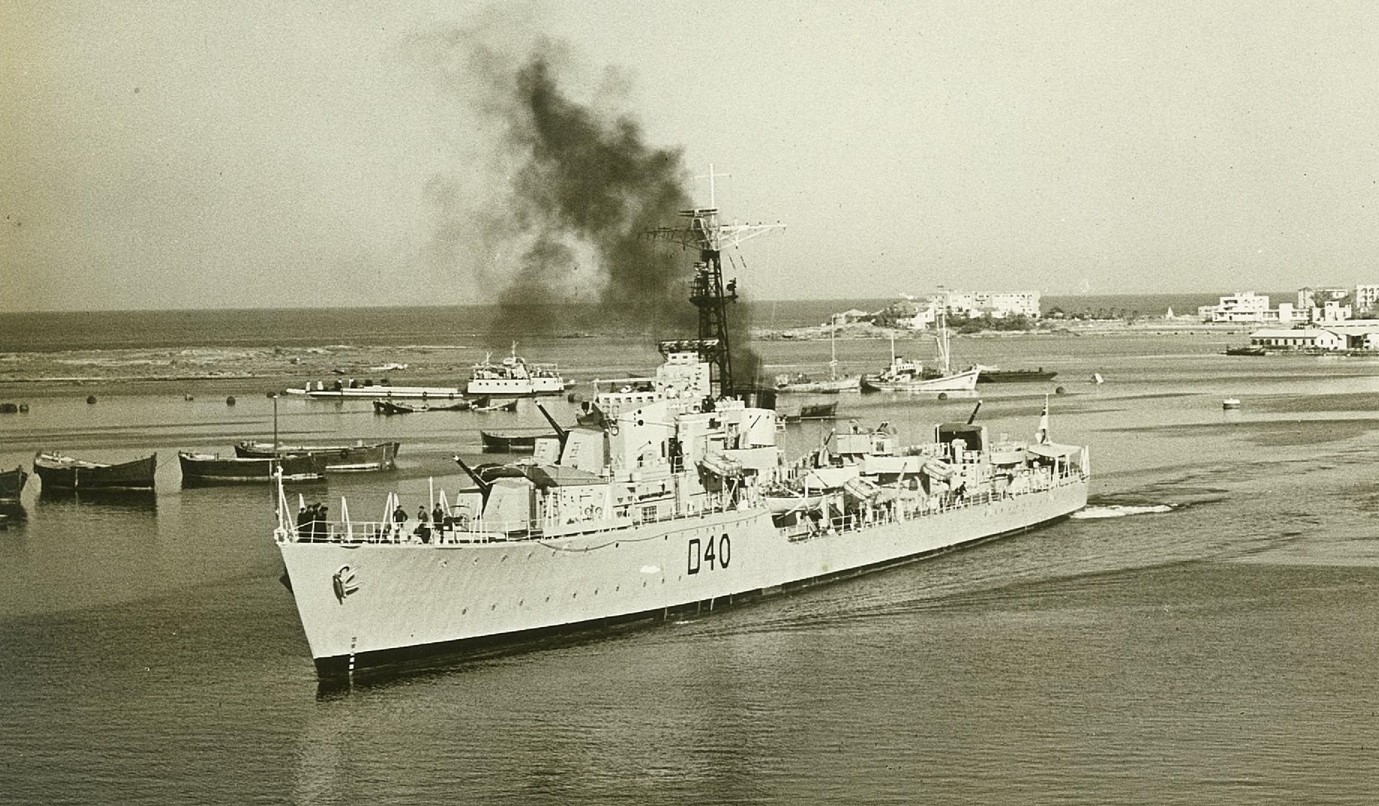
On October 21st, 1967, the Israeli destroyer Eilat was on patrol off Port Said, Egypt. Built by the British in 1944 as HMS Zealous, Eilat had been in Israeli service for a dozen years, and was tasked with a route patrol to protect the northern coast of the Sinai Peninsula, acquired in the Six-Day War four months previously. Things hadn't been entirely calm on the patrol. Three months earlier, Eilat had taken part in an action against a pair of Egyptian torpedo boats that had sortied from Port Said and crossed into Israeli waters. She had been assisted in sinking them by two Israeli torpedo boats, but tonight she was alone.


Eilat

Yitzhak Shoshan, Eilat's captain, was careful to keep his vessel in international waters, but neither he nor anyone else onboard expected trouble as sunset approached. The only thing out of the ordinary was an unusual radar signal picked up by the destroyer's ESM equipment. Although Shoshan had previously been the Israeli Navy's chief electronics officer, neither he nor anyone else aboard recognized it as the tracking radar from an Egyptian missile boat in Port Said harbor. Read more...

December 01, 2021

Review - Ultimate Admiral - Dreadnoughts

Now that I've settled into the new rate, I'm going to start posting some shorter stuff on Wednesdays when I have things written up that don't justify taking the Sunday slot.


I recently figured out how to buy the still early-access Ultimate Admiral - Dreadnoughts, a game that seems to be an attempt to compete with Rule the Waves in the early 20th century warship builder genre, but with better graphics.

Let me start by saying that Lord Nelson likes it much more than Rule The Waves, because it lacks the essential addictive element that means I disappear for days or weeks at a time. The main issue is simply lack of a campaign mode, which is supposed to be coming soon. Instead, your options are either the Naval Academy, a series of missions with specific goals that you have to build ships for, or the custom battle, where you can set up almost any combat you want and have at it. But in both cases, you're building a ship before every battle, and using it for that battle only, which removes the higher strategic element that makes both RTW2 and Aurora so compelling for me. And even in the custom battle, you build only one type of ship, with the AI generating the rest. The game I've played that's most reminiscent of UA-D is Children of a Dead Earth, which is a very hard sci-fi space combat and shipbuilding game. Both are nice enough, but rely on single battles instead of a campaign.

But what if you just want to build ships and don't care much about the larger strategy? Unfortunately, the only place where UA-D's shipbuilder is clearly superior to RTW2s is in graphics, which are quite nice by the standards of this genre. My main criticism here is that it mistakes complexity for depth instead of letting depth emerge naturally. There are a huge number of options covering everything from boiler type to shaft details, but they all feel like the sort of thing you get in a video game, with specific percentages given for the benefits and drawbacks of each option, all of which look suspiciously neat and rounded in percentage terms. (This isn't helped by its tendency to default to the lowest option, which is sometimes "none" in cases where it really shouldn't be, like rangefinders.) The graphics make this worse, as you have to spend a fair bit of time fiddling with where to put your guns and such, and there's a fundamental constraint of it having to look reasonable with the base that they give you. RTW2 (and Aurora) avoid this problem by going light on graphics, and give you a few meaningful options instead of a bunch of mostly meaningless choices. Having all the options would be fine if it felt like they were trying to build Warship Engineering Simulator (a game that Lord Nelson fervently hopes is never done well because I would disappear forever), but I get the strong impression that this is an attempt to attract fans of World of Warships.

The other main pillar of the game is the combat, which is a mixed bag relative to RTW2. It does a better job of letting you know what's going on, and it's more responsive, at least in the relatively small amount I've played. I haven't had the frustration, common in RTW2, of having ships decide to ignore me and go do their own thing, but I also haven't played large battles. It's also much prettier, although how much you care about that depends on personal taste. The big downside is that you're playing from a third-person perspective instead of the map view of RTW2, which makes it harder to be sure where everyone is and make your choices strategically. There's no air component, which is slightly weird in a game that goes through the end of the dreadnought era.

On the whole, I would say that Ultimate Admiral - Dreadnoughts isn't really ready yet. There's definite promise here, but I don't think it's worth $50 today. It might be when they get the campaign finished, depending on how that's handled, although I think that unless there's a major overhaul to the shipbuilder, it's always going to play second fiddle to RTW2 in my eyes.


2022 update: The above was written shortly before the first playable campaign released. Work continued on UAD throughout 2022, with something like the full campaign available by November. I played a bit as both the US and Britain, and came away both dissatisfied and baffled. Dissatisfied because there were a lot of things which didn't work as well as it seemed they should have, and baffled because RTW2, which has been out for 3.5 years, did these things better.

The biggest issue is still the shipbuilder, which has some new issues in Campaign mode. The big one is that it's not really set up to let you iterate on previous designs. If you copy a design, you're stuck with the tech available when you built that one, and while you can sort of get around this by making a refit and then copying that, I'm not sure that doesn't leave vestiges of the previous design. So to be safe, I built every design from scratch. This was a major annoyance because the lack of sensible defaults for the various options means that you have to spend a while resetting things like the balance between HE and AP ammo and the type of armor you're using.

Campaign play continues the theme of this being a subpar RTW2 knockoff with better graphics. The research screen is set up in such a way that I was constantly checking it, but couldn't advance turns from it like I wanted to in peacetime. Similar problems came up when I wanted to do things like refit ships, which would involve going through three screens when I should have been able to do it from one. The movement model is much more granular than RTW2s, which does sort of solve one of my issues with that game, but it compensates by being unreasonably difficult to actually get your ships to encounter the enemy on the open sea, and far more time-consuming to use because of its granularity. When you do fight, battles far too often degenerate into lots of waiting while your ships charge around after enemy smoke, particularly as it tends to disable 30x time compression (which is far too low a maximum for a battle with a 5-hour time limit anyway) for no apparent reason even if the enemy is nowhere to be found.

On the whole, I stand by my original verdict. This isn't a terrible game, but RTW2 is better on every metric except for graphics, and I would recommend buying that instead.

November 28, 2021

The 6th Battle Squadron Part 2

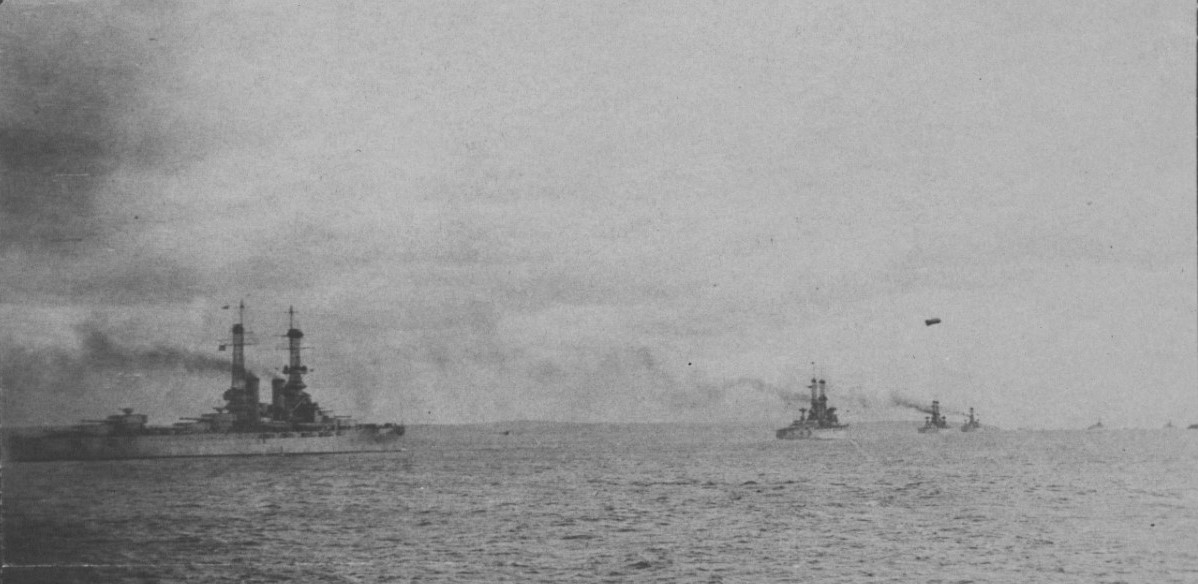
When the US joined the Allies in 1917, the Admiralty requested the USN's aid in its campaign against Germany. While destroyers and submarines were urgently needed to fight the U-boats trying to strangle Britain, they also asked for a division of battleships to bolster the Grand Fleet in its campaign to bottle up the German High Seas Fleet. After much dithering, the Americans finally dispatched New York, Wyoming, Delaware and Florida in December under Rear Admiral Hugh Rodman, and they were designated the 6th Battle Squadron of the Grand Fleet. While they quickly adopted British signals and tactics, they were far short of British gunnery standards, and it would take months to resolve the situation. In the meantime, they were put to work, including being dispatched as escorts to the convoys running from Scotland to Norway, which received battleship escorts because of the threat of German surface raiders.


The 6th Battle Squadron sorties from Scapa

The threats to the Scandinavian convoy were apparently realized in mid-February, when British intelligence indicated that the Germans were at sea to intercept, and Beatty quickly led the Grand Fleet out into the teeth of a roaring gale. Delaware suffered significant damage from the heavy seas, with water passing through a voice tube shorting out her dynamos for half an hour before the crew managed to fix them. New York lost a man overboard, and Rodman reluctantly ordered no search be made due to the threat of the Germans. Unfortunately, the High Seas Fleet was riding out the storm in harbor, so the entire exercise was ultimately pointless. Early March saw the American ships covering another Scandinavian convoy, with the highlight being dense fog off the coast of Norway which led to signalling confusion and the squadron becoming separated for several hours. Read more...

November 26, 2021

Open Thread 92

It is time, as usual, for our open thread. Regular rules (no culture war) apply.

I'm planning to do another virtual meetup next weekend, on Saturday December 4th. Time will be as usual, at 1 PM Central (GMT-6).

2017 overhauls are The Battleships of Pearl Harbor parts two and three, Lissa, Iowa parts five and six, Mine Warfare Part 1 and Russian Battleships Part 1. 2018 overhauls are Falklands Part 8, Commercial Aviation Part 1, Internment, Iowa's crew art and SYWTBABB - Design Part 2. 2019 overhauls are Glide Bombs, Billy Michell Part 1, The Navy and the Space Program and Falklands Part 19. 2020 overhauls are The Seaplane Striking Force, Naval Bases from Space - San Diego, The Reagan Maritime Strategy and Icebreakers.

November 21, 2021

The 6th Battle Squadron Part 1

When the US entered WWI in April 1917, its navy was not ready. Little planning had been done for what it would do in the event that America joined the hostilities, and a rigid version of Mahan's doctrines, with particular emphasis on concentration of the battle fleet and offensive action, continued to dominate American strategic thinking despite the events of the previous three years. This resulted in considerable tension between the Navy Department and the Admiralty. The Americans castigated the British for their timidity and pushed for an offensive against the German submarine bases, President Wilson himself accusing them of "hunting hornets all over the farm and leaving the nest alone".


William Sims

The British had long ago figured out that this sort of offensive would be ruinously expensive, and instead requested destroyers to help in the fight against the U-boats that threatened to starve their population. The Americans agreed to send only a few ships, fearing that more would denude their battle fleet, violating Mahan's dictates on concentration. The American attitude was at least in part due to concerns about the stability of the alliance with Britain, as well as lingering Anglophobia on the part of many senior leaders. The only real exception was William Sims, a committed Anglophile and personal friend of John Jellicoe who was made commander of US naval forces in Europe and quickly came under suspicion as a mouthpiece for the Admiralty.4 Throughout the first months of American involvement, there was a constant battle between the two sides over the relative importance of the battle fleet and anti-submarine forces, with American planners regularly focusing on long-term issues above winning the immediate war. For instance, the battleships ordered in 1916 were prioritized over ASW escorts for fear of having to face a two-front war with Germany and Japan at some point down the line.5 Read more...