
Since I posted Part 1 of this series, I discovered that there was a very recent book on the subject that I had overlooked, and which shed significant light on a number of things which had been confusing with my previous sources. As a result, I rewrote Part 1 with a significant amount of new information, and moved some of its material into Part 2, with revisions. I would recommend reading both parts today to catch up.
Operating aircraft from submarines seems like a crazy idea. Planes are big, and often difficult to get into the air, while submarines are cramped and often prefer to minimize contact with the air. But that hasn't stopped a number of dreamers from trying to make the union work, usually without much success. Germany pioneered the idea, but never actually fitted a submarine to carry airplanes under the sea. The Americans, heavily inspired by what they thought Germany had done, took things farther, but abandoned the idea after tests showed the difficulty of building a suitable plane and operating it successfully.
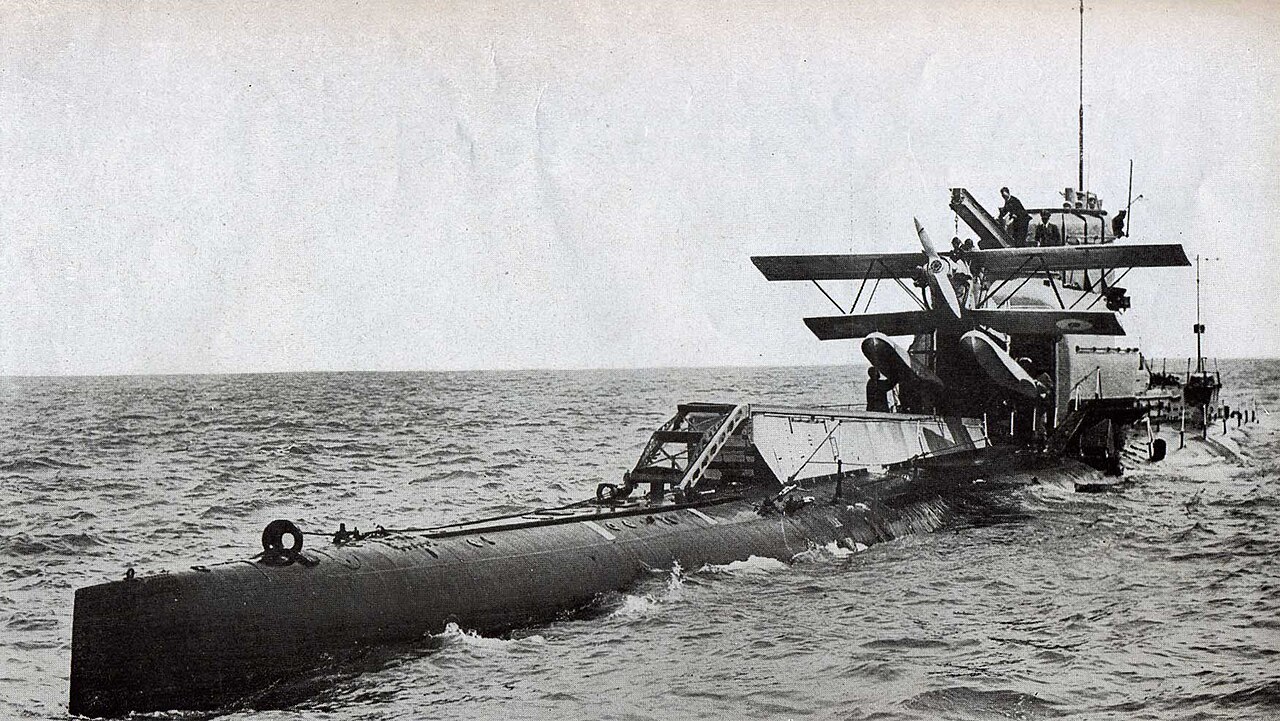
M2 hoists its floatplane aboard
Instead, it would be the British who were the first to make a serious attempt at implementing the idea, removing the 12" gun from the monitor submarine M21 and replacing it with a hangar for a small floatplane. But, in an important step forward for submarine aviation, M2 was fitted with a catapult2 and a crane, removing the need to ballast down to launch and retrieve the plane.
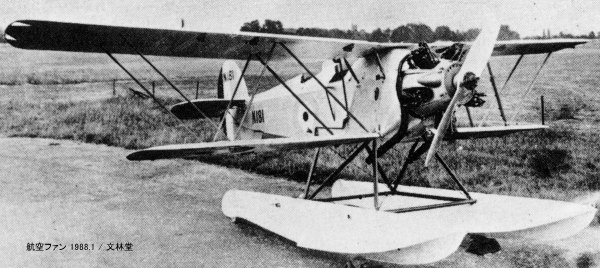
A Parnall Peto
This was coupled with a serious attempt to reduce cycle time in other ways. As the submarine surfaced, the five-man hangar crew would be at their stations, and oil heaters would ensure that the Parnall Peto was ready for immediate launch, instead of needing to wait for the engine to warm up. Once surfaced, even if the ballast tanks weren't completely empty yet, the hangar door would be lowered, and the plane's trolley wheeled across the tracks built into it and connected to the catapult while the wings were unfolded and locked into place. The observer had a crank to rotate the engine, and once it was running smoothly, the Peto would be catapulted off. But despite this effort, it still took 12 minutes from surfacing to catapult the plane off and 11 minutes to recover and submerge, numbers not that much better than S-1 had managed. The catapult itself was also fairly low to the water, limiting its utility in heavy seas, and the Peto needed calm water to land on. To make matters worse, the catapult was short and the Peto pretty flimsy, limiting acceleration and requiring some natural wind to take off successfully.
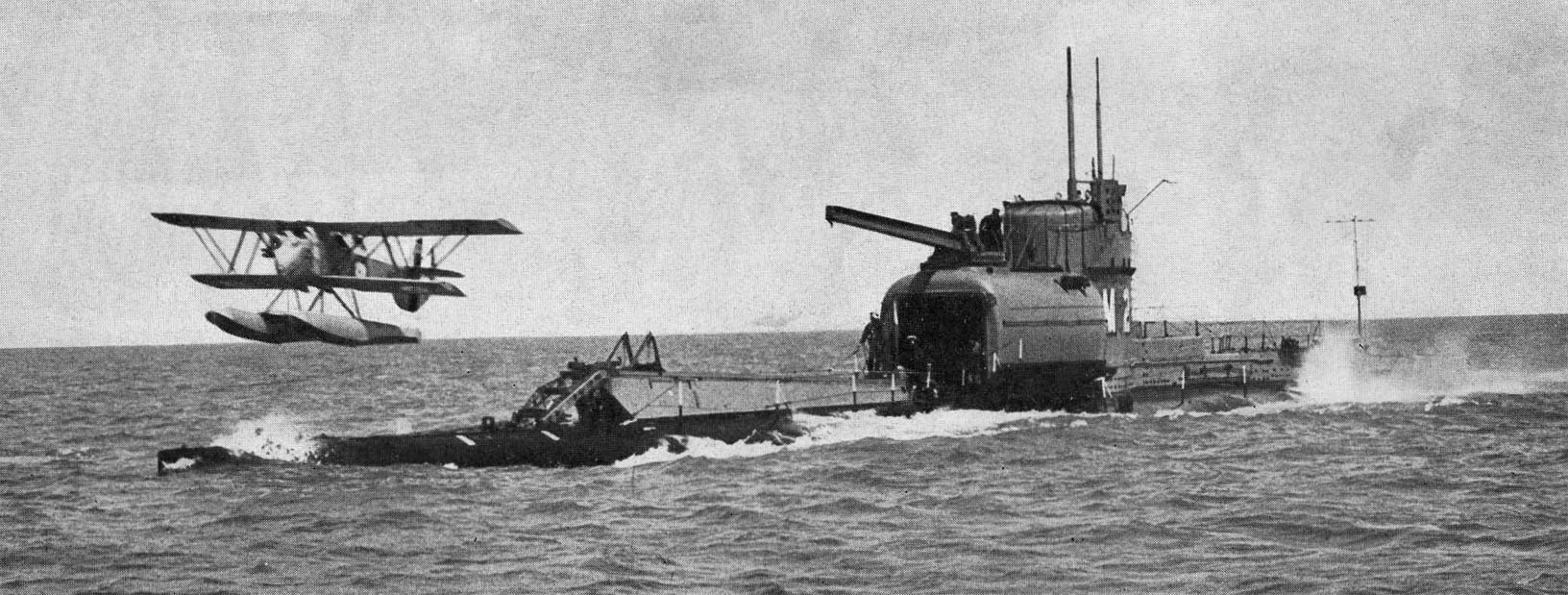
M2 catapults off a Peto
M2’s conversion was completed in late 1928, and she began to run trials, operating with the fleet on several occasions with reasonable success. But there wasn't enough success to guarantee further adoption, and the plan seemed to be to continue low-priority development of submarine aircraft, without actually equipping any submarines to carry them. In any case, M2 was scheduled for retirement in March 1932, but before that could happen, tragedy struck. On January 26th, 1932, M2 foundered with all hands. Salvage efforts revealed that the hangar was open, and a leading theory was that the practice of opening the hangar door before the ballast tanks were fully empty, with the submarine held on the surface by the diving planes, may have backfired. However, this was a known risk, and orders were to close the door from the hangar into the rest of the submarine to prevent it. That inner door was open, and a passing merchant ship saw M2 sink by the stern, which suggests that the hangar was not the main problem. Instead, the more likely case is that the aft ballast tank valves were left open, allowing that tank to refill after the submarine surfaced. Ironically, the hatch from the hangar into the submarine was probably opened to pass the order to close the valves, but it was already too late, and the flooding through it doomed the submarine. Several salvage attempts were made, recovering the wreck of the Peto and several bodies, but the hull itself was eventually abandoned, and remains a reasonably popular dive site today.
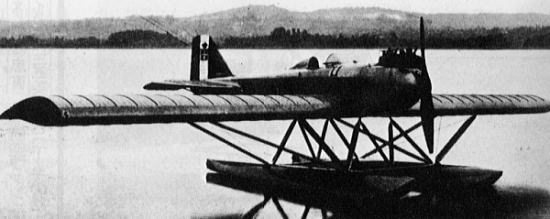
Macchi M.53
Britain was far from the only European nation to be experimenting with submarine-launched aircraft in this era. The Italians conducted some tests using a sport seaplane and a non-waterproof "hangar", and despite a recovery method that involved putting divers in the water, they liked the results enough to fit the new cruiser submarine Ettore Fieramosca with a hangar. They'd need planes, and two prototypes were built, the Piaggio P.8 and the Macchi M.53. Both seemed to perform reasonably well, and the Piaggio was selected for production before the entire thing was abruptly cancelled due to insufficient stability on the part of the Fieramosca, and the hangar was removed after the submarine was launched.
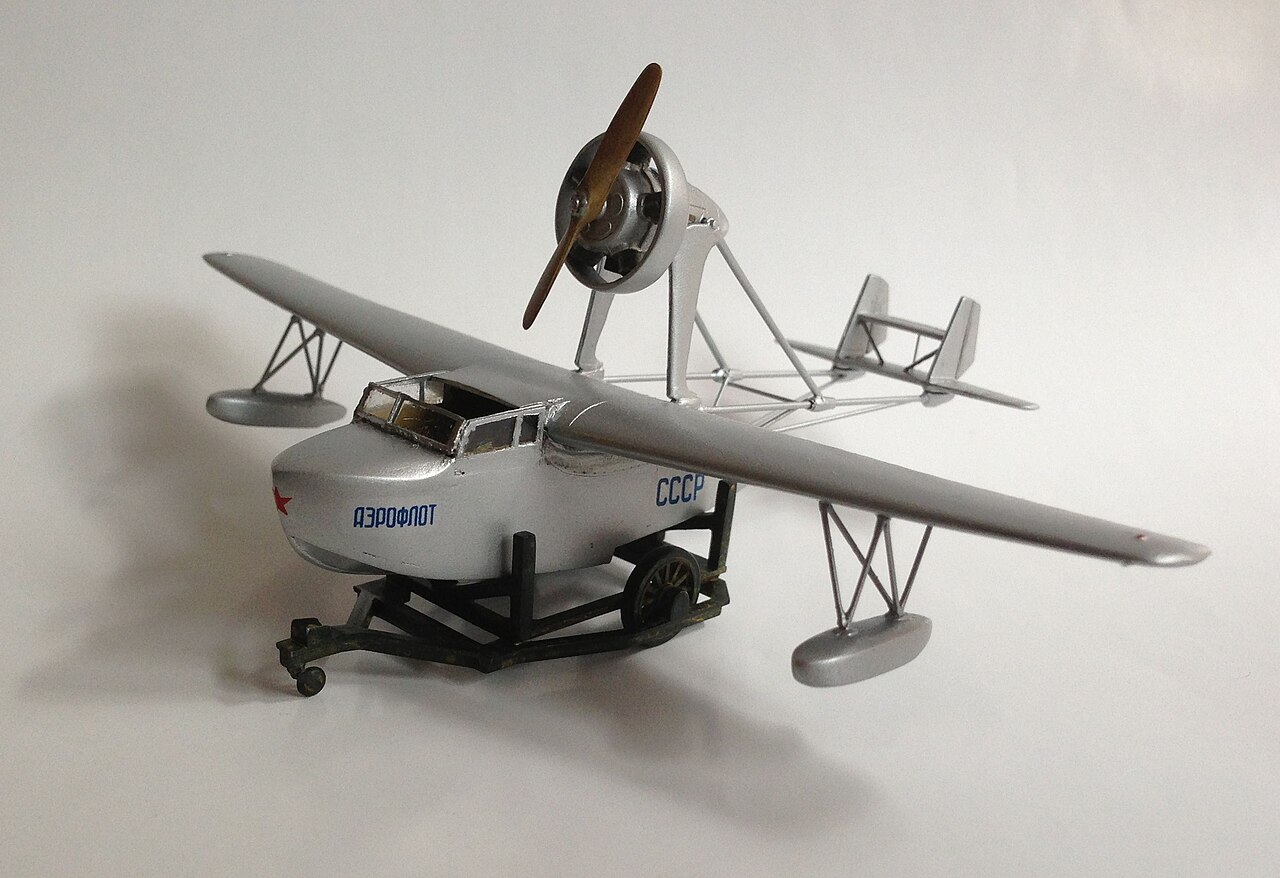
The Soviet SPL flying boat
The Soviets had similar ideas, developing a small flying boat and planning to fit hangars to a new class of big submarine they were building before cancelling the plan due to concerns about underwater performance. The Polish and Dutch navies also looked into the idea, although work there never went was far as building suitable aircraft. Particularly in the case of Poland, this is unsurprising, given how silly it would be for a navy that expected to fight in the Baltic to not just rely on land-based planes.
But what drove all of these concepts, and why did they die off so suddenly? Much of it appears to have been driven simply by the need to keep up with the hot new thing. The Germans were thought to have made it work during the war, so the US piled in, and then everyone else assumed that the USN wasn't wasting its time, and so followed. In practice, it wasn't possible to fit a useful aircraft into a hangar that didn't impact the performance of the submarine too much, and it wasn't quite clear what most powers were planning to do with them anyway.3 When the US and Britain cancelled their programs, the bubble popped. Only two powers persisted after the mid-30s, and we'll look at the first of them, France, next time.
1 The M class were very weird boats. The original proposal was for shore bombardment, but this was swiftly shelved on the grounds that it wasn't clear what would be worth bombarding in this manner. Instead, the idea was that the gun would be far better at hitting moving targets such as warships, which were effectively impossible to torpedo beyond 1,000 yards or so at the time. The submarine would aim with a special periscope, surface enough to expose the muzzle of the gun, open a special flap that kept the gun dry while the submarine was underwater, fire, then dive again, hopefully before any escorts could intervene. The 12" shell, fired from a gun previously used aboard the Formidable class pre-dreadnoughts, should be enough to devastate anything short of a battleship, and the submarine would withdraw to reload and find a new target. The gun had to be reloaded on the surface and it was difficult to bring the exposure for a shot under a minute, so only three were completed. ⇑
2 Weirdly, it appears that the catapult could be driven either by powder or by compressed air. ⇑
3 The only hint of a plan I've seen came from the US, which at one point specified a 200-mile range to reach Japanese bases on the Inland Sea from the nearest submarine position, and a radio to relay observations before the plane was shot down by defending fighters. One of the major concerns that helped kill it off was the fear that airplanes would follow the floatplane back and attack the submarine that way. ⇑
Recent Comments