
There have been a few news stories lately about General Motors producing missile casings for the PAC-3, and delivering the parts within 22 days of the contract being signed. And, obviously, there has been commentary overinterpreting this as being a sign that players outside the traditional defense industry are better and that the glorious dawn of fast weapons manufacturing is just around the corner, if we embrace new, agile companies like... General Motors.
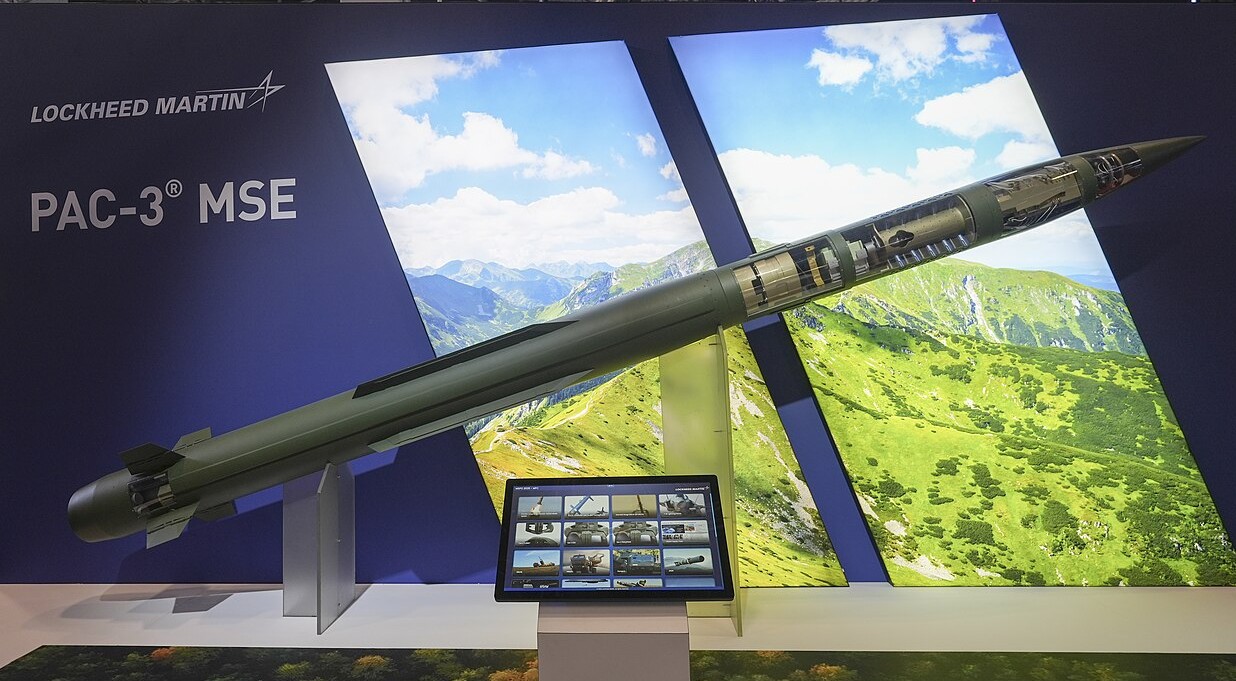
A PAC-3 missile with a defective casing
Obviously, I think all of this is nonsense. First, let's be clear what we're talking about. These are missile casings, basically mildly specialized pieces of metal. Shaping metal is not a particularly new technology, and I find it hard to believe that casings are the main limiting factor in expanding PAC-3 production. Seekers, warheads and motors are all much more specialized and much harder to expand. The most likely reason behind all of this is that there was some hiccup on the part of whoever normally makes the casings, and Lockheed turned to GM to bail them out. I spoke to an industrial engineer who has experience in missile production, and she said that 3 weeks would be a reasonable turnaround time for this kind of thing in the civilian world if the customer supplied the tooling. GM probably did some extra work to avoid the delays you frequently get on defense projects, but it's either a short-term stopgap or the whole thing was a publicity stunt, and Lockheed is now holding onto a bunch of casings that they won't use until mid-February.
But it's also worth noting that this isn't GM's only foray into defense production. They famously built a lot of stuff in WWII, everything from trucks to airplanes to weapons. After the war, they stayed in the industry. Besides building various vehicles, they owned Allison, a major jet engine manufacturer, as well as being heavily involved in military electronics, most notably inertial navigation systems, through its AC Spark Plugs/Delco division. In the mid-80s, they bought Hughes Aircraft, becoming a major player in the satellite and missile spaces. But as GM got into deeper and deeper financial trouble during the 90s and 00s, these were all sold off, with Allison going to Rolls-Royce, the satellite divisions to Boeing and most of the rest of the business to Raytheon. The last bit to be sold was the ground vehicle group, which became part of General Dynamics Land Systems shortly after it won the contract for the Stryker.
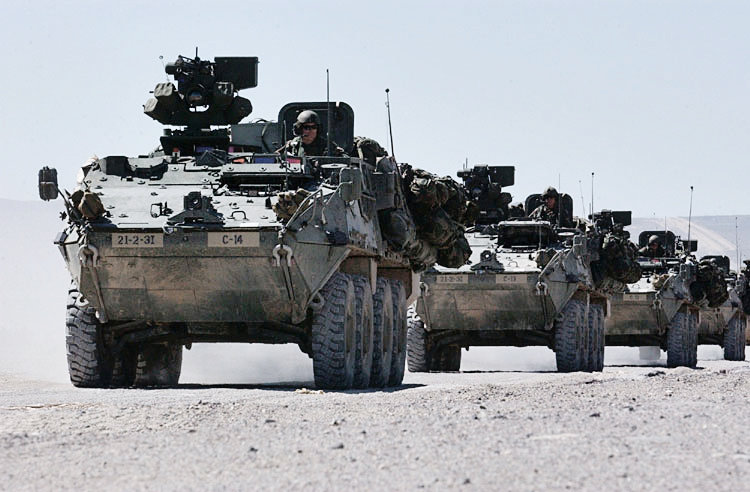
An early Stryker exercise
I bring this all up mostly as a way to remind people that the history of the defense industry is complicated, and that a lot of the reports of consolidation are overblown. Many of you have probably seen the chart from the "18 theses" advertisement for Palantir, which shows 51 primes falling to 5. At least three different groups mentioned in the previous paragraph are listed separately among the 51, and the people who made said chart played similar games elsewhere. Most notably, at least three different divisions of General Dynamics are shown as separate "primes", rolling up to Lockheed and Raytheon, even though GD is one of the 5 current primes. And Avondale Industries, Litton Industries and Newport News Shipbuilding are all shown rolling up into Northrop Grumman, even though the vast bulk of those businesses was spun off as Huntington Ingalls in 2011. Yes, I'm sure they can point to some bits of those companies that Northrop kept, but HII is the 7th largest defense contractor, behind the big 5 and L3Harris.
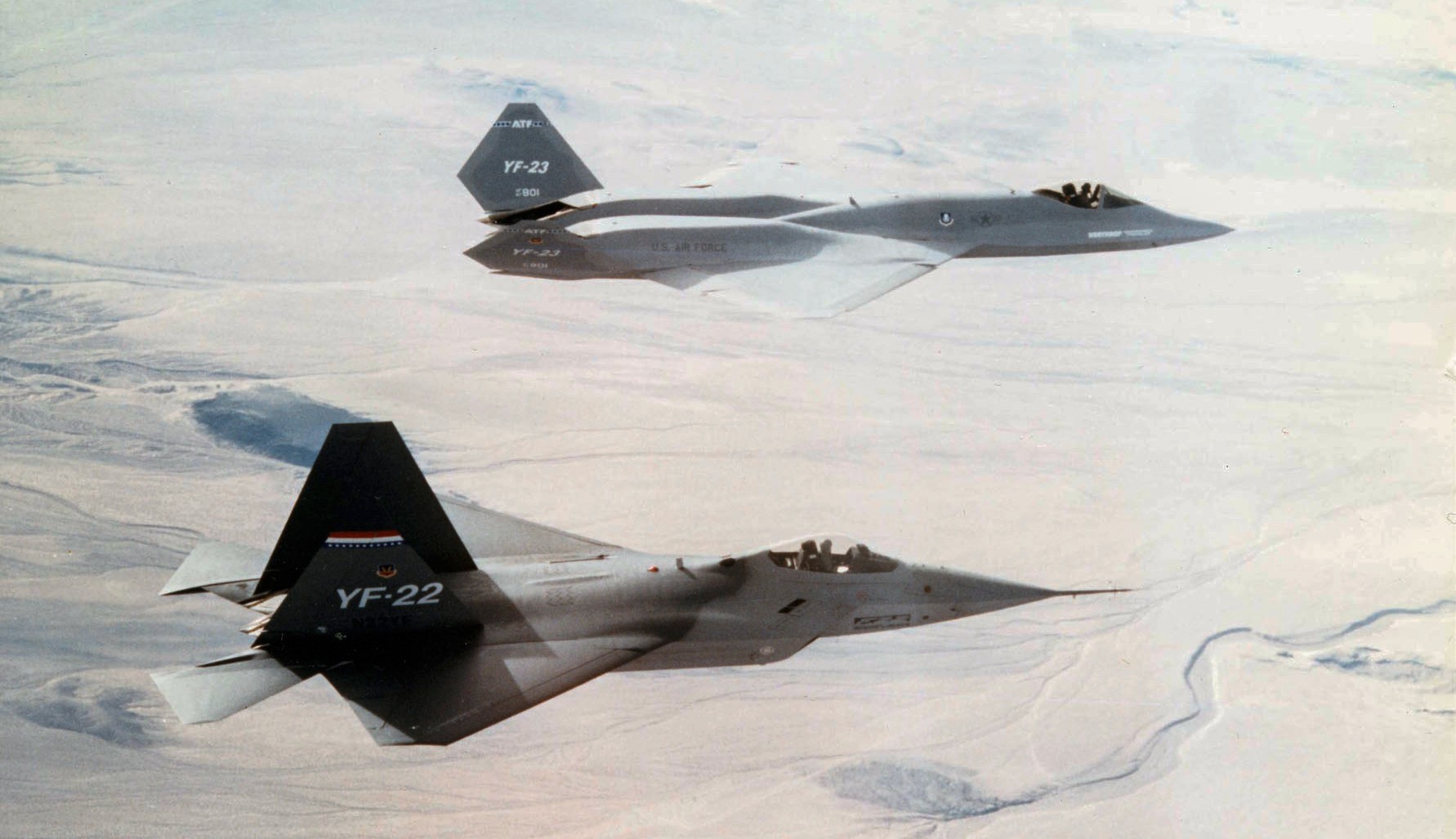
ATF prototypes
But even if we ignore the many flaws in the chart, the basic thesis behind it is deeply flawed. 1980 wasn't some golden age when "51 primes" rushed in to bid on every possible defense contract. The defense industry is big and specialized, and many of the "primes" in question only did one or two things. Boeing didn't build tanks, Chrysler didn't build airplanes and "Jappesen Sanderson" didn't exist.1 A lot of the movement on the chart is reflective of the stock market's growing distaste for general-purpose conglomerates, which has applied far outside the defense industry. This isn't to say that there hasn't been actual consolidation in terms of "how many companies could plausibly bid on this contract", because there absolutely has been, but it's closer to 50% than 90%. For instance, in 1986 the Advanced Tactical Fighter program that ultimately became the F-22 attracted bids from Boeing, General Dynamics, Grumman, Lockheed, Northrop, McDonnell Douglas, and North American Rockwell, whereas the only competitors for a similar program today would be Boeing, Northrop Grumman and Lockheed Martin. But this mirrors a general drop in budgets. Keeping design and production capability around is expensive, and if we wanted more people able to do it, we would need to pay for it somehow.
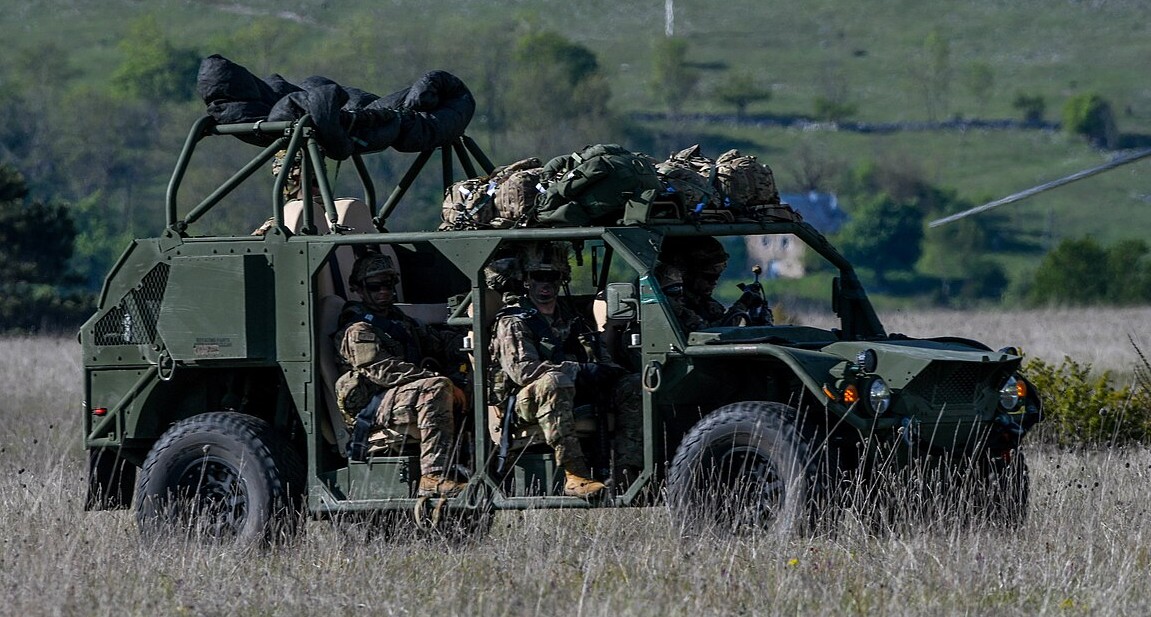
An M1297 Army Ground Mobility Vehicle
But another part of the "defense reform" thesis is that outside companies are somehow more efficient, because they're subject to market discipline rather than being able to grow fat and lazy servicing the undemanding DoD.2 But GM itself gives us one of the better tests of this. They returned to the defense business 10 years ago, focusing on military applications of their existing automotive technologies. And while they've done some development work, their main focus has been on competing in the Army's ongoing efforts to provide a light, airmobile vehicle for its normal "leg" infantry. The first competition was held in 2014, and while GM entered a vehicle based on their Chevrolet Colorado ZR2 off-road truck, they found themselves up against a field largely of more bespoke off-road vehicles, including the purpose-built General Dynamics Flyer 72, Polaris DAGOR and Boeing Phantom Badger. The Flyer won the initial round, becoming the M1297 Army Ground Mobility Vehicle, but a second round saw GM triumph with the M1301 Infantry Squad Vehicle.
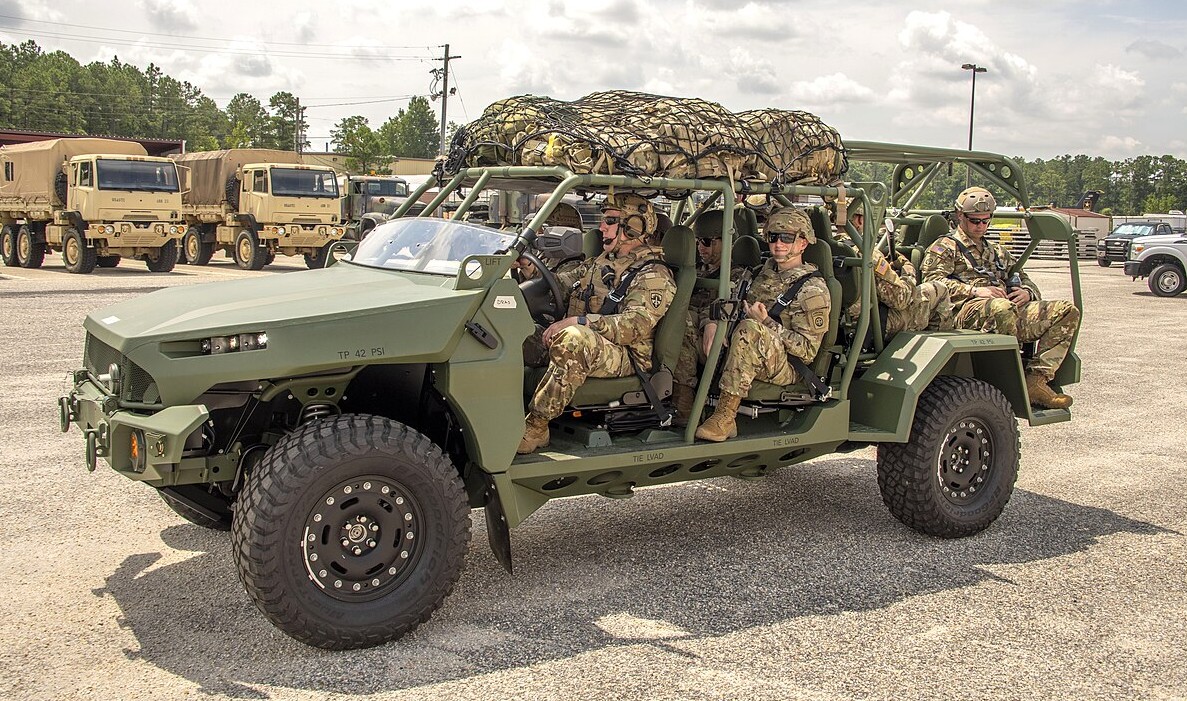
M1301 Infantry Squad Vehicle
I don't want to get into the debates about the soundness of the idea behind the M1301,3 and instead look at the finances, at least as far as that makes sense given the usual wackiness of military pricing. For a start, a civilian Colorado ZR2 looks to be running $50-55k, while the cost of one M1301 per the FY 2027 justification book is about $190k. I honestly don't find this all that surprising. GM may claim 90% off-the-shelf parts, but I think some of those aren't on the base ZR2, and the military is a terrible and annoying customer, so 3x the price isn't that weird.4 Perhaps a better comparison is how the cost of GM's approach compares to other vehicles. One place to look is at Army budget projections before and after the contract went to GM in 2020. The FY21 book, submitted Feb 2020, shows a predicted FY21 cost of $190k per ISV, while the FY22 book, submitted in May 2021, shows only $150k per vehicle in FY 21. So it does look like this produced some real savings relative to what the other options probably would have cost, although it's on the order of 20-25%, and we don't know what other tradeoffs the lower-cost vehicle may have required. But it's also worth noting that the same FY22 book shows the per-unit cost for the new-production M1152A1 HMMWV, a significantly larger vehicle without a civilian production line to draw from, at $144k per unit.
The lesson that should be drawn from all of this is that there is no silver bullet for the problems plaguing American defense procurement. Outsiders may have advantages over the incumbents, but these tend to be small and swamped by the mess built into the structure of the system. If all you look at is the headline figures, you'll be deeply confused about the problems, which in turn leads to ineffective solutions.
1 Jeppesen Sanderson, which did exist, made navigation and flight planning products. It's now part of Boeing, consolidated with the mythical division of Boeing that previously made navigation products. ⇑
2 People who claim this never seem to talk about Boeing, which alone among the major primes makes about 50% of its money in non-defense businesses. By all rights, it should be head and shoulders above everyone else, which I don't think is the general consensus. ⇑
3 The Pentagon's evaluators viewed it as "not survivable", which is probably true. On the other hand, it's also a lot faster than walking, and easier to airlift than other vehicles. ⇑
4 If you go fishing for per-unit numbers, you'll find ones that are a lot higher, because people are just dividing the annual topline by the total procurement number, which is going to roll in a lot of sustainment that isn't included in actual procurement. Because of how variable that work is, it's easy to get numbers that are all over the place. ⇑
Comments
I wonder if the Japanese war industry works any better or worse.