
Prussian military theorist Carl von Clauzwitz famously said "War is the continuation of policy by other means." In this, he was pointing out the link between conventional diplomacy and warfare, both of which are intended to achieve the state's objectives. What he didn't say is that foreign policy, and even war, is often an extension of domestic politics by other means, too. Stirring up anger against foreigners is a great way to distract from issues at home, and if popular support really is wavering, a "short, victorious war" may even be necessary. Of course, then you're in a war and the enemy gets a vote on when it stops, which rarely turns out well for the people who initiate it.
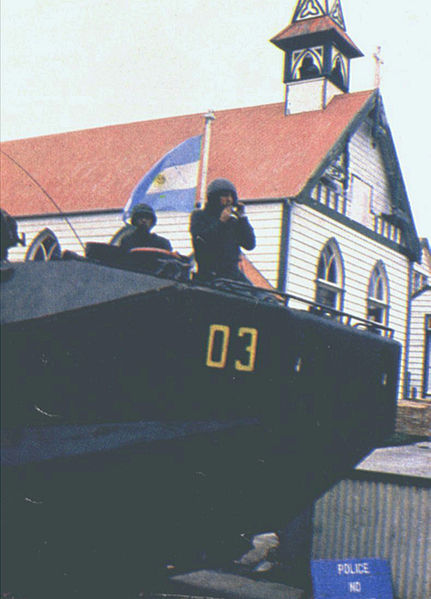
Probably the purest example of this is the Falklands War, driven almost entirely by the need for a repressive military junta to distract the population from an increasingly bad economic situation. It did not end well for them. This is an unusually clear example of domestic policy/politics driving a war, given the lack of any concrete economic or military benefit from possessing the Falklands, but we have seen the same thing happen repeatedly over the last few centuries.
To be clear, this is not a maximalist claim that all participation in war is driven by domestic politics.1 Even leaving aside defensive wars, there are certainly plenty of cases where war is driven by the classical realist motives of maximizing state power or preventing some other state from doing so. But, particularly in the last 100 years or so, war has gotten more destructive and basically undermined any economic justification for conquest, leaving domestic issues as the main driver.
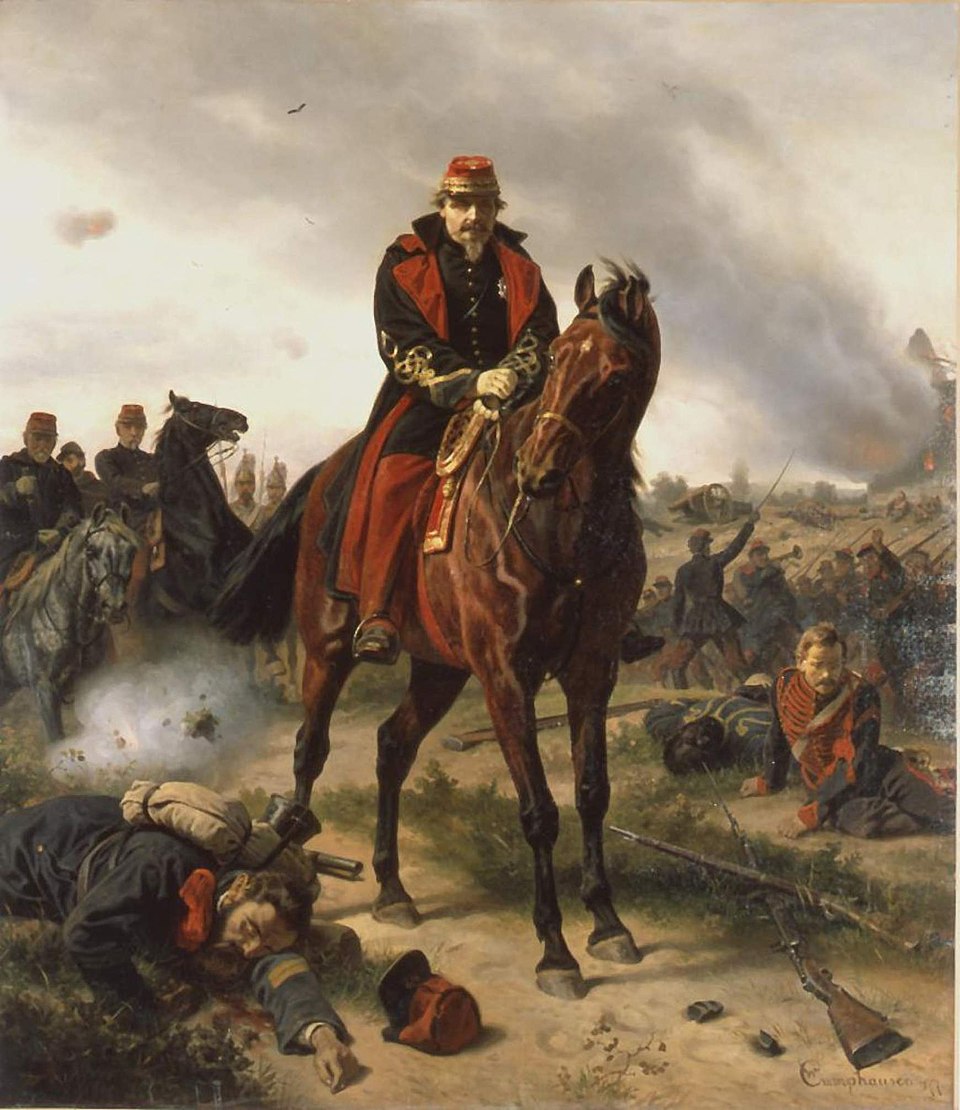
One early example is the French invasion of Algiers in 1830, driven largely by Charles X's attempts to distract from his growing unpopularity among the French populace. Unusually, the military side actually worked, with France conquering Algeria fairly quickly, but it wasn't enough to save Charles X, who was deposed shortly after the campaign ended. Four decades later, the ruler of France, Napoleon III, was again unpopular and considering taking military action to solve the problem, this time against Prussia, which was in the process of consolidating the various German states. While this was an entirely standard geopolitical objective, the actual declaration of war was sparked by the Ems dispatch, a message sent by Bismarck in a successful attempt to incite the French people to demand action against Prussia. In the ensuing war, Napoleon III personally led the French Army to defeat at Sedan, and was deposed by the French even before the war ended.
The record of such wars didn't improve much in the 20th century. Although the Russo-Japanese War is the source of the quote "what this country needs is a short, victorious war to stem the tide of revolution" by the Russian minister of the interior, it was the Japanese who started shooting, and there's not a lot of evidence that Russia even wanted a war, much less for the purpose of suppressing discontent. Of course, Russia's defeat supercharged unrest, and forced the Tsar to give up absolute power. Nor did the war end peacefully in Japan, where riots broke out against the terms of the peace treaty, negotiated while Japan was effectively bankrupt, and the government fell due to the loss of popular support.
A decade later, other people tried the strategy more explicitly. The Austro-Hungarian leadership acted aggressively against Serbia in large part because of concerns about the stability of the multi-ethnic empire in the face of rising nationalism, although this was at least as much an attempt to push back Serbian influence in the Empire's Slavic territories as it was a purely domestic matter. The motives for Germany's actions during the crisis are still disputed, but one major school, drawing on the work of historian Fritz Fischer, argues that the German leadership deliberately provoked the war in hopes of using aggression abroad to pacify the population behind the existing government. In particular, the Social Democrats had become the largest party in the Reichstag in the 1912 elections, and while they had been kept out of the government, there were fears that might not be possible if trends continued.
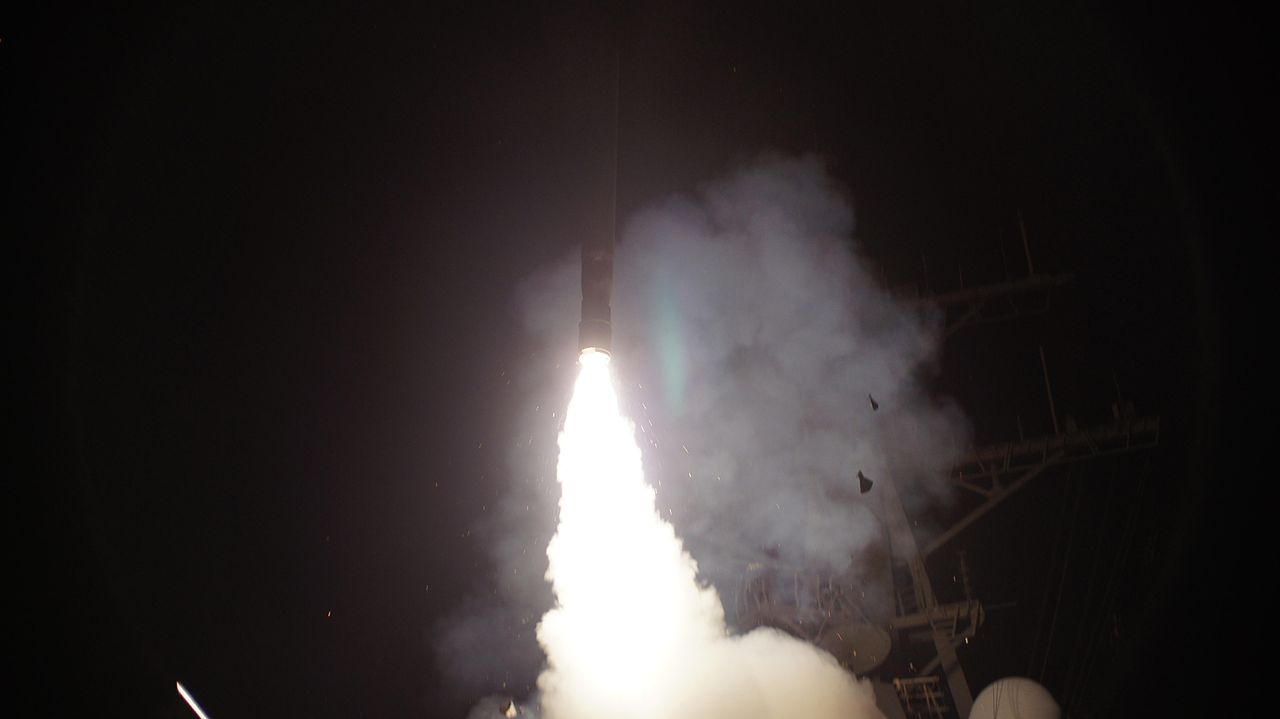
Obviously, this didn't work out great for either of those governments, and the lesson that this is a bad way to make serious foreign policy seems to have mostly been learned through the 20th century, with the Falklands being the outstanding exception. The biggest example since then is probably the western intervention in Libya, which was driven less by carefully-crafted policy and more by a desire on the part of western leaders to appear like the good guys in front of their voters. In practice, it mostly destabilized Libya, and, more importantly, convinced every dictator out there that Western promises of normalizing relations in return for giving up WMD programs would last only as long as it was convenient. While this hasn't caused direct problems for the west yet, the long-term effects on proliferation are obvious, and not ones we should welcome.
All of which brings us to the recent confrontation between the United States and Venezuela, which is hard to read any other way than the use of foreign policy to achieve domestic political ends. Venezuela was not a military threat of any sort, and all of the increase in tension between the two countries in the last year has been driven by Washington, not Caracas. The most obvious comparison is to Manuel Noriega and the 1989 invasion of Panama, but Venezuela has neither killed any American troops directly nor declared war on the United States. Obviously, the initial stages of the military intervention went shockingly well, but what will happen next remains to be seen. The record of history suggests it will probably not happen the way the Administration hopes.
For new readers, this is not normally very much of a current events blog, and I hope that normal service (by which I mean being geeky about weird corners of naval history) will resume shortly.
1 One could make such a maximalist claim, but at some point things get silly. "The US went to war with Japan after Pearl Harbor because domestic politics demanded it" isn't wrong, but it also isn't the most straightforward way to explain what was going on. I'm talking about going to war to achieve domestic political ends, where the war is incidental. ⇑
Comments
Current events may not be your raison d'etre in this blog, but you're good at it, as in this post and the last one, about the golden battleships we've been promised.
I do feel that the abduction (or arrest?) of Nicolás Maduro feels like history repeating itself. We launched a month-long war against Panama to abduct (or arrest?) Manuel Noriega. In 1989, did we lack the ability to carry out yesterday's raid? Is this ability something the military has developed following our failure to rescue our embassy personnel held in Iran?
"Shortly" meaning that at least one more current events topic, namely the 2025 William D. Brown Memorial Award, is still upcoming, right?
I don’t see how this wasn’t immediately obvious at the time to anyone who thought about it for thirty seconds. Like, compare how the skims have been treated vs Saddam or Gaddafi (or Iran?) and the obvious incentive is to either become friends with the west or develop a credible WMD threat.
That should be Kims, not skims.
revRover:
North Korea had the ability to kill enough South Koreans to deter regime change before they got the bomb.
To what extent can WWII in Europe be considered an instance of this? I've seen claims that the Nazi economic system basically relied on keeping Germany on the equivalent of a war footing and would have collapsed in the 1940s regardless.
Venezuela may become a worthwhile study for modern naval combat. The sensible thing for the US Navy, at least in the opinion of this Australian, would be to declare "mission accomplished" and go home immediately. The Trump admininstration does not inspire confidence that they'll do the sensible thing.
If the US really is going to "run Venezuela", or at least make big investments in the oil infrastructure, the USN is going to have to hang around the coast for some time to come. A wonderful live fire testing opportunity if Russia, China, Iran feel like supplying Venezuela with new weapons. Not so wonderful for the USN perhaps.
@Steve
I haven't read much about Just Cause in a long time, and I suspect that we've gotten a lot better at the sort of intel work required as a side effect of GWOT and such. But this sort of thing isn't my specialty.
@Basil
Yes, but that's something I choose to do, not something forced on me by the Administration.
@redRover
Yeah, it baffles me too. We could have just not done anything.
@hnau
I briefly thought about including that, but it would have first required making the case from Wages of Destruction, which would have taken a fair bit of time, and been not quite central to the case I was making here.
I deeply disagree with the concept that the country that gives up its nuclear program should get some extra security assurances. Because then you got a precedent that if you try to make nuclear weapons, you always end as a winner, either you get a bomb, or security assurances. The point that the powers always made is that either you stop the nuclear program, or we will economically or militarily destroy you. North Korea has nuclear weapons, but 90% of dictators do not want to end like Kim Jong-un.
Also, intervention in Lybia maybe can sound illogical to the US observer, but it was very different in Europe. Arabian Spring (after the initial hesitation) was seen as a once in a lifetime oportunity to make the Mediterranean a European lake with friendly democracies with similar values. So the plan was to make a precedent that you can not solve these riots with force, which worked (for a short period of time). Tunisia and Egypt became democracies. Morocco and Jordan had massive democratic constitutional reforms. Fun fact is that the Algerian regime, the one the French wanted the most to end, was the only one that survived by just brutally bribing the people with oil wealth.
The US was here just because the UK and France found out they would run out of precision ammo, and they would had to start using dumb bombs, increasing the civilian casualties. So do not be harsh on yourself, our American cousins; this was our completely stupid idea.
hnau:
Even regime insiders were apparently worried about that so it does seem very likely.
Hugh Fisher:
The deep state combined with Trump's short attention span means that will probably be what happens.
Hugh Fisher:
I doubt Russia can spare much right now.
StupidBro:
The official concept is that giving up a bomb program means you can buy power plants much better than anything you can make yourself and that has worked.
But in terms of how things actually work it is usually by muddling through and short-term thinking, we (or the next administration) will deal with the consequences later.
I'm very sure that more than 90% of dictators would prefer to be Kim Jong-Un if the alternative is to be Muammar Gaddafi. More broadly, I'm not arguing for security guarantees beyond "in return for giving up your nukes, we promise not to get involved in a civil war/revolt, should one happen". He was well on his way to winning before the Europeans started interfering. You will note that I did not single out the US as the one making the mistake there, because it mostly wasn't our mistake.
@Hugh
We're getting most of that data in the Red Sea right now, and I'd really prefer we didn't start seeing it off Venezuela, because that sort of chaos is good for nobody. But the jury is still very much out on what is going to happen there.
I am also not sure that 90% of dictators don’t want to be the Kims (in the sense of absolute leaders with a cult of personality that gives them unquestioned power over the country), so much as they don’t have the same ability to create that level of unilateral power.
Is this true? I keep hearing things about Iran storing missiles there that could hit Florida, and building drone factories. Also China getting control of Venezuela's rare earths and oil. Keeping rivals sticky fingers out of the Americas seems like a legitimate military goal, but I don't know how much of a threat the Iran/China stuff is/was.
@bean @redRover
Half of the world is run by dictators, and only a fraction ends like Gaddafi. I would argue that most of the dictators would want to have the life of Francisco Franco. The dictators still care about the people to actually like them; they do not want ot fear; they want to live in real luxury, they want their children to study in the West, and their ego usually wants so the other leaders take them as equals. I do not think that most of the dictators like them to be a Stalin.
@FLWAB
I haven't heard any corroboration on the missiles, and view any talk about "drone factories" as nonsense without a lot more specifics. As for oil and rare earths, well, that's not really a military threat thing. I've since heard better defenses of the actions, but don't think that was the driver behind what was done.
@StupidBro
The problem is that while Franco might be the ideal, there's always the risk of being turned into Gaddafi if things go wrong. Used to, you could try to be Idi Amin, but the recent Pinochet prosecutions have closed that avenue off, too. Kim basically doesn't have to worry about that, so that's the one a lot of people are looking at.
Pinochet is a name I often see attached to cautionary tales.
If you want Evil Dictators to stop being Evil Dictators, a coordinated global policy of "If you ever stop being an Evil Dictator we'll either kill you or put you in prison for the rest of your life" is probably a bad plan. No matter how good it feels to put an Evil Dictator in prison, or watch the Youtube video of their being anally raped to death with a bayonet or whatever.
Almost nobody sets out to be an Evil Dictator. They are either born into the family business, or they set out to be a liberator and that turns out to be harder than it looks. But once they get there, the lesson is now very clear - either get yourself a Great Power patron or nuke up ASAP, and don't ever try to get off that tiger.
The aim of not letting people get away with being evil dictators is to provide an incentive not to become one in the first place.
Also to signal that we really don't like that kind of person.
See, this is the problem. Let's say we have an evil dictator who really enjoys living in luxury, but has gotten tired of the whole "evil dictator" thing. If we allow him to retire in luxury somewhere and can credibly promise not to try him for his many crimes, then he'll do his best to ensure a peaceful transition to democracy. If our position is, "you are an evil dictator and thus we will try you for crimes if at all possible", then he'll stay and keep doing crimes. Unless you're building your policy around minimizing utility for evil dictators, then you should obviously take the deal because it will improve the lives of everyone else. And if you are building your policy that way, then you should stop and get a better framework.
Almost nobody sets out to become an evil dictator in the first place. Often it's a matter of being born into the family business, and the kind of business where trying to leave gets you nerve-gassed in a Malaysian airport. Otherwise, it's mostly a matter of starting as a reformer or a revolutionary, genuinely trying to be one of the Good Guys, but finding the job harder than it looks and being drawn into temporary expediencies to protect the revolution from its enemies. By the time those "temporary" expediencies add up to an enduring dictatorship, it's too late.
"Hero of the revolution, not the right guy to build a new nation, handed over power and retired gracefully", is a career path we should want to encourage. "Didn't die a hero, lived long enough to see themselves become the villain", is not something we can really discourage without offering graceful retirement as an alternative.
bean:
In practice we already have that, as long as said dictator can find another dictatorship that is willing to allow them to retire. Democracies arresting them if they step foot on their territory doesn't actually change that.
When has that happened? Most dictators who "retire" that way do so because the alternative is probably death. (Assad and Amin spring to mind here.) The only person who has successfully pulled off the transition I describe as the ideal is probably Juan Carlos I, and he had the massive advantage of being able to pull off "keep living in luxury" while still in the country.
bean:
He also decided to do the transition before he got power so got to avoid the evil doing.
John Schilling:
I think this is the root of the disagreement. The kind of person that ends up becoming evil dictator very much does intend to become an evil dictator, whether because of personal issues or because they've contracted an ideology that endorses dictatorship (or both).
@bean
Juan Carlos I. as dictator? Do not say this in Spain (except at the meeting of communist party). It is pretty opposite; he single-handedly brought democracy to Spain, and he was planning it years before Franco died.
If you think about his abdication in 2014, that was because of corruption allegations, not because he was a dictator.
No, I get that he single-handedly brought democracy to Spain. That was kind of the point. He was handed the dictatorship by Franco, and chose to democratize instead. I'm not familiar enough with Spanish politics to know exactly when he started planning that, and it doesn't really matter. But he was the only potential dictator I can think of who did hand over power like that, and it may not have been a coincidence that he was also basically unique in being able to plausibly keep a lot of the cool benefits of being dictator in the process.
(And in case there's any confusion, I am not trying to insult him at all. His decisions in the 70s were clearly admirable, and I'd like to encourage more potential/actual dictators to do that sort of thing.)
@bean
In this case, I would know hundreds.
Any Eastern Bloc dictator (except Ceaușescu, but he did not give up his powers) had basically never been judged. I think the "hardest" on them was Poland, which limited their pensions to 3 times the national average.
There was a military junta every couple of years in Turkey, and everyone went about their lives as usual. I am not aware of many military juntas that would voluntarily relinquish their powers and then face prosecution. Even the post-Yugoslav dictators, if they had seen a trial, it was by international courts, and their countries usually covered them. There were some punishments, but usually in cases when it was "voluntarily" e.g. Greek junta gave up the power voluntarily, but only after the Army rebelled.
And even outside of Europe, many dictators did not face any consequences, Chiang Ching-kuo in Taiwan, João Figueiredo in Brazil, Suharto in Indonesia even recieved military funeral. To be fair, basically any dictator in Southeast Asia.
I find it actually completely opposite. I can think about only one dictator who was punished after he had given up his powers voluntarily, and that was Pinochet. And even that was a very "silver spoon" punishment.
The problem with this is that the 80s saw huge turnover of leadership in the Communist world, and as the dictators died off, they were replaced by party functionaries, who could genuinely say "it was like this when I got here". The exceptions were Romania and Bulgaria, both of which did prosecute their dictators.
Also, you're mostly discussing events pre-2000, and part of my thesis is that the rules changed sometime around then. Pinochet I think was the bellweather here.
Died while president in 1988. Too early and not really retired.
A better example, but he was very much in the "party functionary" mold. Also, pre-Pinochet.
Spent the rest of his life in poor health and dodging corruption trials. Not sure this makes your case.
@bean
Not really, Gustáv Husák was in power since the Russian invasion in 1968, Jaruzelski was the one who crushed the demonstrations by tanks in 1981 (and subsequently Poland became basically his personal dictatorship). The only one who died a short time before the revolution was Kadár in Hungary.
The problem with Romania and Bulgaria was that they did not give up their power, and still Žižkov ended up free because of immunity as the former president.
I do not know any dictator who gave up their status voluntarily to democracy post 2000, but I have asked Gemini, and it gave me Jerry Rawlings (Ghana), Joaquim Chissano (Mozambique), Thein Sein (Myanmar), Jigme Singye Wangchuck (Bhutan), Maumoon Abdul Gayoom (Maldives). I did not check it, but when Gemini told me their current status, they all lived happily in their countries.
I have even tried Gemini to find a counterexample, but I have failed except for the cases of "voluntarily" abdications, like e.g. Mubarak.
You're right about Husak, who I had classified as "basically retired due to ill health" for some reason. That said, he died in 1991, so there wasn't really time to go after him. Jaruzelski was somewhat more complicated (it's a lot easier to forgive 2 years of evil dictatorship than 20) and even then, he mostly seems to have avoided prosecution by being old and sick.
As for the others, it's worth pointing out that you need some degree of evil to be an evil dictator. Only Gayoom has any mention of more than token human rights violations in his wiki article, and he was president of a tiny country that nobody cares about except as a tourist destination. (I'm not saying that the others didn't do human rights violations. Wiki is a good proxy for the general western view of the people, not necessarily showing the reality.)
@bean
Husak died quickly, but there were others, e.g. Strougal, who was really in bussiness of sending people into uranium mines, and who could be punished. Also the Jaruzelski was the dictator between 1981 and 1989 (he only changed his title a couple of times during that period), and basically most of the brutality of the Polish regime was during his watch (even though he argued that he did it only to stop Moscow from invasion).
But my point is that dictators do not resign to protests because there would be something that would threaten them, but because they are usually power-hungry maniacs. Most of them do not face any consequences, a tiny number had some legal problems, and one had to stay at home for his last 2 years, being given the best healthcare in Chile.
The graveyards are not full of dictators who gave up their powers and were executed afterwards. The dictators who end up in prison after resigning were usually forced to resign. I would say that there is a short window of "unlawfulness" after the revolution, when it is possible to punish the dictator, but if you resign voluntarily, you control the window. And trying to punish the dictator 10 years later in "lawful" times always ends up with legal problems like immunity, pardons, laws back then, etc.
Proliferation pressures continue to increase.