
On my last afternoon in Dayton, Nelson said that she was not interested in going back to the Air Force Museum yet again, so we went looking for other attractions in the city, and settled on Carillon Park, Dayton's main local history museum/center. Now, for most places, that's about three rooms about the city's founding fathers and some natural disaster that struck in the town in the 19th century. And, well, there was that, but there was also a lot of stuff related to Dayton's fairly astonishing history of innovation. This is the town that gave us not only the airplane, but also the cash register, the cruise missile, leaded gasoline, the electric car starter, the pull tab for cans, and even freon, as well as lots of smaller stuff.

The main pavilion is focused on Dayton's engineering history, from its status as a manufacturing hub in the mid-19th century to the invention of the cash register by the company that became NCR (they have a really cool display of models sold all over the world) to more modern stuff. It was great, and made me wonder why there isn't a National Museum of Engineering, because that should totally be a thing and I would go there a lot. The exhibits were done well, and cover a lot of subjects in a way that felt accessible without being patronizing, a sadly common problem in science-type museums.
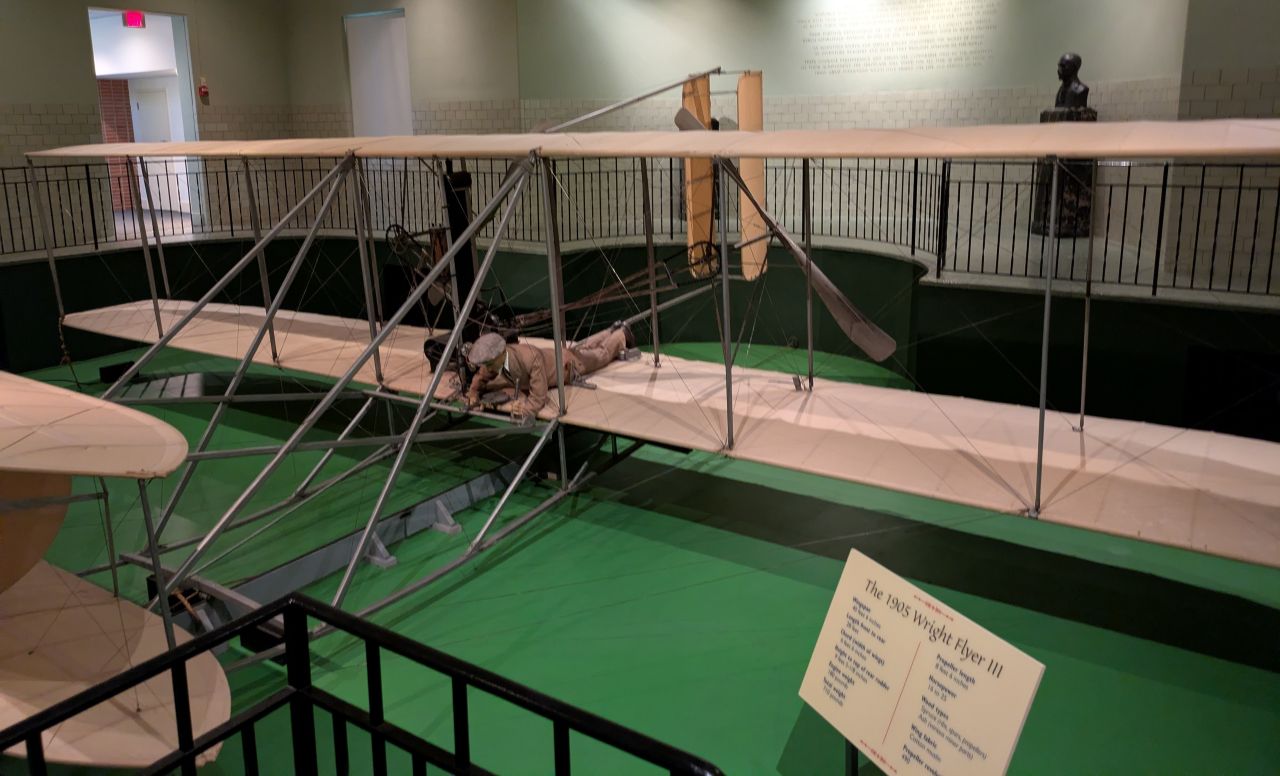
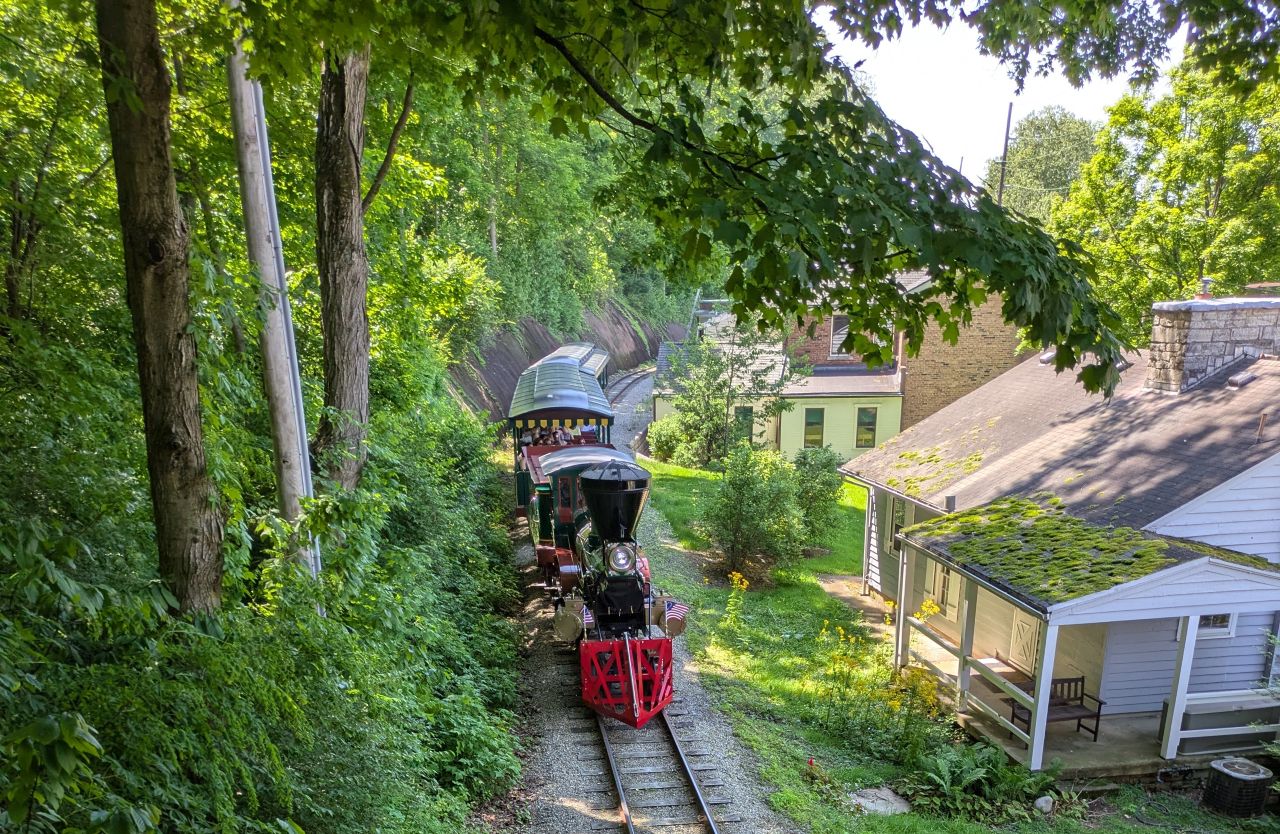
Outside, they have a whole bunch of smaller buildings covering various aspects of the town's history in a rather pretty park that it was slightly too hot to appreciate properly. Many are originals moved from elsewhere, although some are replicas, and they represent everything from the early settlers to an 1830s paper mill to the work of WAVES in the NCR factory assembling Enigma-decrypting machines in WWII. Particularly notable is the Wright Brothers museum, which contains replicas of their shop, the world's largest collection of their artifacts, and the 1905 Flyer III, whose restoration was overseen by Orville shortly before his death. There's also a building with a disassembled NCR payroll machine, which I really enjoyed, and an operational steam train that circles the grounds, which we didn't go on. My only real criticism is that they should have had like a big cutaway model of a mechanical cash register so you could see how it worked, and they didn't. We only had a couple hours, and saw less than a third of the stuff outside. It's not the best museum in town (the competitive bar there is insanely high) but it's definitely worth adding to a trip to the area.
Oh, and as for the park's name, it started around a Carillon, a traditional bell tower, and they apparently do concerts with it from time to time if that's your thing.
There's lots of other stuff around Dayton, much of it tied to the National Aviation Historic Trail, which I'm hoping to get a separate review of at some point soon. But outside of that, if you happen to be in the area, I also have a reader recommendation for Clifton Gorge State Nature Preserve, which is "a big forest full of trails with a gorge near the edge of it. You can go down into the gorge if you want more exciting terrain, and there is a small cave down there somewhere. Also a beaver dam making a big lake." In any case, Dayton is a fun place, and I'd recommend going, not just for the Air Force Museum.
Comments
In Italy we have a National Museum of Engineering, it's called Museo Nazionale della Scienza E Della Tecnica Leonardo Da Vinci (OF COURSE!), it's in Milano, and it ha a submarine.
How they got a submarine in Milano is the stuff legends are made of...
https://share.google/xCTDlZ5qGJWD8Zbi0
Given that the same guy came up with both disasters probably not such a surprise.
@Anon: Freon and Leaded Gasoline are not lethal to all life on planet earth. The biggest disaster this century (post-2000) had the potential to destroy all life on earth (and the Eastern Seaboard if the die rolled that way, instead).
And, unlike Chernobyl (a relatively small geographical incident), you probably can't even name what I'm talking about.
Kesh:
We're still here so that is true, but that doesn't mean they were not disasters though I will give that no one could have anticipated what CFCs would do (but putting lead in fuel was known to be stupid at the time).
Kesh:
Why do I doubt that?
Even the supervolcano at the end of the Permian didn't manage that.
@anon I was slightly exaggerating with "all life on earth." All animal life could very well have been destroyed, due to destruction of the oceanic ecosystem (which generates our world's oxygen supply). This might have left plants, and it would have left some fungi.
I do think "all animals die" would be a catastrophe worse than the Permian Supervolcano.
You can look at known unknowns, and you can look at unknown unknowns. Disaster planning occurs even when there's a finite chance to essentially destroy the world's superpower. It's a little much to ask for anyone to plan around "no more animals on Planet Earth" at this point (sad to say).
I'm discussing the Deepwater Horizon Leak/Cap, by the way. Which isn't just "oil oil everywhere" but also the surfactants being used...
Kess:
That was locally bad but irrelevant on a global scale (the Gulf of Mexico is a relatively small patch of ocean).
Oh, BTW Bean, if you want to submerge yourself in an Italian vacation there is the Enrico Toti (S506, Toti Class) in Milano, the Enrico Dandolo (S 513, Toti Class) in Venezia and the Nazario Sauro (S 518, Sauro Class) in Genova.