
Today is the kickoff for our next Book Club book, Japanese Cruisers of the Pacific War.
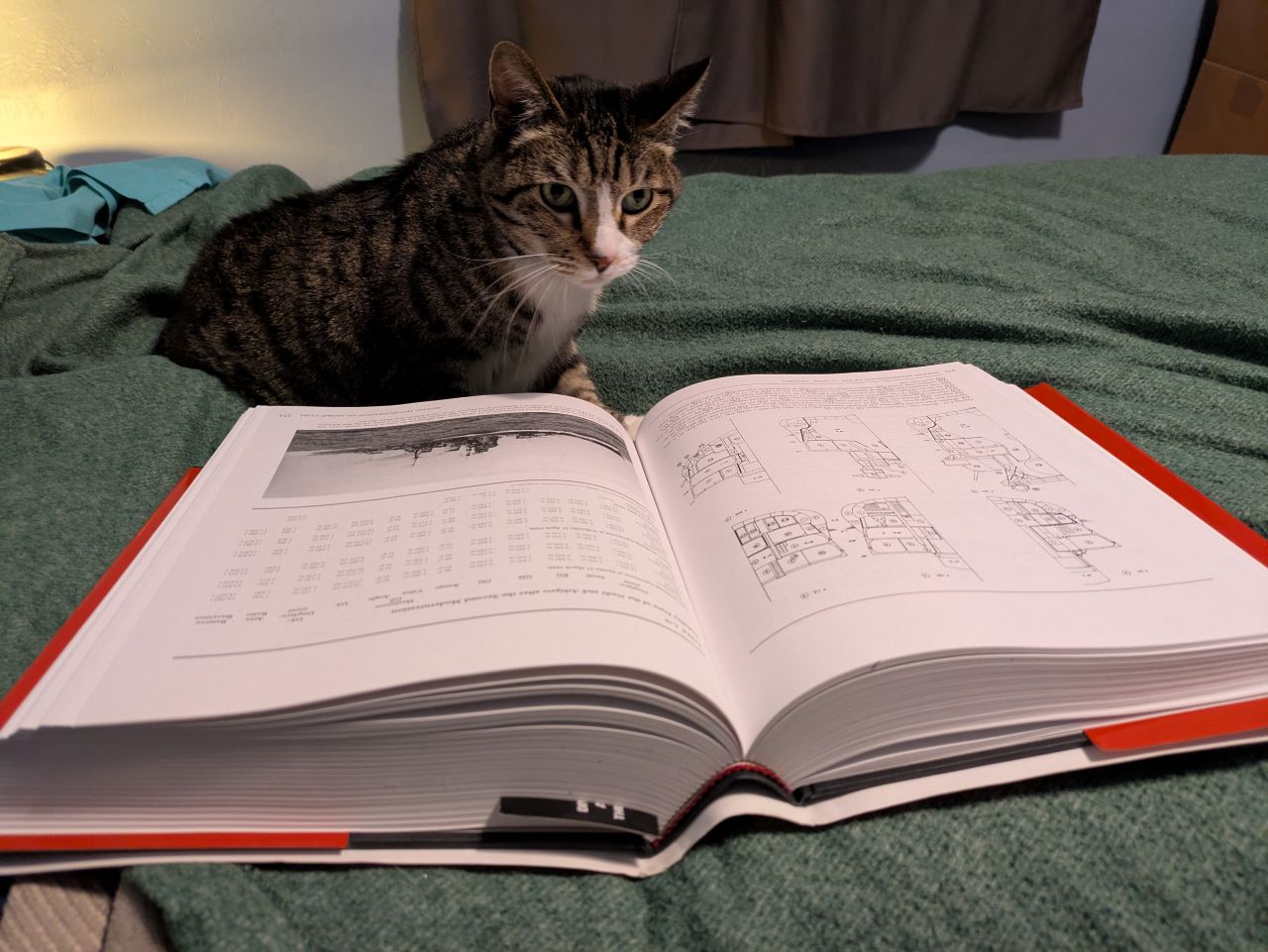
Dean is participating, and you should, too
On the whole, I enjoyed this chapter. It's a good look at both some ships that I didn't know much about and at the Japanese procurement environment between the Russo-Japanese War and the start of the treaty era, although the recounting is very dry. More broadly, this is a good illustration of the difference between what you see in a lot of warship books and what Norman Friedman does so well. If I had to describe his secret sauce, it would be working in the details he gives of who is doing what in a way that makes the narrative at least somewhat more approachable than a textbook. Also, he's really good at preemptively answering questions you might have, or at least nodding to them and saying he doesn't know why, either. For instance, why was Tone fitted with two short 8 cm guns in addition to the 15 cm and 12 cm? My first guess would be that they were for firing starshells, but there's no mention of the purpose at all, and a later class has four, which probably rules that out. (This isn't unique to Japanese Cruisers. I've seen other books which missed fairly obvious questions, most irritatingly Dulin & Garzke's book on Bismarck.) But there's at least a lot of detail here, which is really useful should I decide to write on one of these cruisers at some point.
I have mixed feelings on the way the chapter was structured. On one hand, it's nice to see all of the different twists and turns the programs underwent in an era where Japan had an active budget office that didn't always give the Navy what it wanted. On the other, it's not exactly linear, and I kept getting confused early on about which programs were being built or punted down the road.
One thing I noticed was the rather interesting aircraft arrangement on the Nagara class, with the plane inside the bridge and the flying-off platform forward of it. I know the British had experimented with some stuff like that, but I hadn't remembered that anyone had actually built a ship like that from scratch. Of course, it also illustrated the dangers of including such unorthodox features, as the difficulty of the takeoff meant it was never used operationally. (I am confused as to why similar features worked on British light cruisers during the war, but that could have been as simple as wartime willingness to accept dangers that would be too great for peacetime operations.)
The section on Yubari also had some interesting tidbits, but again reveals what I suspect is a fundamental weakness of the book. The idea of "hey, why don't we build that ship, but on 57% of the displacement" is fundamentally pretty interesting, enabled mostly by the adoption of superfiring twin turrets for the 14 cm guns. But while that sort of thing can help, the huge tonnage reductions can have other drawbacks, and it would have been really nice to have the authors discuss that more explicitly. I didn't even realize how they'd done it until I got to the armament section. They do mention that berthing was either wet or badly-ventilated, but that's as far as they go in terms of drawbacks. Also, it was weird that they credit the twin guns with a higher rate of fire than normal singles, which is the opposite of how it usually works.
More seriously, we are about halfway through Two-Ocean War, and this seems like as good a time as any to talk about what should actually happen next. Do we want to keep Naval Gazing Book Club as a thing, and if so, what book should we do next? Obviously, it should be something that's a fairly easy read, and reasonably cheap. A couple candidates I would submit are Blind Man's Bluff, an excellent history of submarine espionage during the Cold War, and Norman Friedman's The Fifty-Year War, a comprehensive history of the Cold War that is the best I'm aware of for people who have at least some familiarity with the overall war. But feel free to suggest other books, just not ones that cost $200 or that a cat could hide inside.
Comments
Even if we didn't do Blind Man's Bluff, you all should read it.
I like the idea of continuing the book club. I already jumped ahead and finished TTOW, so I'd look forward to moving on to something new when we like. I found Blind Man's Bluff fascinating and I'd be fine with rereading it, but selfishly, I'd prefer the Friedman, since I've never read it.
The 80 mm was used as an anti aircraft weapon on Japanese cruisers.
http://www.navweaps.com/Weapons/WNJAP3-403ns.php
This was before anti-aircraft guns were ever fitted to ships, and the mounting is wrong for that. I would have noticed if it was an AA gun, but it's not in this case.
Maybe the short 8cm guns were for arming the ship’s boats or giving naval landing parties some more firepower. The shorter barrel might make the weapon light enough for those uses.
Not sure if your comments on Yubari's lightness were genuine confusion or part of the joke, but Wiki's interpretation of the same book is that it was done by having the armor double as structure (plausibly analogous to the later US use of STS, which you've previously mentioned was very expensive), and not actually having enough fuel to make the planned range.
@Grant
That would make some degree of sense, actually. Pity they didn't mention that.
@muddywaters
No, that was definitely mentioned, and it did help. My critique is serious and mostly one of structure rather than raw information. The obvious thing to do after talking about how they're fitting the same firepower into a much smaller hull is to go down the list of how it was done and talk about tradeoffs, and they largely didn't do that. The info is in there, but it's unnecessarily hard to get.
(To put it another way, nothing in the post is a joke, except the very concept of doing this book, which was selected as the least suitable one I could think of in my library.)
Because in 1922 aircraft could still take off from flying-off platforms and everyone was cramming aircraft everywhere they could, including on B turret.
https://www.navalgazing.net/attach/FlyingOffPlatformNew.jpg?v=1555593823.jpg
The reason they stopped doing that was that aircraft got heavier and needed dedicated catapults (of quite sophisticated design). The British chose to build hangars and catapults midships primarily to clear the forecastle and quarterdeck for guns and their firing arcs as much as possible, a very logical conclusion, don't you think? The alternative would have been something like the inestimable Tone-class cruiser, but I will wait for when you reach that chapter ;)
I'm in favor of continuing the book club. Worst comes to worst, I can pester my local library. While my good friend has left the library to move to upstate New York, I am still on good terms with most of the librarians, even when I come in with some oddball book request.
I was able to convince them to request something from a college library in California to be sent to the East Coast!!!!