
One of the great and generally unsung wonders of the modern world is the array of submarine cables that knit together continents, carrying everything from news and fiscal transactions to this very text. Up until 170 years ago, messages between America and Europe moved at the speed of ships. For centuries this hadn't been different from anywhere else. Messages had always moved only at the speed of people carrying them, with only very limited exceptions. Signal fires and flags could be used to convey a message if the recipient could see the sender, but these messages tended to be simple and with extremely rare exceptions couldn't go over the horizon.1 It wasn't until 1792 that the first large-scale system for moving messages faster than a horse was created, when the Revolutionary French government built a system of towers with arms on top that could pass complex messages across France in hours rather than days. Similar systems were built in other countries, but building and maintaining a tower every 5-10 miles was expensive, it only worked in daylight and the need to repeat the message so frequently made it somewhat prone to error.
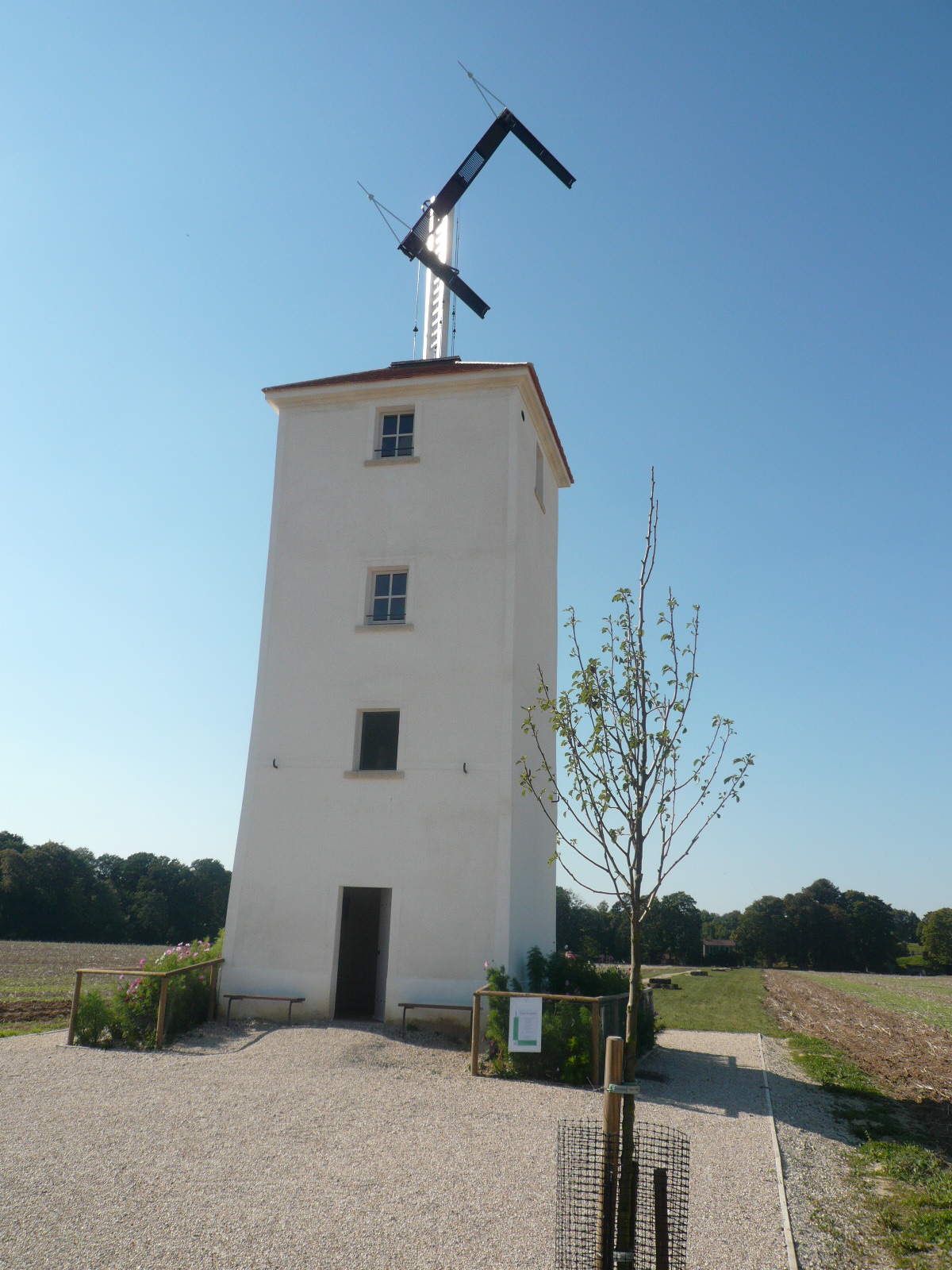
A French optical telegraph
The discovery of electricity, and the realization that it moved through wires far faster than anyone could measure, quickly sparked interest in using it to send signals. A number of different efforts were made, although most were hindered by attempts to send each letter separately and unambiguously, which in turn meant lots of wires and complex machinery. The first commercial electric telegraph was of this type, but it was an American painter, Samuel Morse, who finally devised a truly practical system. Morse's great innovation was less in what he did than what he didn't do. Instead of multiple wires and complicated equipment, he used a single wire2 and a manually-operated "key" to start and stop the flow of current, relying on a trained operator and a code he had devised to send and receive messages.3
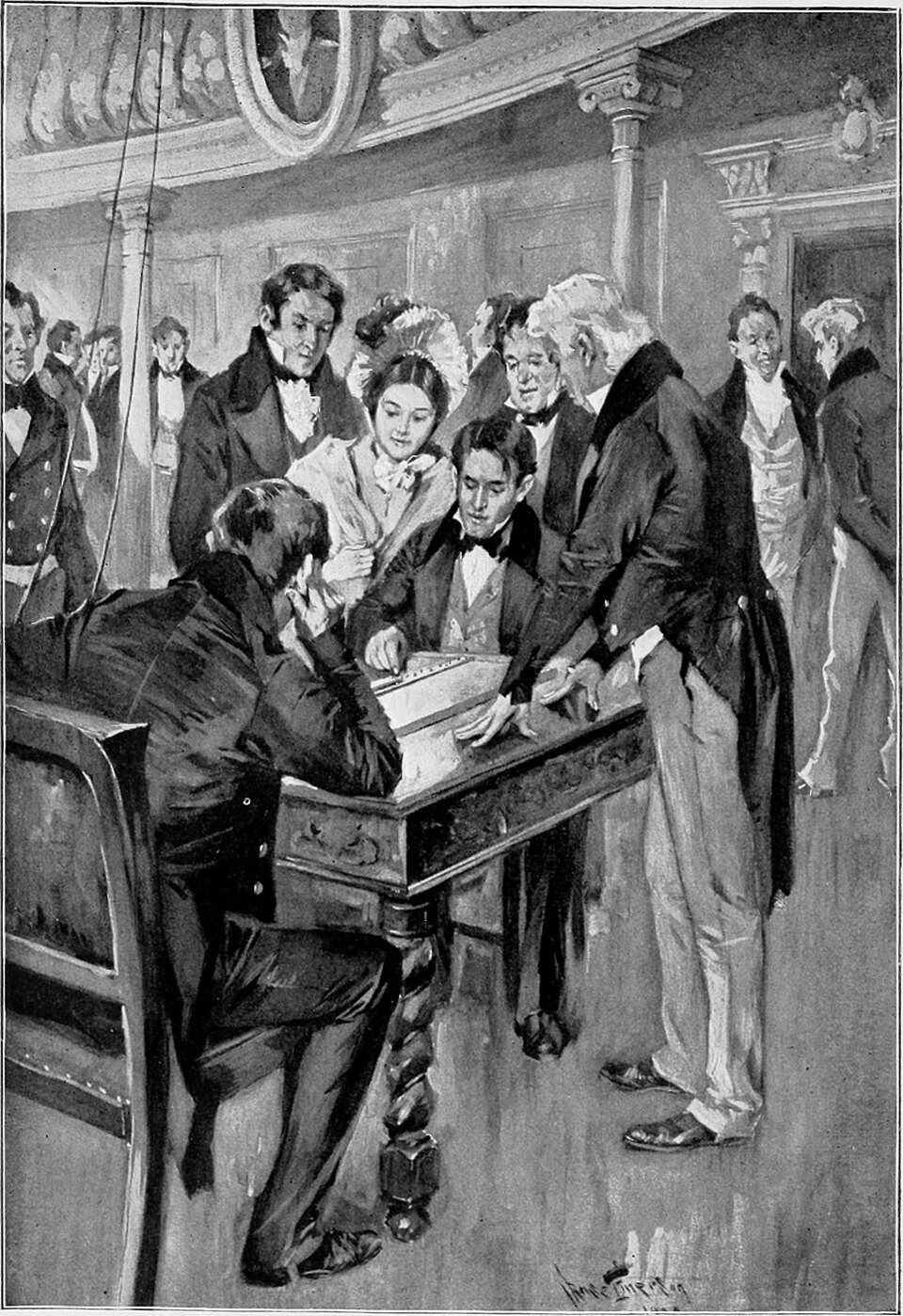
WHAT HATH GOD WROUGHT
The simplicity of the Morse system, first publicly demonstrated in 1844, saw the telegraph swiftly built out across the industrializing world, with relays amplifying the signal as it passed down the lines. But there was one serious problem: the cables were usually suspended from poles, which worked fine overland, but less well if a large body of water had to be crossed. The first experiment on this was done across the Hooghly River in India in 1839, with Morse himself carrying out similar experiments across New York Harbor three years later. One of the major problems was insulating the electrical wire from the sea. Rubber tended to degrade in seawater or get attacked by marine life, but in 1843, the arrival of gutta-percha, a natural plastic from a Malaysian tree, gave engineers a good solution. Not only did it resist the environmental threats posed by the sea, it could also be easily shaped when hot and then solidified when it cooled, making it easier to manufacture. Ultimately, it would remain vital for cables for nearly a century, until replaced by synthetic plastics.
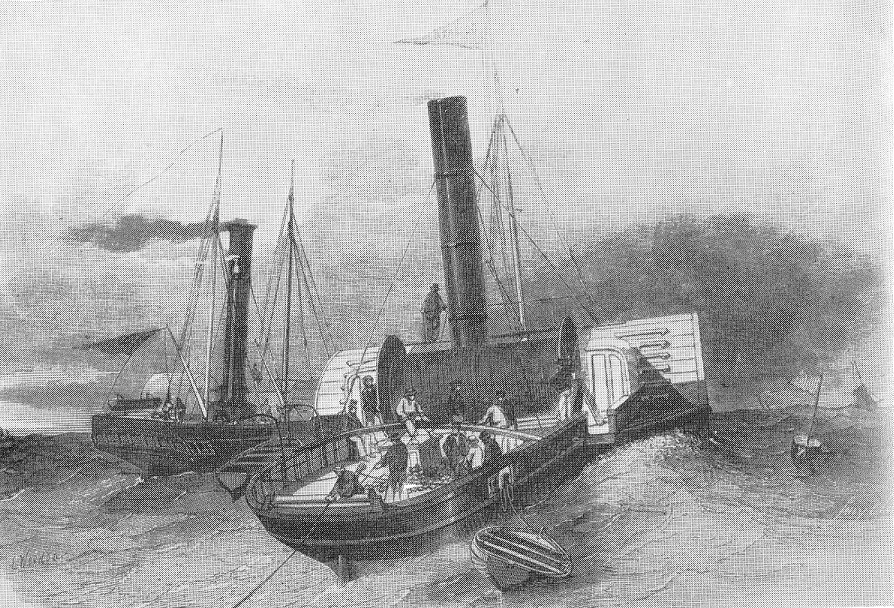
An early channel cable being laid
Armed with gutta-percha, a telegraph engineer named John Watkins Brett came up with a plan to span the English Channel, connecting the French and British telegraph networks. His initial cable, laid in 1850, was simply a copper wire covered in gutta-percha, and it was so light that lead weights had to be attached as it was played out from Dover to Cap Gris-Nez. Despite rather slapdash manufacture and primitive laying methods, the cable was successfully played out across the Channel, but trouble began when the equipment was connected and gibberish spewed forth. A few messages did get through, enough to preserve Brett's concession from the French government, but when the telegraphers returned the next morning, the line was dead. A fisherman had fouled his anchor on the cable overnight, then hauled it up, and decided to cut off a section to see if there might be something valuable inside. It was the first shot in a war between seafarers and cables that continues to this day.
Over the next year, a second cable was prepared, this one with four conductors, insulated with gutta-percha and protected by hemp and galvanized iron. It weighed 30 times as much per foot as the first cable, and the attempt to lay it was nearly defeated by its weight, which made it run out of the ship faster than planned. Fortunately, extra cable was onboard, and it was successfully landed in France. The problems with the first cable, which each side had initially assumed was due to celebration on the other, were discovered to be the result of inductance and capacitance induced in the cable as it was submerged in seawater, which slowed the signal down and spread it out. It was easy enough to solve by simply sending messages more slowly, although it would be a serious problem for crossing larger bodies of water.
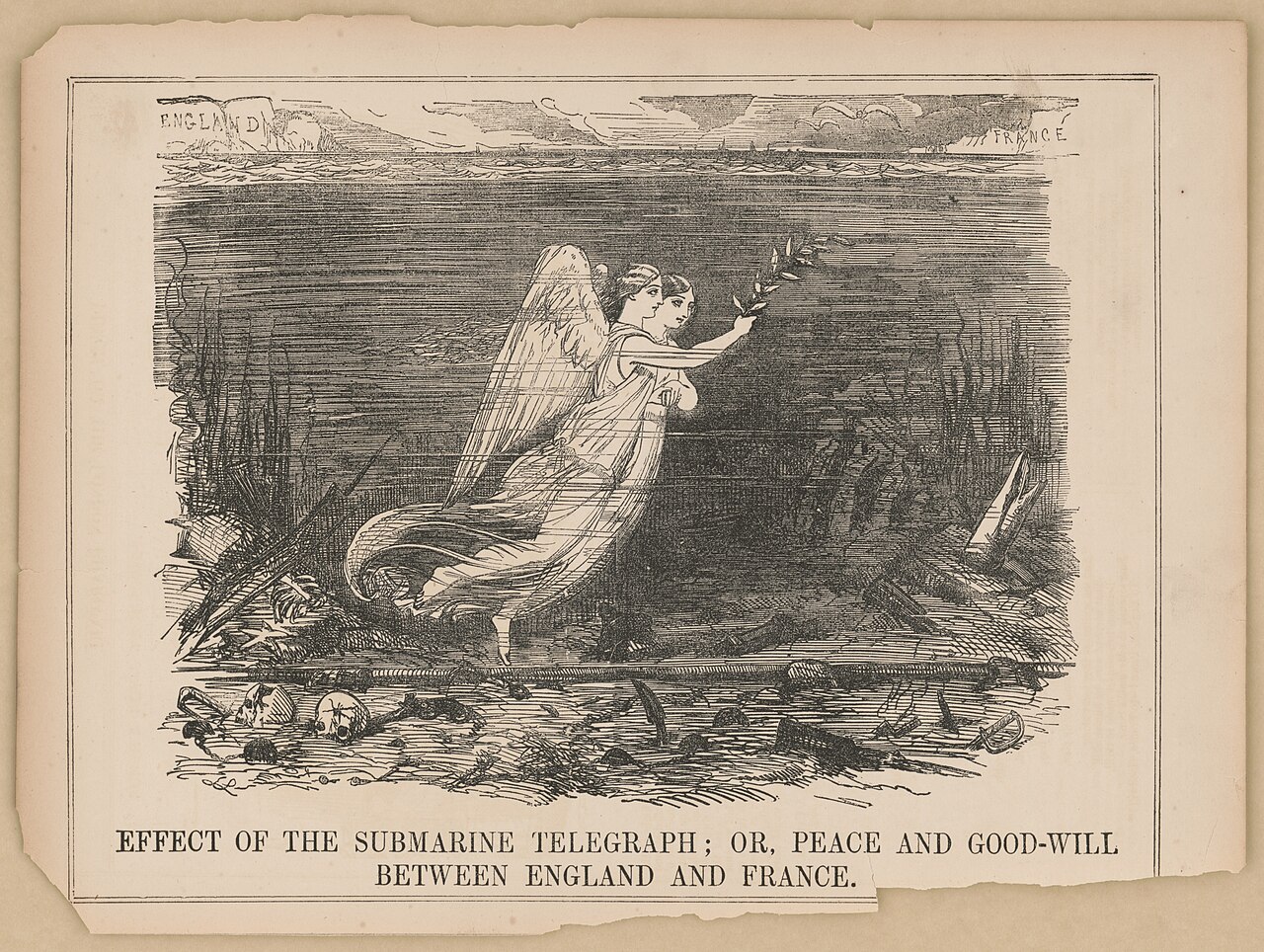
The next few years saw a cable boom within European waters. England was linked to Ireland, Belgium and Holland, and Corsica was connected to both Italy and Sardinia. Attempts to link Sardinia and Algeria were less successful. The first attempt failed because the heavy cable ran out too fast, leaving the cable ship a few miles short of the African coast. Navigational difficulties gave the same result during the second attempt, while the third was thwarted by a unit conversion mixup in the system that controlled how fast the cable ran out, again stranding them a few miles short of Algeria. The Crimean war saw the first military use of the telegraph, with the 1854 bombardment of Bomarsund being reported back to London via Danzig. The next year, the British laid a cable across the Black Sea to provide direct communications with their forces in the Crimea. Because of the urgency of the situation, the majority of the 300-mile cable was a simple insulated conductor, but techniques had improved, and the cable lasted for nearly a year. During this time, senior officials in London and Paris took advantage of this new opportunity to interfere, often giving tactical orders, much to the disgust of the commanders in the field. The French commander, General Pelissier, described the telegraph as "[our] greatest enemy - worse even than the newspapers". But the revolution only went as far as the cable network, and the next war the British fought, against China over restrictions on Opium, was so remote that news of its outbreak didn't reach London for four months. But closer to home, it was beginning to have serious tactical effects. In 1866, undersea cables allowing the Austrian garrison at Lissa to summon help when the Italians appeared, setting up the silliest battle of the early ironclad age.
But the holy grail of undersea cable routes was the North Atlantic, connecting Europe to America and uniting all of the major western nations. This would pose unprecedented problems of length and depth, and it would take extraordinary efforts to bridge that gap. We'll pick up the story there next time.
1 Yes, I know that example is fictional, but the Byzantines had a similar system in the 9th century. ⇑
2 The second half of the circuit used what was called "earth return", flowing through the ground. This saved a lot of material at a time when that was expensive. Undersea cables used the sea for the same purpose. ⇑
3 Interestingly, the Morse Code we know today is not the same as the code used by Morse to send his famous "What Hath God Wrought". That code, known as American Morse, was somewhat more complex and harder to use, and was phased out in favor of International Morse, the standard everyone knows today. ⇑
Comments
Isn't it mainly fishermen that cut cables?
I don't have statistics offhand, but the most famous incidents of undersea cables being cut these days come from cargo ships dragging their anchors, sometimes intentionally.
There are many ways to send a signal afar...
https://www.youtube.com/watch?v=kqiUGjghlzU
Technically, fishermen are a type of seafarer.
Yes, but it implies that the problem is more widespread than mostly just one type.
I know that ships anchoring on/near cables is also a problem. I have no way of quantifying which is worse offhand (and it probably depends heavily on where we're talking about) so I punted to the general.
is it just me, or is the photo of the optical telegraph rotated 90 degrees for everyone else?
What a fascinating bit of historical infrastructure. I’m surprised no one ever thought to use light and fresnel lenses to communicate over distance.
Using a mirror and the sun to signal is a method to signal when stranded or in an emergency - it seems to follow that would be an obvious way to communicate over distance as fast as a telegraph. It would be interesting to learn more about other, early communication technologies.
Photo looks correct to me.
Heliographs and blinker lights were a thing, but they didn’t show up until the 19th century and were rarely used in chains. I can think of a couple reasons for this. One is error correction. The standard optical telegraph lets Station A see what Station B is sending to Station C, greatly reducing the risk that the message gets mangled in transmission. Light systems can’t do that, and it’s a major pain to send “hey, your message was garbled, please correct” down a long chain of stations, but not a big deal if it’s just two people talking directly.
Second, and probably more importantly, I think Morse and Vail may have been the ones to develop the idea of breaking down a complicated message into a binary signal. Every previous system I can think of was trying to pass something human-legible at a given moment, either something very simple via a binary channel (“we’re being invaded”) or some more complicated unit (a letter or a word) via, say, signal flags or a multi-channel electric telegraph. Or you have things like the Greek hydraulic telegraph, which is a rather hilarious attempt to work around the limits of light as a signalling medium. The problem is that once you have the concept of binary signalling, you also have the telegraph, which is obviously better for any stationary link. It can go a lot further between stations (reducing construction cost) and doesn’t care about the weather. Maybe if there had been more problems with undersea cables, we would have seen short water gaps like the English Channel closed with optical systems.
@WRW: you might be interested in the article on early ship-to-ship signalling, Wiki's more general history, and ACOUP's on how limited communication restricted army command.
Beacons were used to warn of an approaching fleet twice in c.430 BC Greece and in 1588 England.
The concept of binary communication was invented in 1605, but that proposal was to encode it as two colours/tones/etc rather than the presence or absence of a single light/sound, and I'm not aware of it actually being used before the electric telegraph. (There were optical telegraph systems that included lights so they could be used at night, but they were multi-lamp systems sending a letter or more at once.)
I see the picture correctly on desktop, but rotated 90 on my iPhone.
The telegraph is rotated 90 degrees on my Mac laptop, viewed in Safari.
Everyone should read "Mother Earth Motherboard" if interested in this topic. Arguably the best piece ever published in Wired of old.