December 01, 2017

Mine Warfare Part 2

While the first naval mines were contact mines and they are still the dominant type numerically, the main focus of mine warfare in recent decades has moved to influence mines, which are set off by means other than physical contact with a ship’s hull. Influence mines are traditionally laid on the bottom, although they can be moored if the water is too deep for bottom mines to be effective.
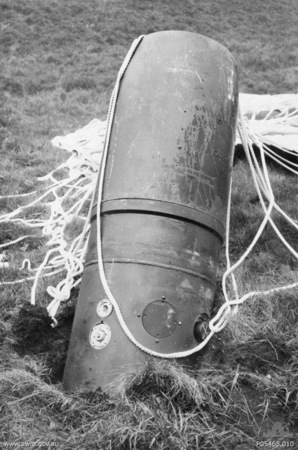

A German air-dropped magnetic mine
Read more...

November 29, 2017

USS Iowa (BB-61) Part 7 - Turret II and Retirement

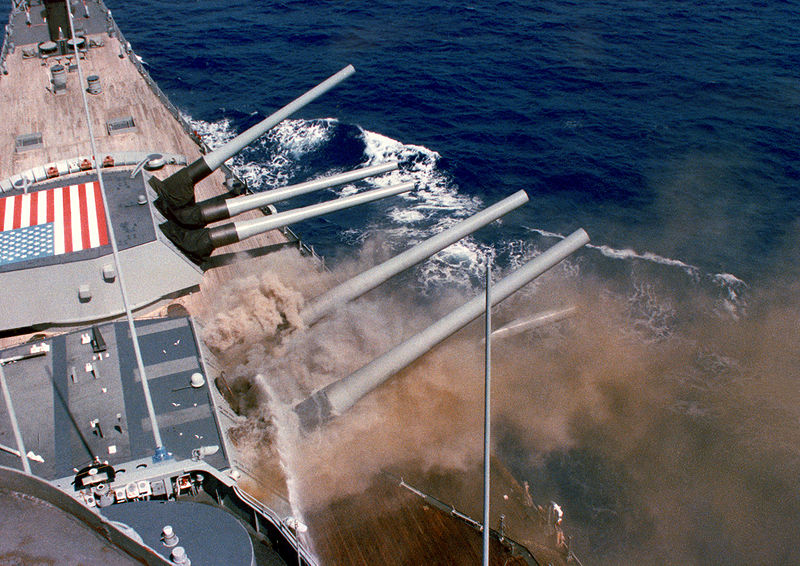
After five very successful years in service during her third commission, tragedy struck Iowa. On April 19th, 1989, she was conducting gunnery drills as part of FLEETEX 3-89, a training exercise with the navies of Brazil and Venezuela. At 9:55, while the center gun of Turret II was being loaded with the first round, the powder exploded, killing 47 men. This exact cause is still somewhat controversial, and the Navy's handling of the investigation did not help. I should emphasize at this point that everything which follows is my own opinion, and I don't speak for anyone else on this.


Smoke billows from Turret II after the explosion

In the immediate aftermath, the crew of the Iowa responded heroically, fighting to save the ship in what was still a very dangerous situation. The anti-flash measures, most notably the scuttles isolating the powder flat from the turret proper,1 worked well, and a repeat of the fate of the battlecruisers at Jutland was avoided. But there was still the risk of heat soaking into the powder flats and igniting the powder, so the magazines were flooded. It took about 90 minutes to extinguish the fire, and several members of the crew were decorated for their actions during this battle. Read more...

November 26, 2017

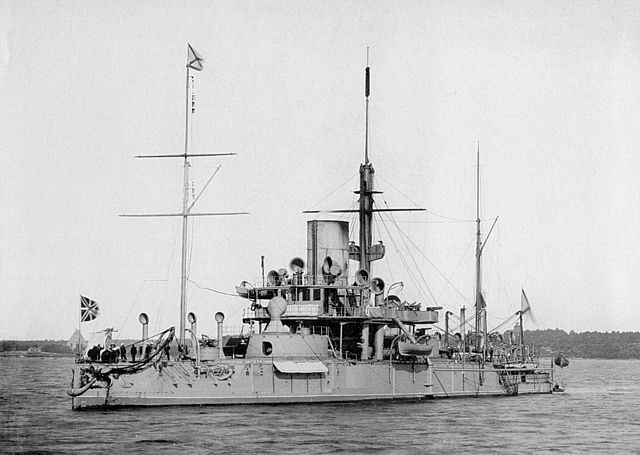
Russian Battleships Part 1

When he offered to host me, I offered Said Achmiz the opportunity for me to pick a topic to write on. He selected Russian battleships, and I found a really good deal on a copy of Stephen McLaughlin's Russian & Soviet Battleships, the standard source on the subject, so settle in for a tale, that like most tales from Russian history, began with bright hopes, and subsequently fell apart.2


Petr Velikii, the first Russian battleship

Read more...

November 24, 2017

Mine Warfare Part 1

Probably the most underappreciated of naval weapons is the humble mine. Mine warfare is unglamorous, dangerous, and potentially decisive.


HMS Merlin

The first ship mined (as we understand the term today)3 was HMS Merlin, on June 9th, 1855. The ship, deployed to the Baltic as part of the Crimean War,4 suffered only minimal damage. The Russians had deployed primitive moored contact mines, tethered to the bottom, which detonated if a rod on the top was bumped by a passing ship. Interestingly, they were invented by Immanuel Nobel, father of Alfred Nobel. In response, the British initiated the first minesweeping operation a few days later, grappling the mines and hauling them up. Remote-controlled mines, detonated from shore, were also used, but proved less successful than the contact mines.

Read more...

November 22, 2017

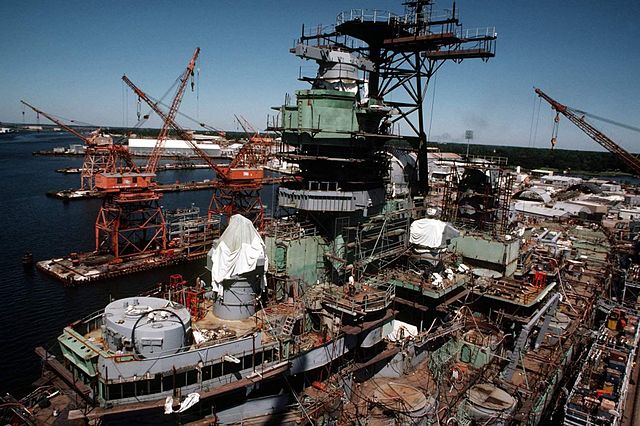
USS Iowa (BB-61) Part 6 - The 80s

For a quarter-century after being decommissioned, Iowa slept. In 1968, New Jersey was recommissioned for service off Vietnam, then decommissioned after a single tour because the North Vietnamese hated her too much and Washington wanted to send signals that they were interested in peace.5 In the 70s, several attempts were made to scrap the ship and her sisters, thwarted mainly by the efforts of the Marine Corps, who feared the loss of fire support capability these ships provided.6 These efforts began to gain support in the late 70s, and in 1980 a bill to release funds for a reactivation reached the Senate floor before being defeated thanks to the personal intervention of President Carter. Fortunately for Iowa, President Carter was himself defeated that November, and President Reagan announced that he would support the reactivation and modernization of all four Iowas.7


Iowa undergoing modernization at Pascagoula

Read more...

November 19, 2017

USS Iowa (BB-61) Part 5 - Korea and 2nd Commission

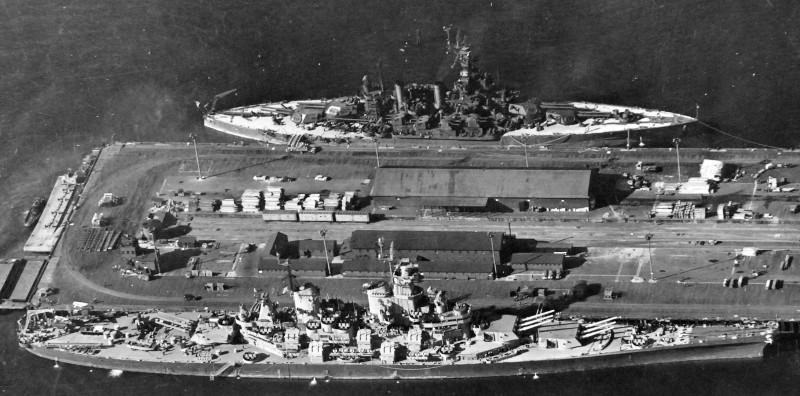
On September 20th, 1945, only a few days after the Japanese surrender, Iowa left Japanese waters, bound for Okinawa with 354 passengers, mostly liberated POWs. In Okinawa, she picked up another 562 passengers under the auspices of Operation Magic Carpet, the US effort to bring troops home as quickly as possible by packing them onto whatever ship was available. Most of the contingent from Okinawa were Seebees, who amused themselves by fighting one another. Iowa proceeded to Seattle, where she unloaded them and hosted over 10,000 visitors during the Fleet Week/Navy Day festivities.


Iowa and Maryland in Seattle for Navy Day 1945

Read more...

November 17, 2017

The Battleships of Pearl Harbor Part 3 - Surigao

The attack on Pearl Harbor and the devastation of Battleship Row, are well-known. Less well-known is the later salvage of most of the battleships sunk that day, and their service around the globe, covering amphibious landings and providing fire support. However, five of them did get one moment of glory, fighting in the last battleship-on-battleship action in history.


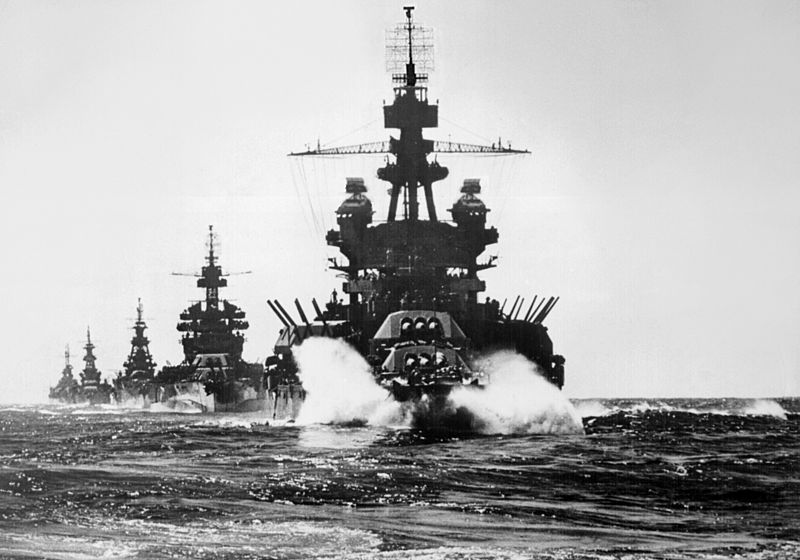
Pennsylvania leading the US fleet near the Philippines

In October of 1944, the US launched its long-promised return to the Philippines, landing on the island of Leyte. This triggered the largest naval battle in history, the Battle of Leyte Gulf. The Japanese, who had planned for the ‘Decisive Battle’ between their battleships and those of the US for decades, designed their counterattack on the US landings around three main groups. Their carriers would come in from the north and draw off the US carriers covering the invasion, while two groups of battleships would sneak up on the invasion fleet from the east, passing through the Philippines and pincering the US transports from the north and south.

Read more...

November 15, 2017

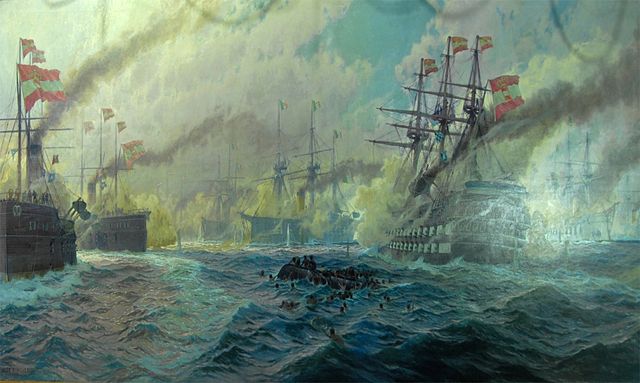
The Battle of Lissa

I’ve written quite a bit on the history of battleship design, but I haven’t spent much time on the use of the early battleships. This is a gap I intend to close, by looking at the (surprisingly few) clashes of ironclad and pre-dreadnought battleships.


The Battle of Lissa

Read more...

November 13, 2017

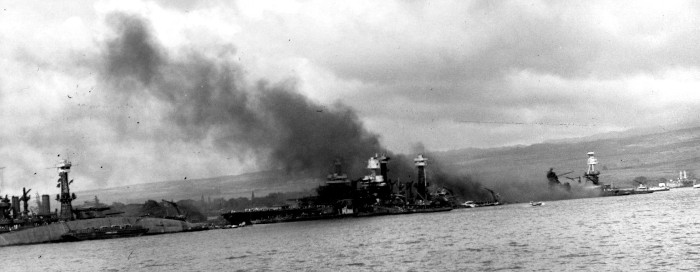
The Battleships of Pearl Harbor Part 2 - Salvage

When we left Pearl Harbor, it was the evening of December 7th, and most of Battle Force was on the bottom of the harbor. But what happened to the ships afterwards? We’ll go through the ships in the order which they returned to service (if they did) and then look more broadly at the use of the survivors during the war.


Battleship Row, Dec 8, 1941 (L-R: Maryland, Oklahoma, Tennessee, West Virginia, Arizona)

Read more...

November 12, 2017

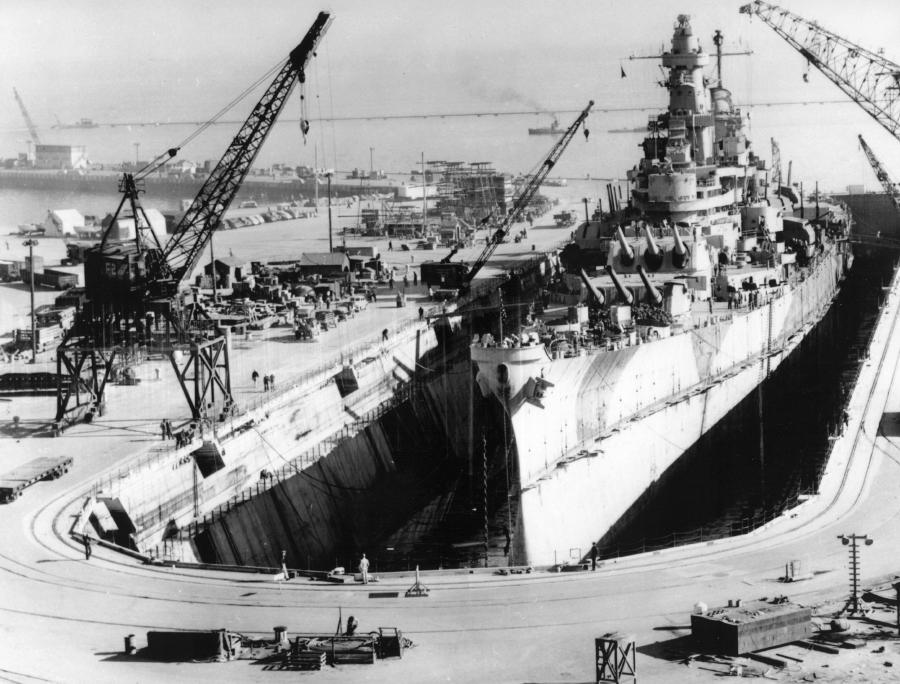
USS Iowa (BB-61) Part 4 - The End of WWII

Iowa's refit at Hunter's Point after her first tour in the Pacific ran from January until mid-March of 1945. Besides the repairs to Shaft 3, she received an enclosed bridge (the original bridge had consisted of an open walkway wrapped around the front of the conning tower), updated radar for the Mk 37 directors, and new airplanes, SC Seahawks replacing OS2U Kingfishers.


USS Iowa in drydock at the beginning of her refit

The end of March was spent operating out of San Pedro Harbor, her future home, working up before going back to the front lines. She relieved New Jersey, due for a refit of her own, on April 20th, and was off Okinawa in support of operations there five days later. En route, the crew learned of the death of President Roosevelt, who they had carried across the Atlantic a year and a half previously.

Read more...