
Old Fort Niagara is a bit of an unusual site for me to cover. Despite being at the mouth of the Niagara River on Lake Ontario, it's not really a coastal fort, because 20 miles up the Niagara River is Niagara Falls, which is a bit of an obstacle to navigation. Instead, it was established in 1726 by the French to control the portage route between Lake Ontario and Lake Erie and dominate trade through the Great Lakes. Things were fairly quiet until the outbreak of the Seven Years War, when the British managed to capture the Fort, and ultimately all of the territory the French had in the northern portion of North America. It was an important position for the British during the American revolution, ensuring they kept a hold on the western Great Lakes. Despite the territory being given to the US at the end of the war in 1783, the British didn't withdraw until 1796, when the Jay Treaty finally convinced them to hand over the forts in the then-western portion of the US.
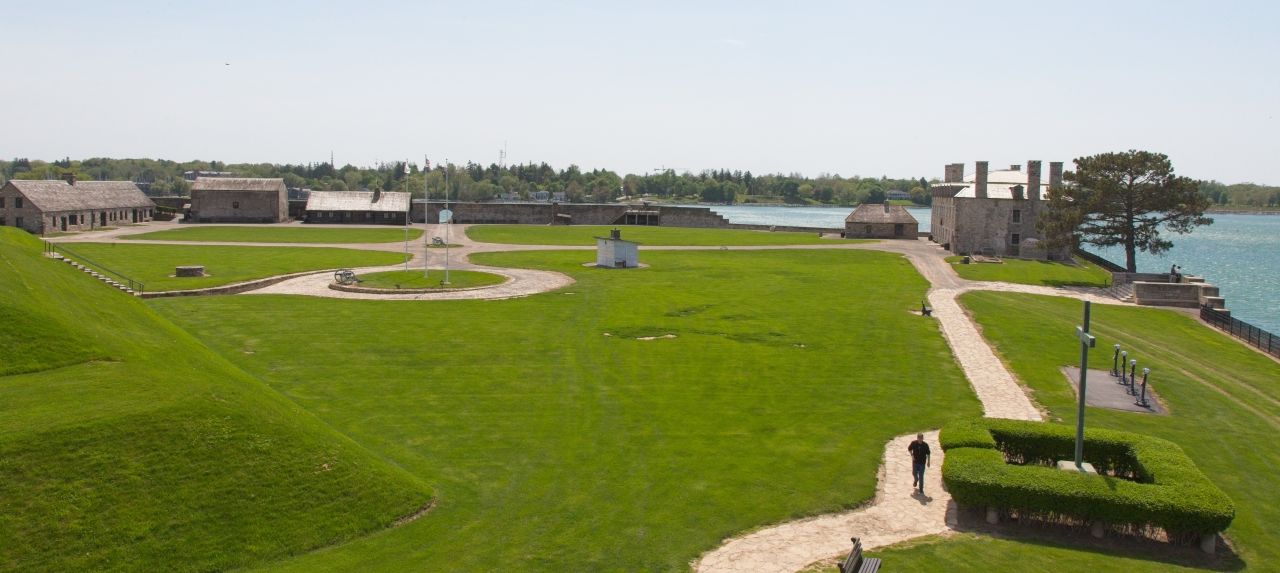
The fort's parade ground, from one of the towers
The fort's last war was the War of 1812, when it spent a while fighting artillery duels with Fort George, its British counterpart on the other side of the Niagara River before the British managed to capture it. It was returned to the Americans after the end of the war, and while the position was improved a couple of times during tension with Britain in the rest of the 19th century, first when rebellions broke out in Canada in 1837-1838 which saw a stone wall built along the riverfront, and then during the Civil War, which saw a brick casemate wall constructed along the fort's landward side. Since then, things with Canada have been peaceful (so far), and the fort was turned into a museum. Read more...



Recent Comments