
This is the conclusion of reader Michael Tint's series cataloging the history of the jet fighter, from the earliest days to the rise of electronics. Now, we'll take a look at the current fifth generation, and the sixth generation that is currently under development.
Gen 5
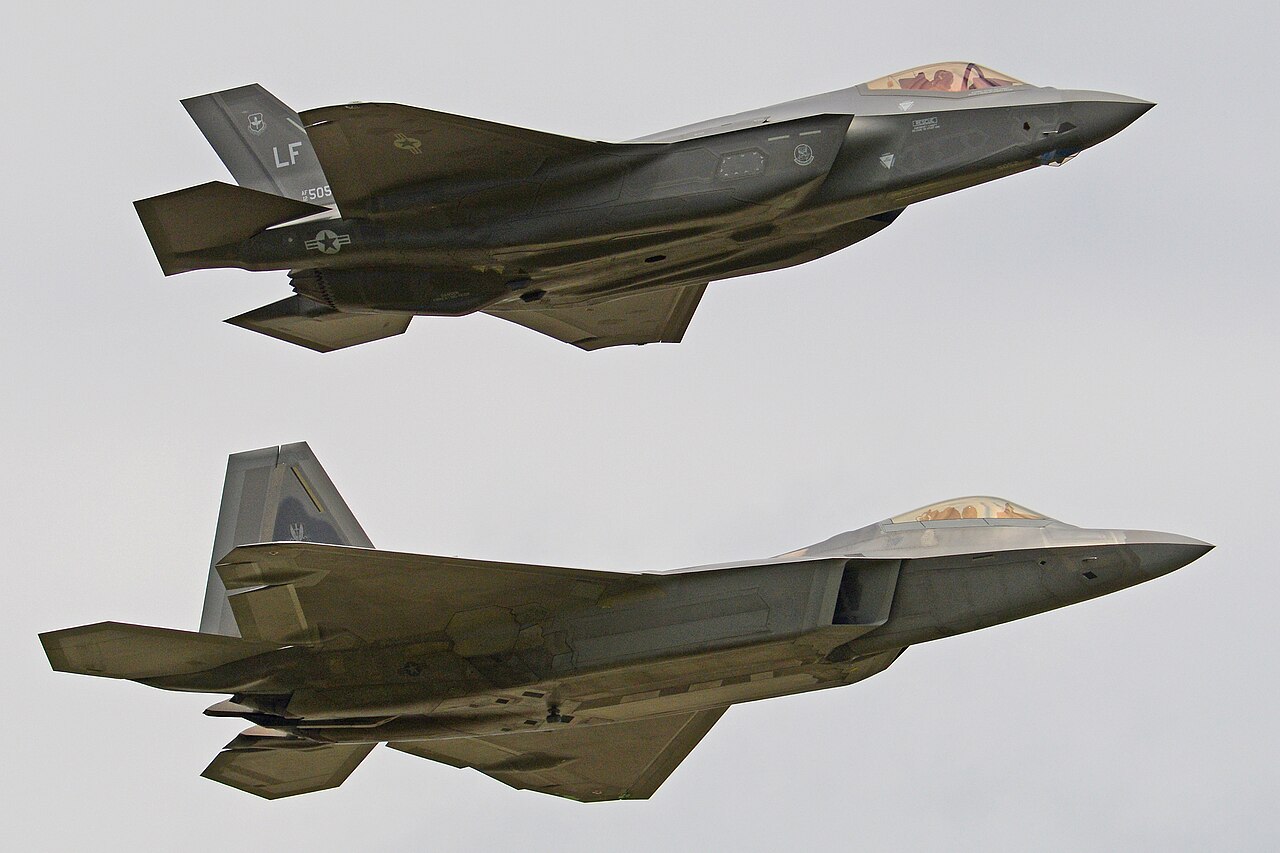
Development of Gen5 fighters technically began in the late 1980s, but the end of the Cold War meant large delays in development. As a result, the first Gen5 fighter did not enter service until 2005. As with every previous generation, these aircraft are larger, more expensive, and more capable than their predecessors.
There are also far fewer of them. Despite being in development since the 90s, only 3 true Gen5 fighters have been put into service, the F-22, F-35 and J-20. The sheer cost of development deterred a lot of countries from attempting the effort once the Cold War ended. Once countries began to need replacement aircraft, the sheer size of the F-35 program further discouraged competition. Developing the F-35 was a hugely expensive effort, but once developed, unit costs fell rapidly, and the fly away price of an F-35 is comparable with in production Gen4 fighters.
Stealth
Gen4 fighters took advantage of the growing power of radars to achieve far greater capabilities than their predecessors, but those improvements equally enhanced the power of the fighter’s great foe, the surface-to-air missile. These too could be actively guided, and since they didn’t need to fit on an aircraft, they could be far larger. The S-300 missile system developed by the Soviets in the late 70s could theoretically detect and fire on targets hundreds of miles away, and later versions of the system only grew more powerful. The traditional approach to defeating air defenses, flying higher and faster, was clearly not viable in the face of threats like this. Survival for 5th generation fighters required a new approach.
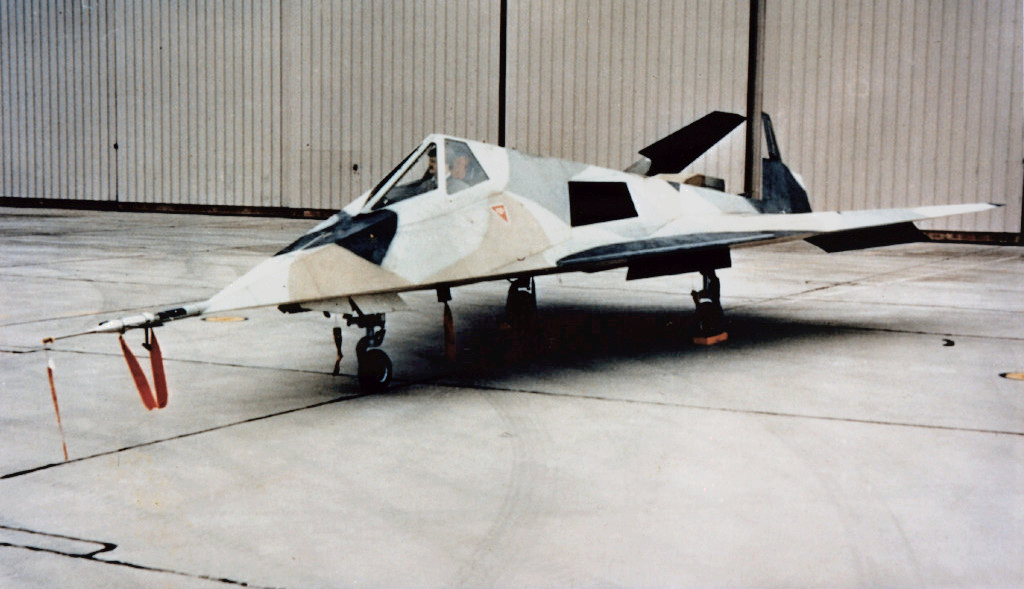
Lockheed Have Blue, the first stealth aircraft. Both flyable versions crashed
The first inklings of the new possibilities came from an ironic source, a Soviet mathematician named Petr Ufimtsev who published some mathematical models for radar deflection. He showed that while large objects reflect more energy than small ones, not all that energy goes in the same direction and the shape of an object determines what direction the energy will go. Because radars depend on energy reflecting back in their direction, how visible an object is on radar depends on its shape as well as its size. A large object that reflects most incoming energy away from the source will be less visible than a small one that does not. How visible an object is measured by its Radar Cross Section (RCS), measured in meters squared. An object with an RCS of 1 has the same return as a perfectly conducting sphere with a cross sectional area of 1 m2
To show what it means in practice, we return to our 10,000 strength radar. As noted before, it sees a return of .1 at 18 miles from target with an RCS of 1. Reduce the target’s RCS to .1, and the strength of the return drops proportionally. This means seeing that same .1 strength return requires closing to 10 miles. Reduce the RCS to .01, and it has to close to 5.6 miles.
Stealth does not make aircraft invisible. There is always some return, and sufficiently powerful radar that’s sufficiently close will be able to detect stealth aircraft. But reducing the range at which an aircraft can be seen by the enemy dramatically increases its survivability and lethality. Operating with powerful radars and long range missiles, stealth fighters can destroy targets from great distances, before the target even knows they are there.
This makes reducing RCS hugely advantageous, but far from easy. Ufimtsev was allowed to publish his work because Soviet authorities considered his models impractical to implement. Calculating the RCS of a complex object was computationally difficult, and simply not possible in 1962. By the mid-70s, computers had improved enough that it became possible – but only for objects composed of flat surfaces; curves were still too difficult. This need for flat surfaces led to the distinctive angular faceting of the Stealth Fighter, and caused it to be nicknamed “the Hopeless Diamond” by engineers who despaired of ever getting such a shape to fly.
Aerodynamics was not the only difficulty. Eliminating points of radar reflection required changes to all aspects of aircraft design. Engine intakes could no longer be shaped to maximize airflow, but had to hide the engine fan blades from enemy radar. Weapons could no longer be carried externally: they and the pylons that carried them were large reflectors. Instead, they needed to be carried internally, pushing up size and cost while reducing carrying capacity. Even things as seemingly simple as landing gear and fuel ports needed careful attention, because every gap or opening in the airframe was a potential reflector. Special radar absorbent materials (RAM) are used to help with some of these problems, but what they can achieve is limited. The vast majority of stealth comes from shape, design, and build quality, not materials.
These challenges meant that it simply wasn’t possible to produce a proper stealth fighter with Gen4 technology. While the F-117 was called the Stealth Fighter, this is a misnomer. It had no air-to-air capability, no gun, and couldn’t fly at supersonic speeds. Similar in size to the contemporary F-18A and powered by the same two engines, it had about ⅓ the payload and was famously difficult to fly. It was a remarkable achievement, but it was a highly specialized attack aircraft not a fighter. A true stealth fighter was not yet possible.
By the late 80s improvements in computing technology made it possible to run RCS calculations on curved shapes. This opened up the possibility of a true stealth fighter, but it was far from the end of difficulties. Once designed, stealth aircraft must be manufactured to an extremely high level of quality. Carefully designing your aircraft to minimize gaps gains you little if your manufacturing process produces large gaps anyway. F-117s were effectively hand built by an elite team of engineers, but that was practical because only 59 were built. A proper fighter had to be produced in the hundreds, on an assembly line. And once built, they had to be maintained. Similarly, the B-2 bombers are among the most expensive aircraft to operate in the US inventory. They need to be kept in temperature and humidity controlled spaces to preserve their radar absorbent materials.
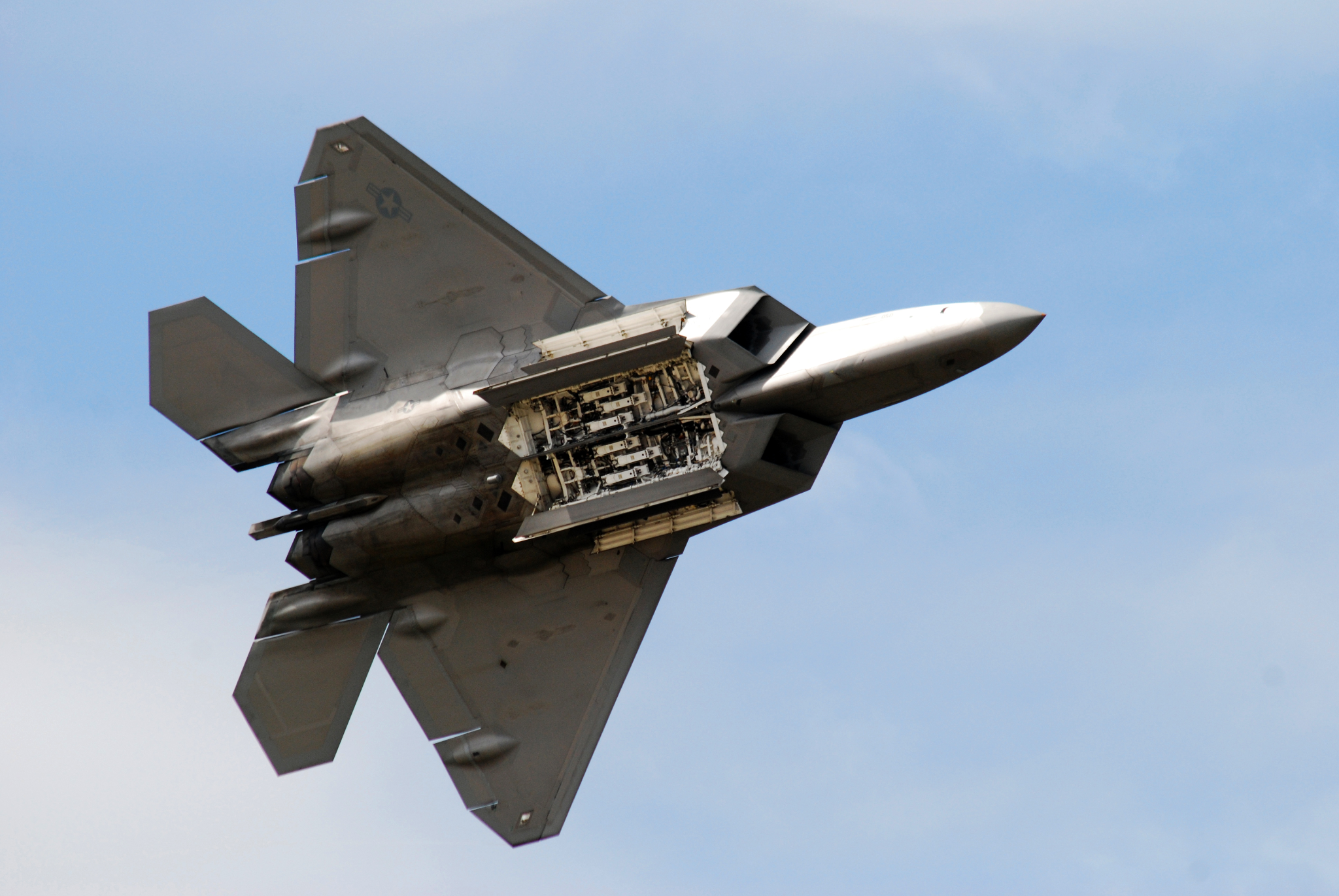
An F-22 lifting its bay doors to show you its internal weapons storage
By Gen5, these challenges had been met. Nearly 200 F-22s were built and over 1,300 F-35s have been made at time of publication. These had considerably more “baked in” stealth, with more durable coatings and less need for TLC. Little is known about exactly how stealthy the Chinese J-20 is, but it has also been produced by the hundreds, with no signs of slowing. Stealth is a prominent feature of virtually every fighter currently being developed, and that is unlikely to change any time soon.
Super Cruise
Gen5 fighters do not have an overall higher top speed than their predecessors. In fact, they are slightly slower. Maintaining stealth requires that the inlet ducts be carefully shaped to hide the engine fan blades, not to maximize airflow. That said, Gen5 is not without improvements in engine technology. While no single big technological leap stands out, better materials technology and design led to improved efficiency, thrust to weight ratios, and engine life.
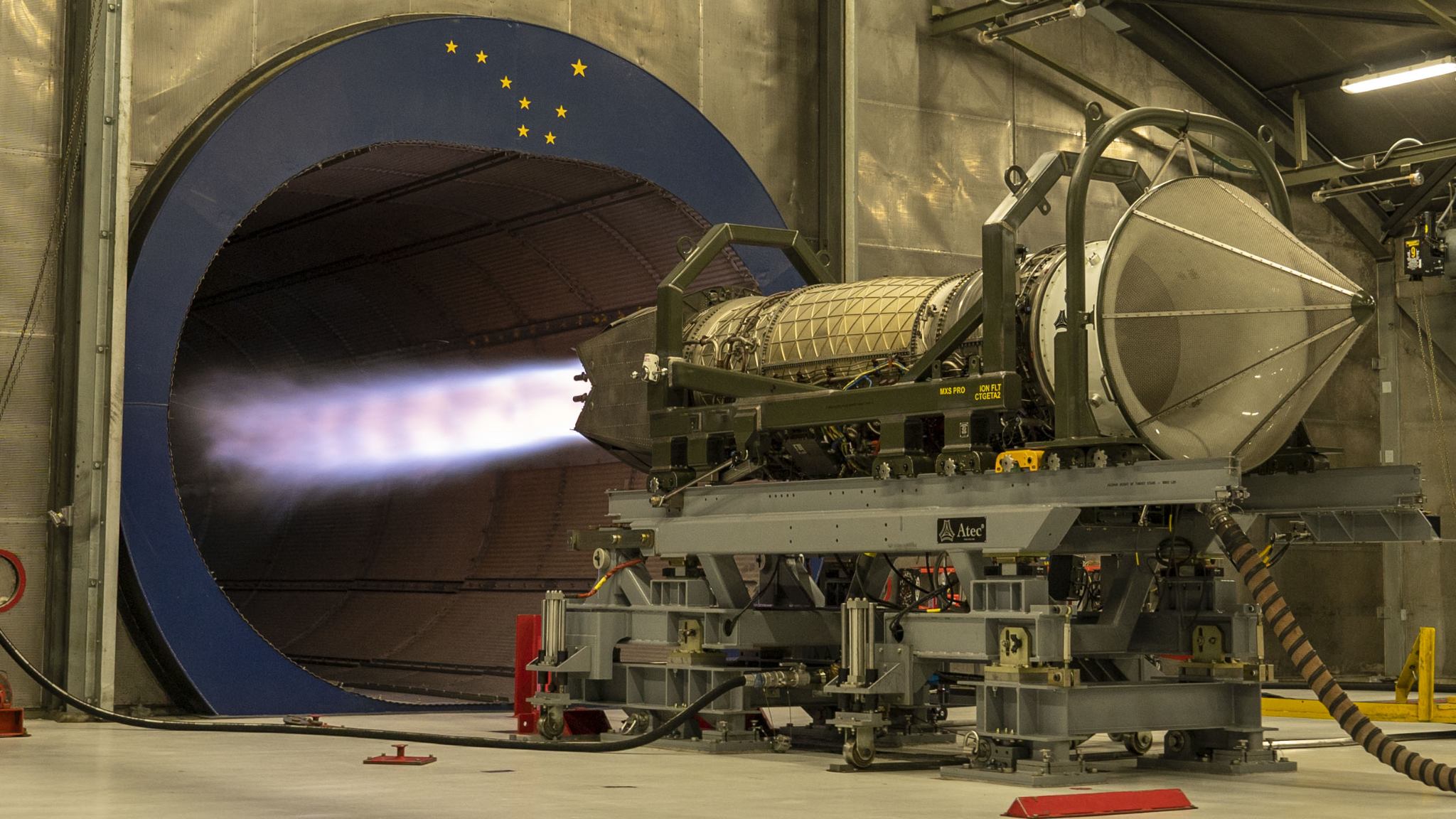
Static test of an F119 engine from an F-22
In theory, improved engines and internal weapon carriage should allow Gen5 fighters to be capable of super cruise: going faster than the speed of sound without the use of afterburners. This gives the fighter all the traditional virtues of speed – the ability to close on or disengage from a target, launch weapons from a higher energy state, and evade threats more effectively – but without the fuel penalty that makes afterburner sprints so costly.
In practice, supercruise is unevenly realized. The F-22 can exceed Mach 1.5 on dry thrust, but design compromises in the F-35 left it with a very nominal super cruise ability, at just Mach 1.2 (the lower edge of supersonic flight) and for very limited durations. And while the Chinese claim supercruise capability for the J-20, their continuing struggles with engine technology raise doubts about the veracity of this claim. That said, improved engines in development for both the F-35 and J-20, so the gap between promise and reality is only going to narrow in future.
AESA Radars
The most basic function of a radar system is scanning, sweeping the beam back and forth over a wide area looking for radar returns, the classic green blooping display that lights up when something is detected. But a return, on its own, is just a blip on a display. It could be an enemy. Or it could be a friend. Or it could be a flock of birds. To be useful, returns needed to be recorded and watched over time so they could be properly tagged and analyzed.
Radar guided missiles add another complication to the situation. A fire control radar needs to have a relatively narrow beam in order to produce useful returns. This doesn’t mean that it can’t scan, but it does mean that scanning requires physically moving the radar antenna around to sweep its beam over the area to be covered. But to guide a SARH missile, that beam must remain pointed at the target continually. This means it can track or scan but not both at once.
Early radar systems solved these problems with brute force. Sea and land based radar systems were built that could combine multiple radars, some of which would be dedicated to scanning and others to illuminating targets. Tracks were kept by hand, literally. Rooms were set up where radar operators would describe what they were seeing to plotters who would record plots (the record of a single return) as tracks (collections of plots) by writing them down on large boards. These systems worked, but could be swamped by too many targets and were obviously totally unfeasible for use in a fighter jet.
The solution was automation, and the first step in that direction was recording plots and storing them in computer memory. This was first done in the 1950s aboard ships; large analog computers could log the returns from multiple radars and record the plots over time, in theory following dozens or hundreds of different tracks at once. This was an important step, but still relied on multiple radar antennas to track and scan simultaneously. This, plus the sheer size of early computer memory meant this was still not practical for aircraft.
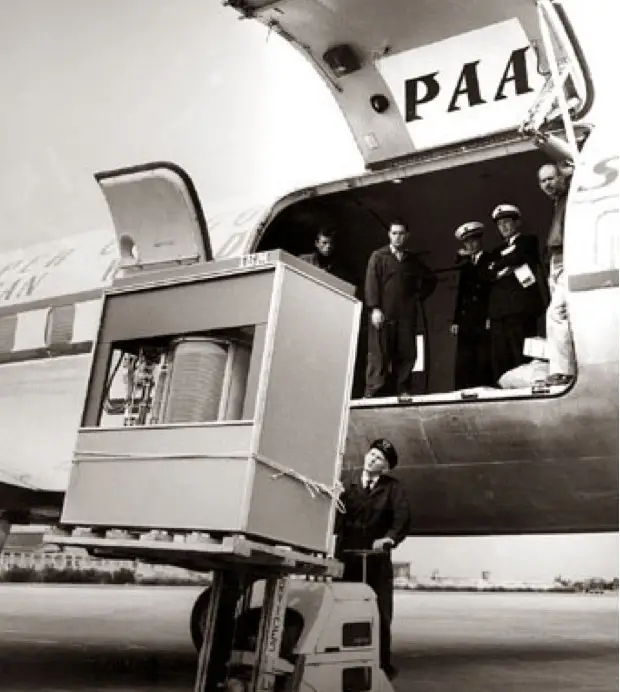
5 megabytes of memory in 1956
The next step forward was the electronically scanned (or phased) array. As we saw earlier, a radar works by physically pointing a radar beam around the volume it wants to scan. You can think of a mechanical radar as a giant flood light. Each part of the antenna releases energy, making a very bright light. But it’s heavy so it only moves slowly, and can only do one thing at a time.
The phased array works differently. Instead of physically moving the radar around, a phased array uses computers to control devices called phase shifters. These can delay or alter the phase of the beam coming out of different parts of the antenna. Doing so alters the way the beams interact with each other causing the beam that gets emitted to “bend” in different directions, which can be used to sweep the resulting beam over the target area. This allows them to sweep their beams hundreds of times a minute.
The first phased arrays were called Passively Scanned Electronic Arrays (PESAs). These could still only form one beam and do one thing at a time, but were capable of switching between tasks with every sweep of the beam. Combined with computer memory and processing, they could mimic the effect of multiple beams by storing results between sweeps and automatically maintaining tracks. The PESA is still a floodlight — it still only points in one direction — but instead of moving around, it has complicated mirrors and lenses that let you redirect the beam very quickly.
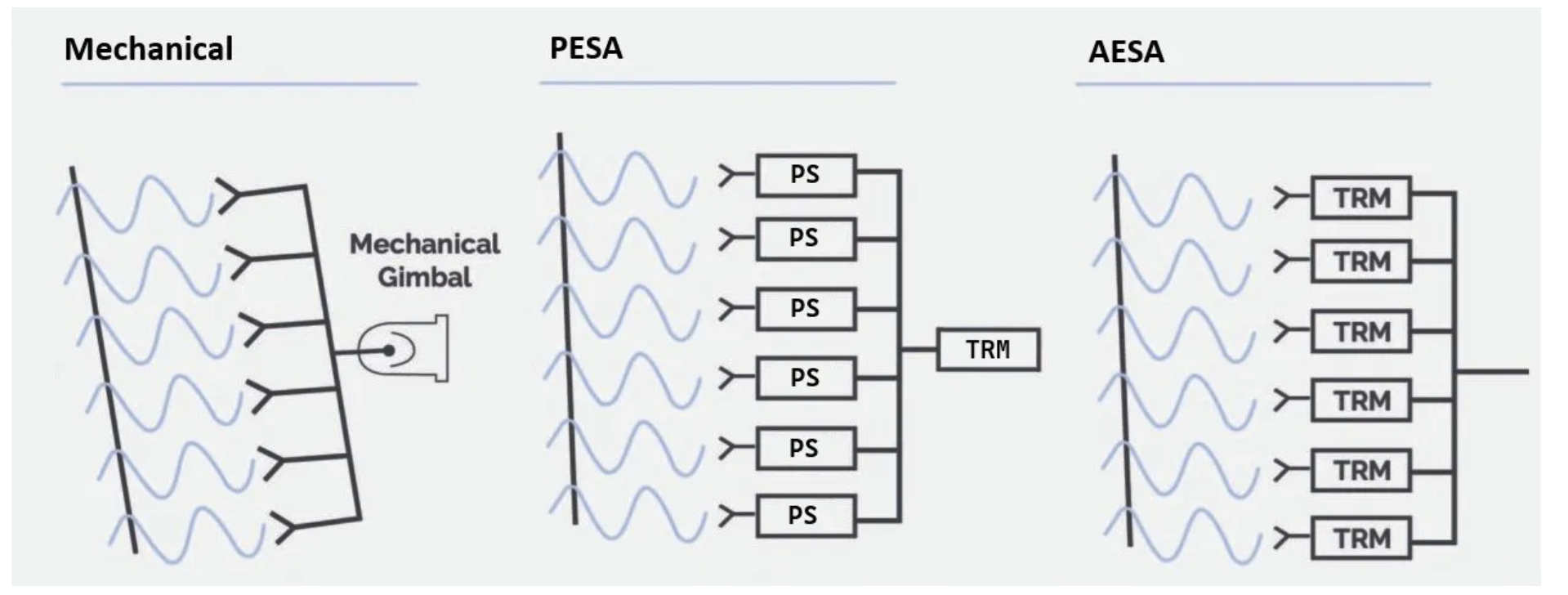
Different methods of radar scanning
PESAs found homes on ships and ground installations, but rarely on aircraft, for two reasons. First, PESAs required serious computing power to operate, power that simply couldn't be packaged small enough for a fighter in the 1970s. Second, the more power pushed through a transmitter, the more problems there are with cooling and reliability, and these were more easily managed on land and at sea than in the air. As a result, Gen4 fighters were initially designed with mechanical radars backed by digital computers, which could approximate track-while-scan capability by recording plots and predicting future movements, but were limited by the slow mechanical sweep of the antenna and could lose tracks during rapid maneuvers. By the time computing had miniaturized enough for electronically scanned arrays to be viable on aircraft, a new architecture had emerged: the Active Electronically Scanned Array (AESA). Instead of one powerful transmitter driving the whole array, the AESA has dozens or hundreds of transmit/receive modules (TRMs), each one effectively a small radar of its own. Smaller modules cool more easily, allowing more power to be pushed through the system. The aggregate output of smaller modules can far exceed that of any single transmitter system, and having multiple independent units is intrinsically more reliable.
Instead of a floodlight, the AESA is dozens and dozens of flashlights. These can be combined and pointed at one target, or they can emit at slightly different frequencies and do multiple things at once. An AESA radar can have some modules track while others scan, form complicated radar beams that are harder for radar warning units to detect, rapidly change frequencies to resist jamming, or even use the radar as an electronic warfare system.
AESA radars were developed towards the end of the Gen4 era, and most Gen4 fighters are now equipped, or can be, with AESA systems. But Gen5 aircraft were designed to take advantage of AESA radars from the ground up – not merely as a better radar, but as the foundation for something more ambitious: combining data from every sensor on every aircraft in a formation into a single shared picture of the battlefield.
Sensor Fusion
The idea of combining the sensor data from multiple aircraft is an old one. As discussed above, the US Navy led the way in trying to build systems that could integrate data from multiple ships and aircraft into, cohesive single operational picture that was shared across the fleet. By the Gen4 era, they had succeeded in building systems that could integrate multiple radar systems together, and then use data links to share radar tracks, target information, and even weapon guidance across multiple platforms.
While this was a huge step forward, the integration was, to a degree, superficial. Each platform uses its own sensors to make its own tracks, then shares that information with others. Systems exist to compare tracks and eliminate duplication, but no platform has access to the raw sensor data the others are collecting, only the conclusions drawn from it.
Sensor fusion goes beyond this, sharing the underlying raw data itself across platforms. This is made possible by the AESA radar, whose flexibility allows it to double as an extraordinarily high bandwidth data transmitter capable of sending data hundreds of times faster than the Link-16 systems used by Gen4 aircraft. As a result, each platform in the network doesn't just have access to its own sensor data, but to everything collected by every aircraft in the formation.
The practical payoff is significant. When multiple aircraft are all looking at the same target from different angles, their returns can be compared and cross-referenced to produce a far clearer and longer-range picture than any single radar could generate. Targets that might be too faint or ambiguous for one radar to confidently identify become clear when seen through several simultaneously. For the pilot, this means a dramatically expanded picture of the battlespace knowing where threats are earlier, with greater confidence, and without having to illuminate the target with his radar in ways that could reveal his position.
Gen 6
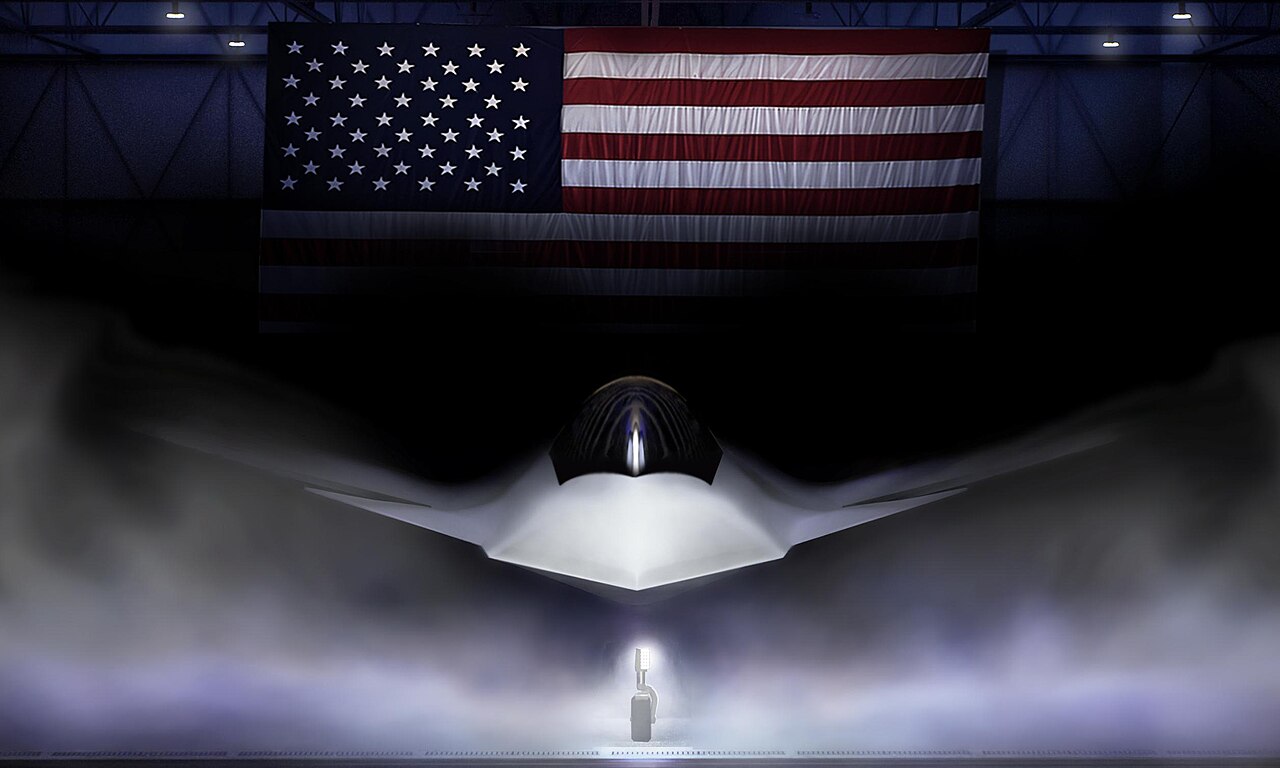
While no Gen6 fighter has yet entered production, the outlines of what they will look like are beginning to emerge. As with previous generations, Gen6 is not defined not by a single technology but by the integration of several simultaneously: larger airframes built for Pacific-scale ranges, tailless designs that push stealth further than ever, adaptive cycle engines that resolve the age-old tradeoff between efficiency and speed, and perhaps most significantly, the replacement of the lone fighter pilot with something closer to an airborne battle commander directing a fleet of drones.
Adaptive Cycle Engines
As discussed earlier, turbofan engines use a large fan to push air around the engine. The proportion of air that bypasses the engine core versus the amount that passes through it is called the bypass ratio. For example, an 80% bypass ratio means that 20% of the air goes through the engine core like a traditional turbojet and 80% does not.
As a rule, higher bypass ratios are more efficient. As discussed earlier, moving air relatively slowly via fan is more efficient than moving it quickly via jet. But just as with propellers, the amount of thrust the fan adds drops off as aircraft speed increases. As a result, while commercial airliners can use high bypass ratios (85%+) to get tremendous fuel economy at subsonic speeds, fighter jets have had to use lower bypass ratios, forcing unpleasant tradeoffs. The F-22, for example, has relatively short range in part because of the very low bypass ratio (23%) its F119 engines required to optimize for top speed and supercruise ability. The F-35's better range performance is in part due to the higher ratio (36%) of the F135 engine, but that higher ratio is partly responsible for its limited supercruise capability.
The adaptive cycle engine cuts this Gordian knot by allowing the engine to change its bypass ratio and achieve the best of both worlds. At takeoff and low speeds, it can operate at a ratio nearly as high as those used by commercial jets, allowing shorter takeoff runs, higher takeoff weights, and greater range and payload capacity. At supersonic speeds, it can operate in a very low bypass mode, as if optimized for high-speed flight. The result is an engine that is more efficient at every speed, giving Gen6 fighters meaningfully longer range, greater payload, and better supersonic performance than any fixed-ratio engine could deliver.
Tailless Designs
Stealth shaping does a good job of handling the problem of radar reflection, but there's another way to get a return from an object: resonance. When hit with a radar beam with a wavelength roughly twice their size, metallic objects will resonate, emitting radar waves in that frequency in all directions. This gives radar designers a potential counter to stealth, by broadcasting at the right frequency they can cause parts of an otherwise stealthy aircraft to light up like a beacon.
The most vulnerable parts of a conventional fighter are its tail surfaces. Vertical and horizontal stabilizers are relatively thin, relatively exposed structures that extend well beyond the main body of the aircraft, exactly the kind of feature that resonance radars are designed to exploit. Tails also create sharp angles where they meet the fuselage, generating radar returns of their own. Gen6 designs are responding by eliminating them entirely, along with any other extraneous protrusions that might give resonance radars a target. The result is a cleaner, more continuous airframe with small control surfaces tucked as close to the body as possible and coated in radar absorbent materials to handle what shaping alone cannot.
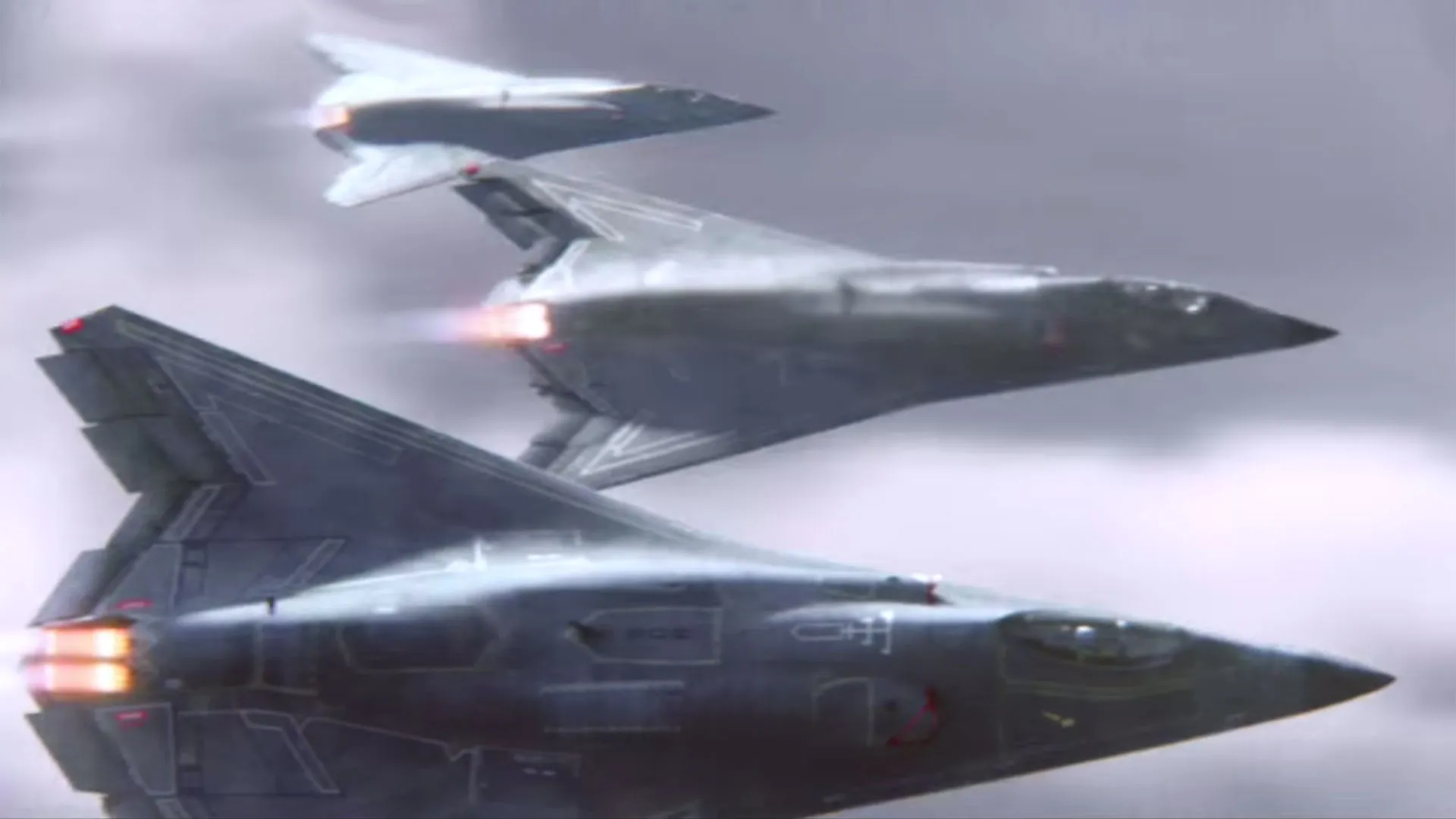
The most important thing about tailless designs is they look awesome
The problem is that tails do a great deal of work. They provide stability and control in pitch, roll, and yaw — the three axes of aircraft movement. Remove them and you have an aircraft that is, in the most literal sense, extremely difficult to control. The B-2 and B-21 bombers demonstrate that tailless designs can fly, but they are large, relatively slow aircraft that prioritize stealth and range over agility. Building a tailless fighter that can match the maneuverability of current Gen5 aircraft is a fundamentally harder problem.
The solution is thrust vectoring, steering the aircraft by pointing the engine nozzles rather than relying on control surfaces. This is not a new idea. The F-22 used two-dimensional thrust vectoring to improve pitch control, and some versions of the J-20 have incorporated similar systems. But Gen5 thrust vectoring was a supplement to conventional tail surfaces, not a replacement for them. Gen6 will need full three-axis control from thrust vectoring, improving pitch, roll, and yaw without any meaningful tail surface to fall back on.
Manned-unmanned teaming
Gen6 fighters will not fly into battle alone, but will be accompanied. All current programs envision pairing them with a variety of unmanned assistants — variously called Loyal Wingmen, Collaborative Combat Aircraft (CCA), or Remote Carrier Vehicles.
Contrary to popular wisdom, drone aircraft are not a new technology. The idea of controlling an aircraft via radio dates back almost as far as aviation itself and such aircraft were produced during the first World War.
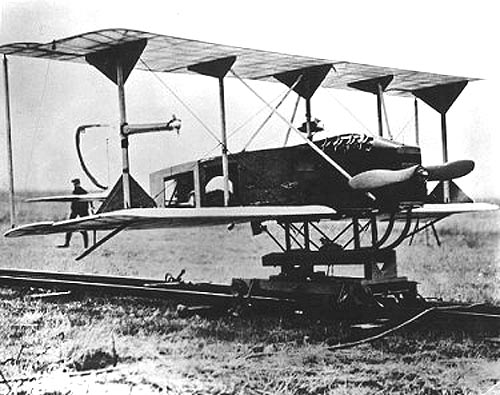
A Hewitt–Sperry Automatic Airplane in 1918
Remote-control aircraft, though, were long limited by the fragility of wireless communication. A drone needed both to receive instructions and to communicate information about its location, speed, and altitude back to its controller to maintain situational awareness. A disruption on either end was likely to result in the loss of the aircraft. This meant that unmanned aircraft were largely confined to simple tasks like serving as target drones.
By the Gen5 era, improved computing technology had changed the situation. While far from fully autonomous, drones had gotten much better at keeping themselves in the air without constant inputs from their controllers, and improved communications bandwidth made them far more useful on the battlefield. Advances in sensor miniaturization meant they could carry increasingly capable cameras, radars, and electronic warfare equipment without needing to be the size of a fighter.
Gen6 fighters will build on these changes, though exactly how is harder to say with any certainty. Proposals have ranged from unmanned versions of the Gen6 fighters themselves, capable of bringing their full suite of combat capabilities, to tiny aircraft like the XQ-58 Valkyrie dedicated to jamming, acting as decoys, or carrying additional weapons, and mid-sized platforms like the MQ-28 Ghost Bat. These less capable platforms will leverage sensor fusion to contribute to and draw from the sensor picture of the manned fighters they accompany, while being cheaper and more expendable than full-on fighters.
The combined effect of these developments is to dramatically multiply the combat power of a single Gen6 fighter. Traditional fighter tactics have always relied on wingmen, paired or grouped aircraft watching each other's backs and dividing up targets. The Gen6 fighter will bring its own wingmen, replacing them with a distributed fleet of drones. The result is a crew that may effectively command a small squadron — extending sensors far beyond what any single aircraft could carry, saturating enemy defenses with targets, and striking from multiple directions simultaneously. The manned fighter remains at the center, but surrounded by a swarm of semi-autonomous robots.
At least, that’s the vision. It remains unclear how well any of this will actually work under real combat conditions. Drone teaming has been tested extensively in exercises, but jamming, electronic warfare, and the chaos of actual combat will stress these systems in ways no exercise can fully replicate. The concept is promising enough that every major air power is investing heavily in it — whether it delivers on that promise remains one of the defining open questions of the coming generation of aerial warfare.
Size
Fighter jets have grown in size with every generation, and Gen6 will be no exception. In fact, they may represent the biggest leap yet, for two related reasons. First, the desire for greater range and payload will be especially intense in Gen6, because these aircraft are being designed with the demands of a Pacific conflict in mind. Earlier generations were usually optimized for fighting in Europe, where combat ranges were rarely more than a few hundred miles. A Pacific conflict could demand ranges measured in thousands.
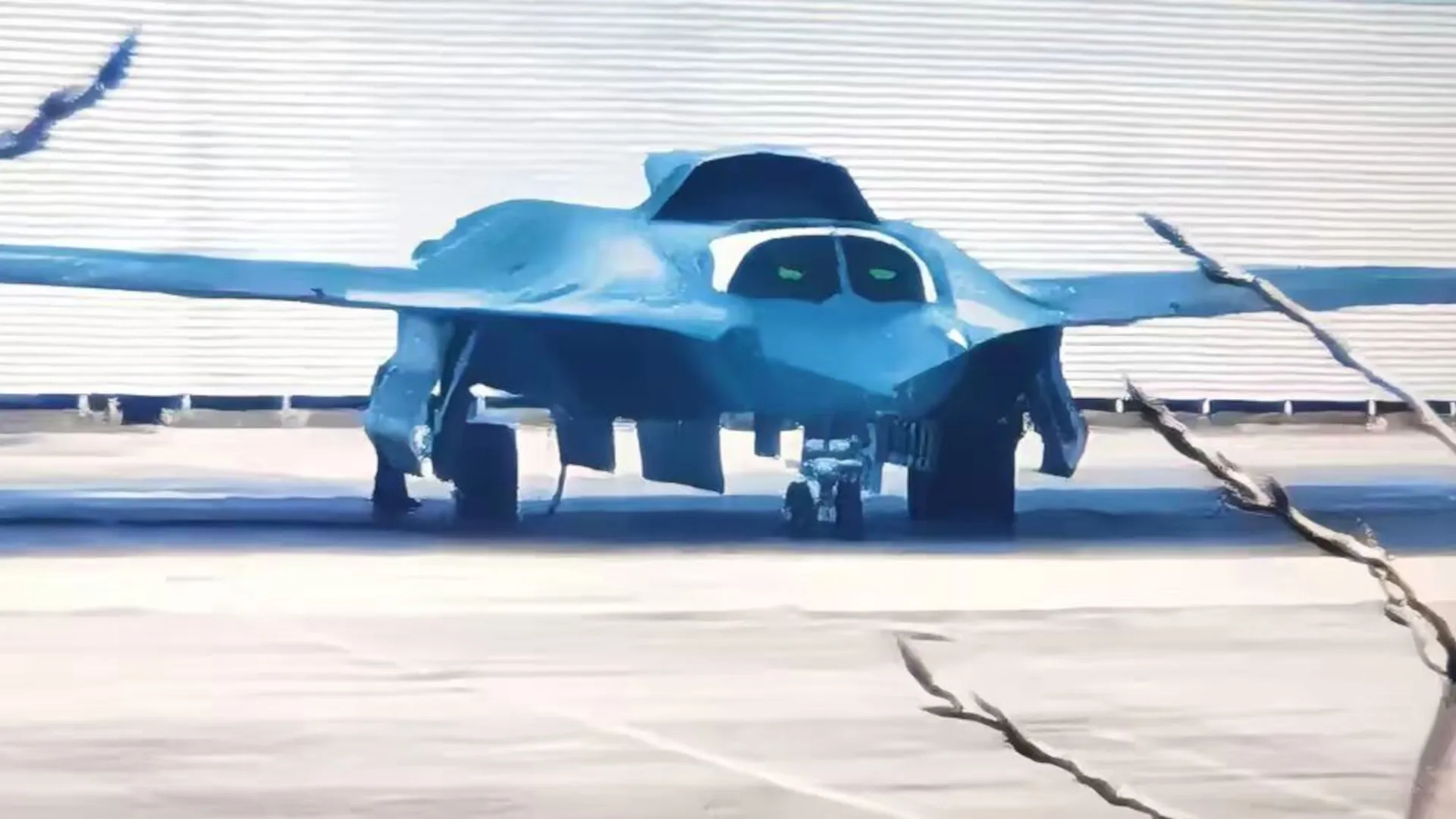
Gen6 fighters will be large
Second, there is the likely return of the second seat. Both the F-22 and F-35 relied on greater automation and simulators to handle cockpit complexity, and eliminated the need for two-seat variants. The Chinese have experimented with the two seat J-20S, but it's unclear how many will be built. In Gen6, though, the GIB is likely to make a return. The long ranges envisioned would strain any single pilot's endurance, and operating a swarm of drones will likely demand a dedicated second operator.
A harbinger of this trend is the only Gen6 fighter yet revealed, the Chinese J-36. Although details remain highly speculative, photographs confirm it's a massive aircraft featuring huge wings, three engines, and side-by-side seating rather than the tandem arrangement typical of fighters.
Comments
So stealth fighters are less detectable by radar -- how do they stand against IR detection and tracking?
I wonder how 5th/6th gen fighters will play out for the non-US parts of the world, particularly once you get outside of NATO. It seems like the answer thus far is "buy an F-35" if you have the money and trust, but for marginal powers, those who aren't fully trusted with F-35 capabilities, or aren't likely to face a top-tier opponent (Argentina, Indonesia, etc., are all F-16 operators currently) I wonder if they end up operating a future Block 90 F-16 (gen 4.5++) indefinitely that isn't stealth or super cruise capable, but still has AESA and some of the other sensor advancements. (Or for that matter, the US is still pursuing F-15EX procurement alongside the F-35 and F-47, though admittedly in a somewhat different role).
It also seems like the cost of development makes it unlikely that anyone outside the US or China will make a fully competitive gen 5+ fighter a la Typhoon or Eurofighter. On the other hand, the South Korea's KF-21 Block III will apparently be stealth and at least broadly in the F-35 realm, though who knows if that makes it into production.
@Tony
Isn't that primarily a rear hemisphere issue? I believe the stealth bombers have spent quite a bit of effort on cooling their exhaust gases, but I don't think that has been (or can be!) for anything with an afterburner.
I am less clear how much of an issue it is for the front hemisphere, though with the advances in modern sensors who knows?
However, I suspect that it would be on the order of visible light stealth - you can reduce it, and it's not an issue in overcast weather, but in clear conditions there isn't much to be done.
redRover:
Variable cycle engines should help somewhat, at least in subsonic cruise.
@Tony:
Not all frequencies of IR go through the atmosphere equally. One of the things with stealth coatings is also tuned IR emissivity. It doesn’t act like a blackbody radiator. The coating will preferentially emit in the frequencies that are well absorbed in air.
I'm a retired USAF weather officer. I'm aware of sonic weather sounders, used to obtain wind data aloft without sounding balloons. I wonder if a network of sounding stations would be able to detect stealthy aircraft from the wake turbulence.
@Bill Bowne, isn't that what Ukrainians are doing with orc drones?
@Bill Bowne
Apparently Iran has been using ground based IR sensors to passively augment their radar network, and I would imagine that you could do something similar with microphones, visible light cameras, and other passive sensors, particularly if you can network/triangulate them. It's not as precise as a proper radar, but it also is less likely to draw a HARM missile, and lets you track the opponent until they're right over a SAM site.
Wake turbulence seems like it would be a very complicated way to do the same thing against planes, though I believe the Russians have done quite a bit of work on that for submarine vs submarine warfare.
Really appreciate the Fighter Generations series.
Couple thoughts on this one
First, pour one out for a legend https://www.airandspaceforces.com/denys-overholser-stealth-pioneer-whose-work-led-to-the-f-117-dies-at-86/
Second... the generational lines are blurry as hell. Current models of 4th gen jets that are still in production (F-15, F-16, F-18, Typhoon, Flanker, Rafale and J-10) all have some amount of 5th Gen capability. AESA radars are common across all of them, so is some degree of sensor fusion and advanced data sharing, a lot of them have a modicum of stealth shaping and most some LO coatings. But the only aircraft that have all of it are, as noted, F-22, F-35, and J-20.
You nailed it re 6th Gen. There's a lot of "it remains to be seen". I think Combined Cycle Engines were scrapped from the US NGAD (F-47) because of cost and delays.
As far as what the rest of the world will do... Who knows. The UK, Italy and Japan are partnering on GCAP; France, Germany and Spain have FCAS. The US has F-47 amd F/A-XX. Four massive programs in the Western world, and a combined market for maybe 1500 aircraft. FCAS already appears to be going as well as most Franco-German cooperation, it wouldn't shock me to see the offerings narrow. Though the current political environment does not exactly encourage the rest of the world to partner with the US on a program. So again... wait and see.