
Claims that US carriers are very vulnerable to missile attack, and will be sunk immediately in any upcoming war, are quite common. They’re also wrong. The carriers are surprisingly survivable, and the prowess of missiles is usually grossly exaggerated.
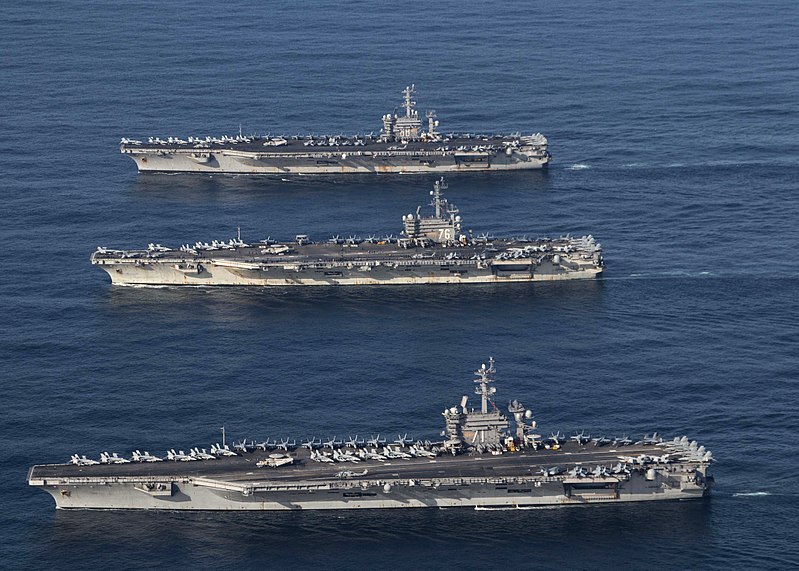
USS Nimitz, USS Ronald Reagan and USS Theodore Roosevelt operating together, November 2017
The first line of defense is the fact that the sea is very big[Citation Needed] and ships are small and mobile. Obviously, improved radar and modern navigational systems have made it easier to find and track ships at sea since WWII. Clouds and darkness are no longer serious obstacles, and it’s harder (though not impossible) to mess up your navigation. But there are still problems. A typical radar system will tell you that there is something there, but it won’t tell you what it is. You can make guesses based on where contacts are, but a smart opponent will do all he can to frustrate this. Carrier groups, for instance, never operate in the “bullseye” formation made famous in photos, and often do their best to look like merchant traffic.1

Recent Comments