October 07, 2018

The Washington Naval Treaty

When World War I ended, the world looked poised on the verge of another naval arms race. The United States, which had aimed at parity with Britain under the 1916 Naval Program, was talking about an even larger fleet program, to firmly surpass the Royal Navy. In the Pacific, Japan was building the so-called 8-8 fleet, aiming to have 8 new battleships and 8 new battlecruisers. This would pose a major threat to British and American holdings in the Far East. Britain would traditionally have simply outbuilt these threats as they had with Germany a decade earlier, but the war had left them nearly bankrupt. So when American Secretary of State Charles Evans Hughes called a conference on naval armaments in November 1921, all three countries showed up, as did France and Italy.1
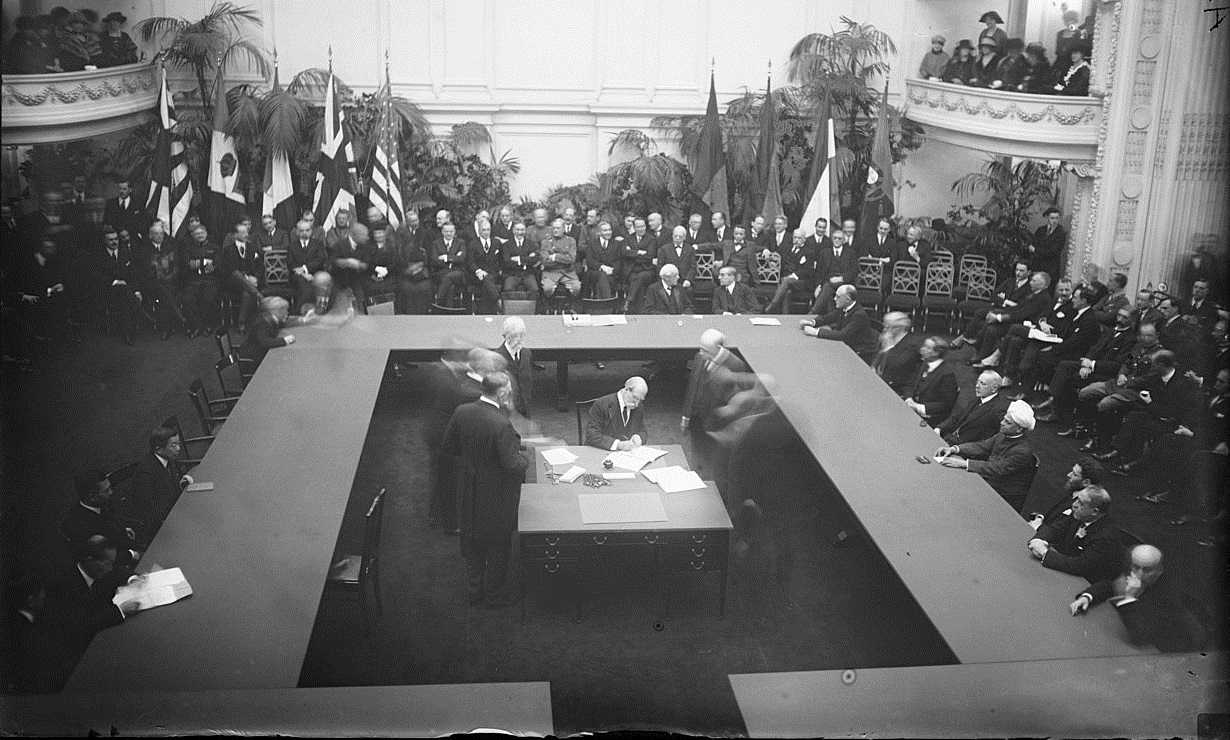
Hughes opened the conference with a dramatic series of proposals, calling for the immediate suspension of all capital ships currently under construction, no new construction for the next 10 years and rules on when older ships could be replaced. Older ships would be scrapped to bring capital ship tonnages in Britain, the US and Japan to 600,000, 500,000 and 300,000 respectively.2 All other categories of ship would be limited on similar lines. Read more...
October 05, 2018

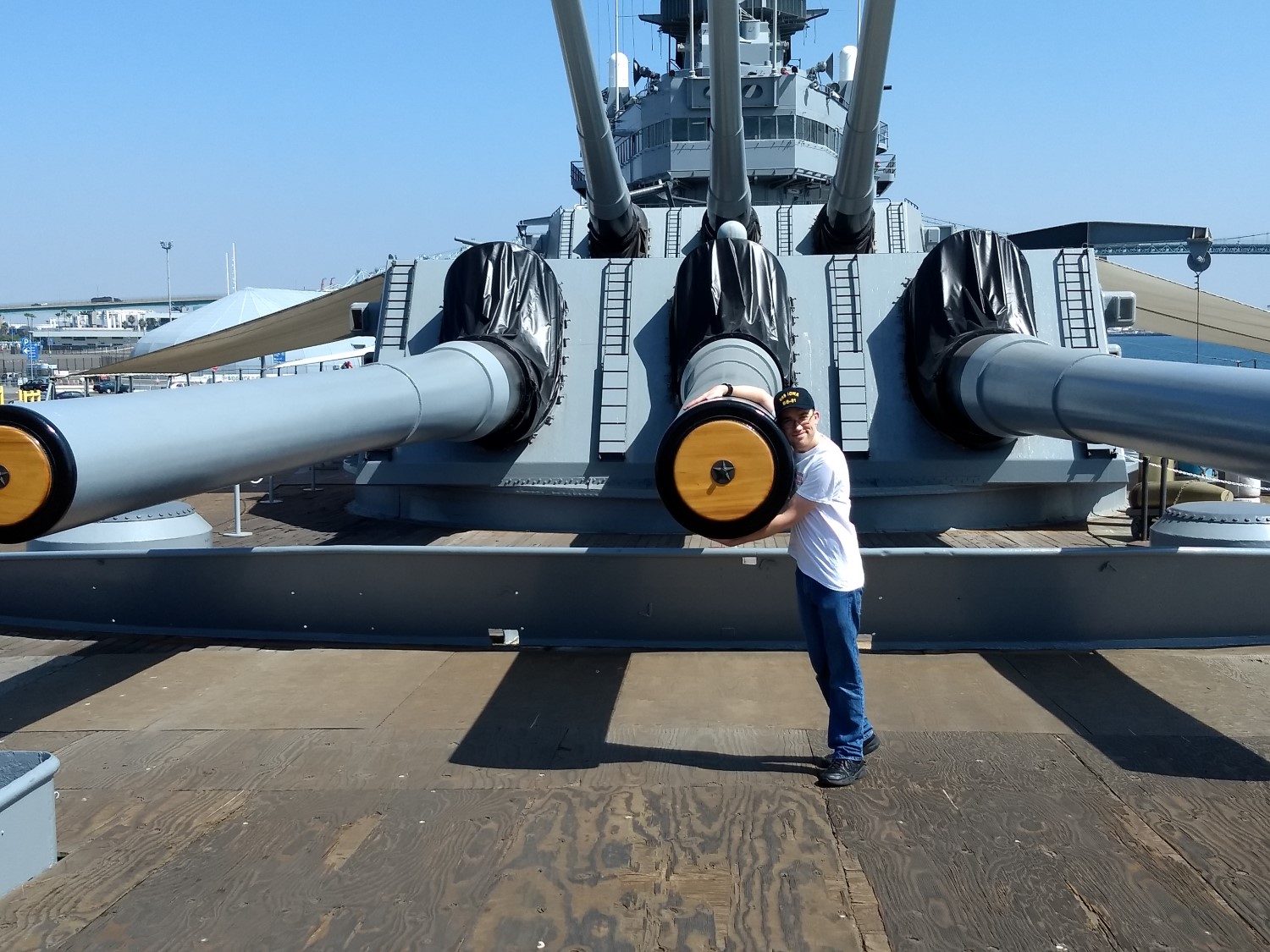
Going back to Iowa

My first visit back to Iowa after my move to the Midwest was great. I got to see the ship again, meet readers, hang out with my friends on the crew and take a look at what they've been up to in the past year.

First, there's the Full Steam Ahead tour, which was about to start when I left. All five people who showed up to the meetup did the FSA in the morning, and said that they enjoyed it. I shadowed part of the tour, as I wanted to get to the boiler room and plotting rooms. Read more...

October 03, 2018

Secondary Armament - Light AA Guns

While the heavy AA guns and their dual-purpose successors could be potent weapons against aircraft in the right situation, there were also cases where their limits were sharply revealed. Even the fastest-firing of them was limited to no more than one round every three seconds or so, and when the target was a strafing fighter or a torpedo bomber closing in for the drop, they simply could not respond fast enough. Smaller weapons, of limited range but capable of filling the air with steel, were needed.


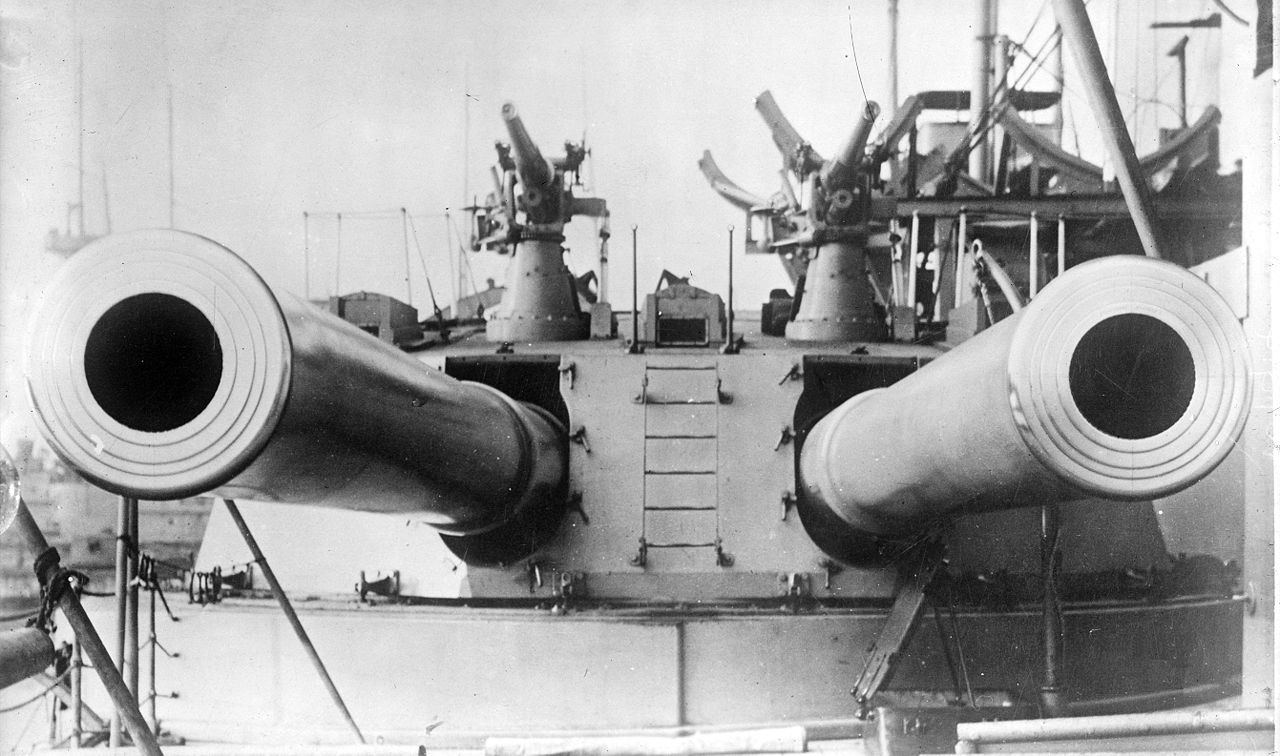
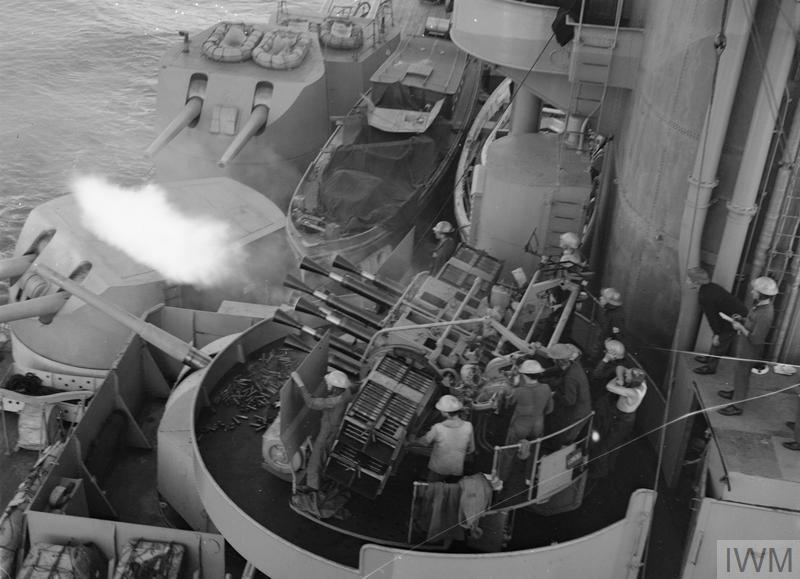
Octuple Pom-Pom on HMS Rodney

Initially, these were simply versions of the standard machine guns used ashore, fitted with ring sights and bolted to a convenient railing. These were adequate in World War I, but shortly after the end of the war, the British saw the need for something better. They had also made use of the 2-pdr Pom-Pom,3 a 40mm autocannon, for AA firepower and decided to base their future light AA weapon on it. Development began in 1920, but lack of funding slowed development, and the famous octuple 2-pdr Pom-Pom didn't enter service for another decade.4 It was a revolutionary weapon, introducing director control5 and power operation to automatic AA weapons. The 2-pound shell was powerful enough for aircraft of the era, with a 0.16 lb bursting charge. On the downside, rate of fire was only 90 rds/min/gun, and the choice to use existing ammunition limited muzzle velocity to only 1,900 ft/sec. By the late 30s, this was clearly insufficient, and an improved version capable of about 2,300 ft/sec was designed. It was not capable of firing the old ammo, and for some bizarre reason, both low and high-velocity weapons were kept in production throughout the war. Read more...

September 30, 2018

Secondary Armament - Dual-Purpose Guns

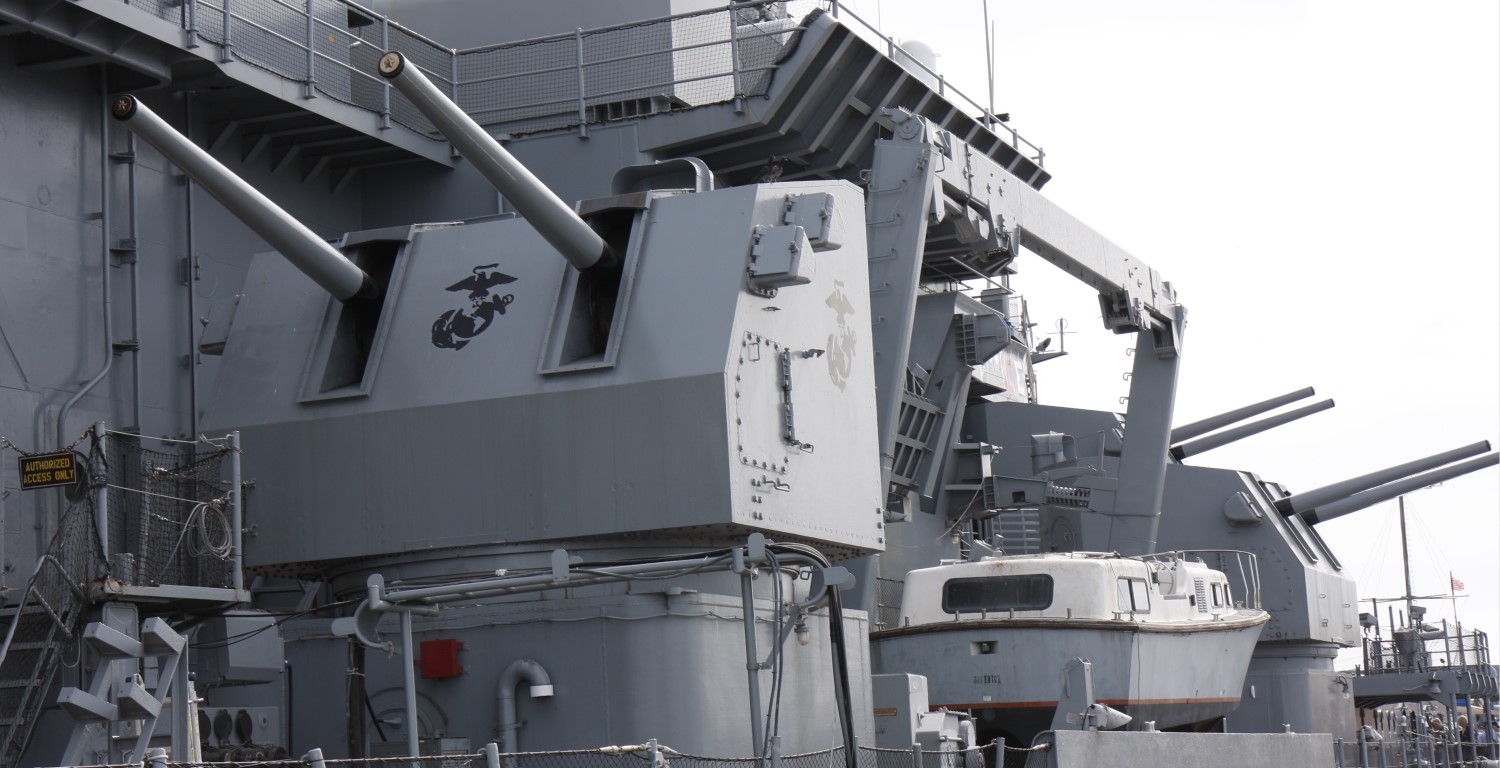
The battleship had emerged from the First World War with two separate batteries of medium-caliber gun, one for shooting at surface targets, and one for air targets. Some nations embraced this, but elsewhere the obvious inefficiency of having to carry two separate sets of guns of approximately the same size prompted a search for a gun, and a mounting, which could fulfill both roles. Both destroyers and aircraft were getting larger, tougher and faster, and countering them required a gun with reasonably high muzzle velocity, a large shell, and a high rate of fire. The US and Britain both installed these weapons on their treaty battleships, and refitted their older battleships with similar batteries where possible.


Iowa's starboard DP mounts6

Another major driver of DP guns was improved AA fire control. The first generation of AA guns had relied on barrage fire, attempting to saturate a patch of sky the target airplane would fly through. During the interwar period, however, systems like the British High-Angle Control System and the American Mk 37 director7 were developed which would theoretically allow accurate engagement of aerial targets. However, this method required high muzzle velocity, as the target could maneuver in the dead time between aiming and the shell reaching the target. This fit well with the need for higher muzzle velocity to reduce the dead space for anti-destroyer fire. Read more...

September 28, 2018

Museum Review - USS Albacore

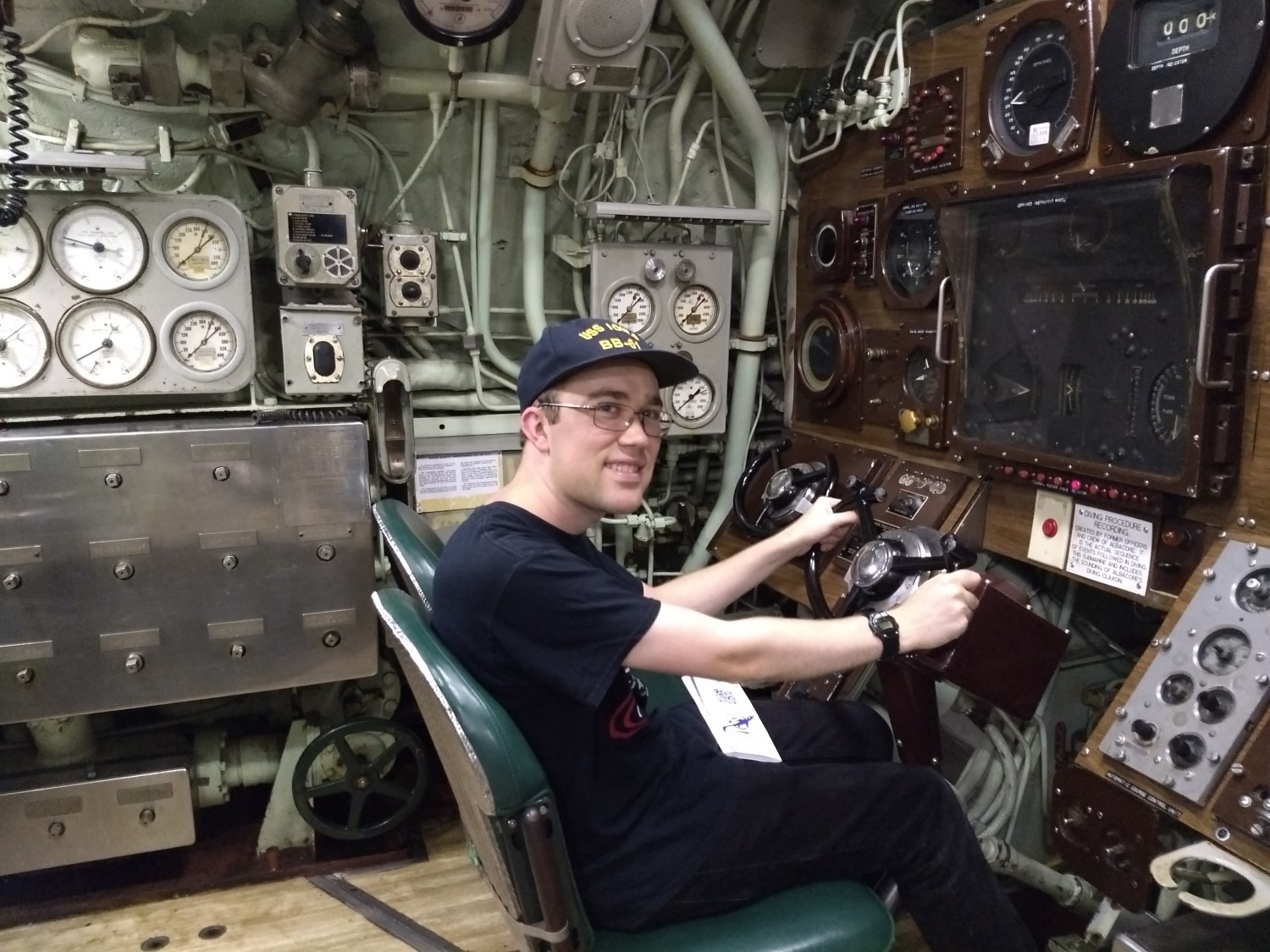
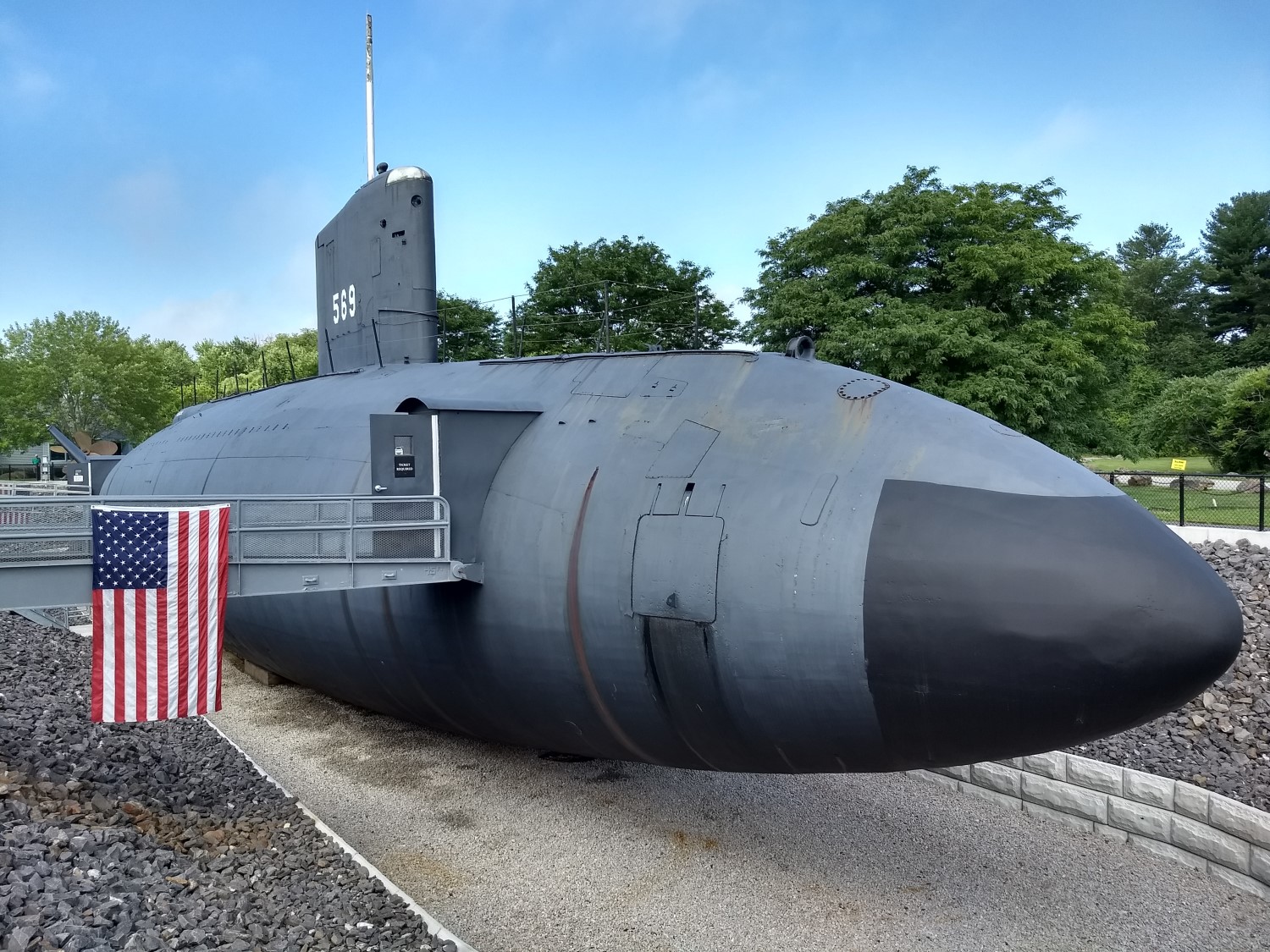
On the morning of my last day in New England, I headed north to New Hampshire to see USS Albacore, the second of the vital forerunners of the modern submarine. Sister Bean had to go back to work, so I was on my own. While Nautilus had pioneered nuclear propulsion, she had retained the general hull design of previous submarines, only partially optimized for underwater operations. Albacore, while propelled by diesels and batteries, was the first to be fully designed for performance underwater.8


Me at the control panel, for real this time
Type: Museum experimental submarine
Location: Portsmouth, New Hampshire
Rating: 4.3/5, Worth a visit because there's no glass
Price: $8 for normal adults

Website

Read more...

September 26, 2018

Secondary Armament - Anti-Air Weapons

The airplane entered the world only a few years before Dreadnought, but its immediate impact was much smaller. The slow, short-ranged aircraft of the first decade of heavier-than-air flight were incapable of meaningful contribution to naval warfare. However, this was to change radically over the next few decades, and navies were not slow to realize this.


QF 3" 20 cwt onboard HMS Royal Oak

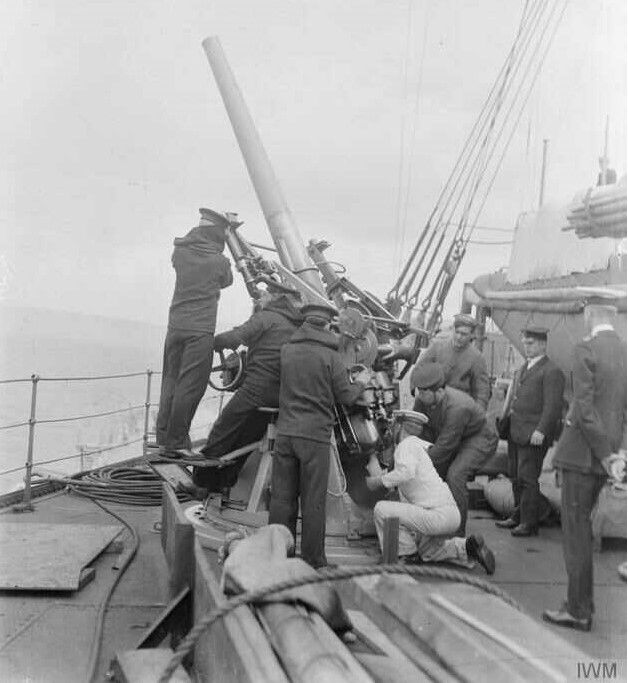
The first battleships to carry AA guns were the British Iron Dukes, who received a pair of 3"/45 guns upon completion in 1913. These weapons were mounted in open high-angle mountings, designed exclusively for AA fire. They proved to be excellent weapons, well-suited to the demands of shooting at aircraft, a very different challenge from the usual problems of surface gunnery. Airplanes were small and fragile, but moved much more quickly than surface ships, and in three dimensions. This meant that the most prized features in AA weapons were handiness, so that the gun could be brought on target quickly and kept there, and a high rate of fire.9 Time fuzes were used to make the shells explode near the predicted target position, greatly increasing the lethal area, but the target could maneuver while the shell was in flight, so a high muzzle velocity was also desired. However, this required a long barrel, so larger-caliber weapons tended to be short and low-velocity.10 Read more...

September 24, 2018

Open Thread 9

It's time for our regular Open Thread. Talk about whatever you want, so long as it isn't culture war.

I've found a strong contender for the Naval Gazing Award for Excellence in Defense Journalism Failure. The Military's Addiction to Oil, an effort to quantify the military's impact on global warming. It's from 2007, but it was so bad that HuffPo actually pulled the rest of the series. The man has clearly never been near a member of the military, except maybe during a protest. Favorite points include his mention of the "B-52 Stratocruiser" (merely one of many misunderstood aircraft), a claim that the "Seals" have a philosophy of "spray and pray" (a statement I would not like to make near actual SEALs), random shots at defense contractors unrelated to the article's thesis, an assumption that the military doesn't care about fuel economy (fuel logistics are a big concern, and if they could cut the amount of effort devoted to it, they would), and the claim that the Abraham Lincoln "fired 1.6 million pounds of ordnance from its guns" during the early stages of Iraqi Freedom (all three CIWS would have had to fire for almost 9 hours straight to do this). Read more...

September 23, 2018

The Wartime Battlecruisers

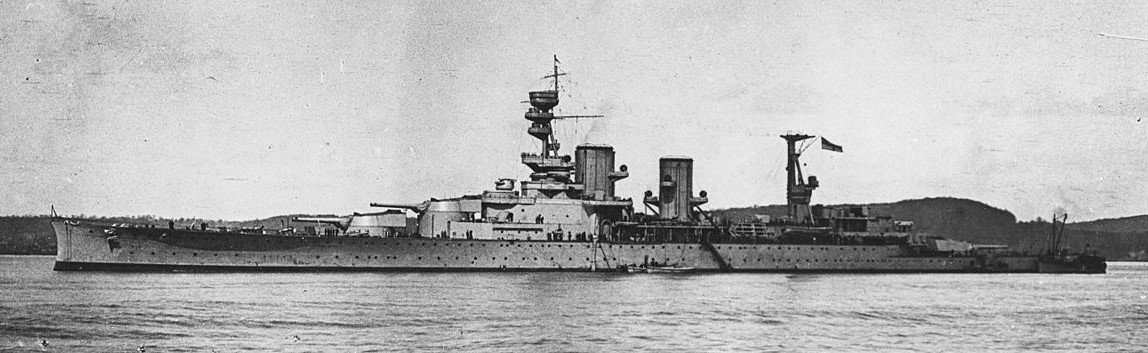
When war broke out in 1914, it was assumed that the fighting would be over quickly, well before any new capital ships could be completed. The ships of the British 1914-1915 building program, three Revenges and a Queen Elizabeth, had yet to be laid down. One of the Revenges and the Queen Elizabeth were being constructed at the Royal Dockyards, and were promptly cancelled, freeing capacity for other, more urgent, vessels. However, the last two ships, Renown and Repulse, were being built under contract in private yards, Palmers and Fairfield respectively. Cancelling these ships would incur significant penalties, and work on them was allowed to proceed.


HMS Repulse shortly after being completed

Into this picture came Jackie Fisher, who had invented the battlecruiser and continued to believe it would one day displace the battleship.11 After the Battle of the Falklands in December 1914, where Invincible and Inflexible performed well, running down a German squadron that had been attacking British trade, Fisher proposed that Repulse and Renown be redesigned as battlecruisers. His initial proposal was for a 32-kt ship with two twin 15" turrets, 4" secondary armament, intended to save weight relative to the 6" weapons used on the most recent capital ships, and armored like Indefatigable. He soon added a third turret to his requirements, along with a pair of torpedo tubes, and the Director of Naval Construction, Eustace Tennyson D'Eyncourt, produced a design that matched these specifications within three days. This design was swiftly approved, and detail work began only 9 days after Fisher had issued his specification. This urgency carried into the production program, and Fisher planned to complete the ships within 15 months of authorization, by March 1916. Read more...

September 21, 2018

Museum Review - Mystic Seaport

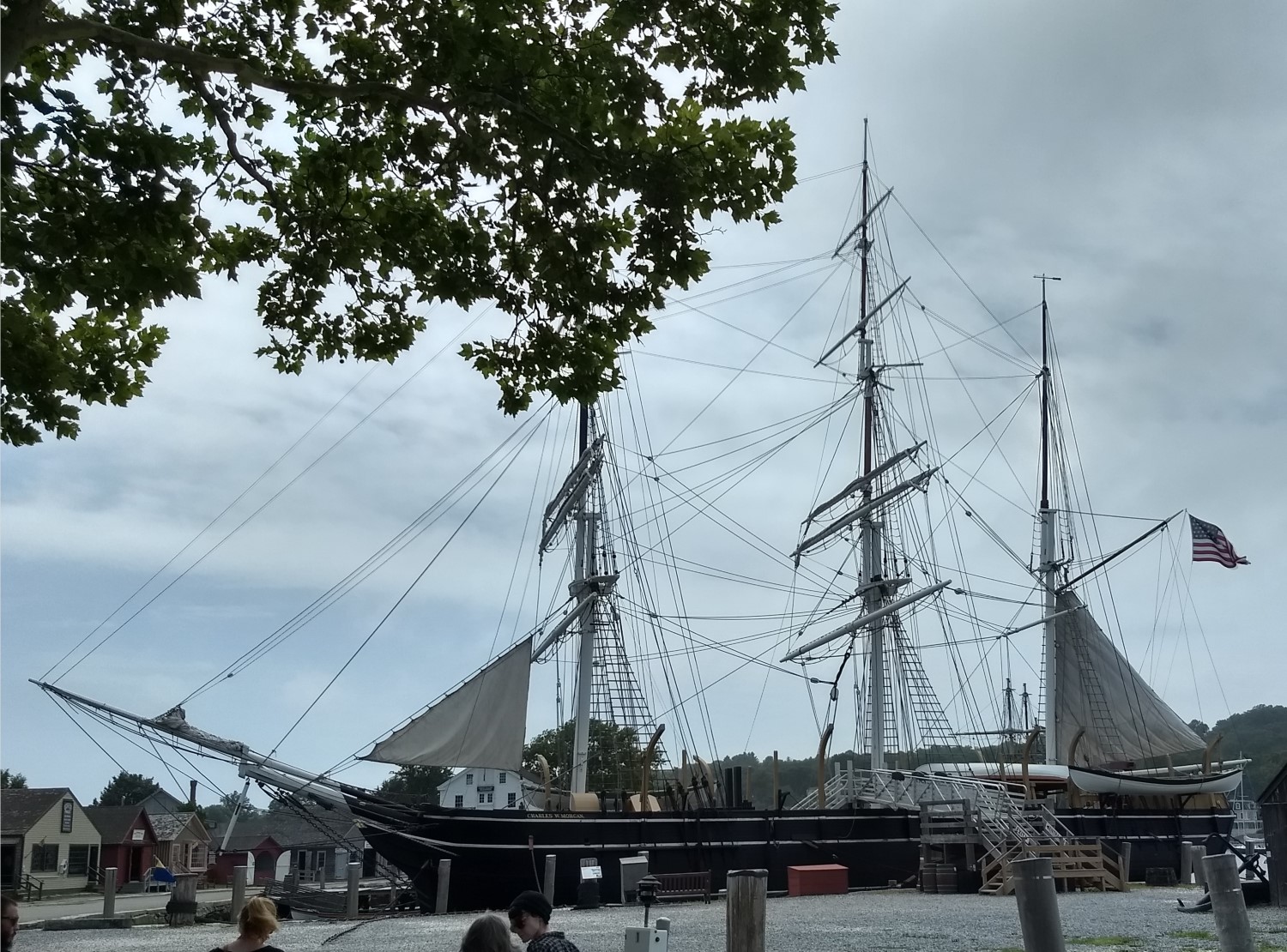
After visiting Nautilus, Sister Bean and I drove over to Mystic Seaport. Mystic Seaport is the nation's largest maritime museum, including a collection of historical ships, mostly sailing vessels, and a recreation of a 19th-century port. It was all meticulously detailed and lovingly cared for.


Charles W. Morgan12
Type: Museum of 19th-century maritime history
Location: Mystic, Connecticut
Rating: 4/5, Very detailed and lots to do, but it didn't have a spark
Price: $27 for normal adults

Website

Mystic has a massive collection of vessels, so many that it's rather overwhelming. The most impressive is the Charles W. Morgan, the last surviving American whaling ship built of wood and the oldest merchant ship afloat. She, and all of the other ships in the collection, have been painstakingly restored, and made as operational as possible. This means that the guides, who are fairly numerous, are pretty knowledgeable and often have insights that those of us in the more traditional museum ship world don't get. Read more...

September 19, 2018

Secondary Armament - Anti-Destroyer Weapons

While the quick-firing batteries of the pre-dreadnought were eliminated with the arrival of Dreadnought, the secondary gun was not dead. Torpedo boats remained a threat, and one that could not be countered by the main guns, because they trained and fired too slowly.


12-pounder guns atop one of Dreadnought's turrets

Dreadnought herself had a light secondary armament, 27 single 12-pounder (3") guns, designed around the threat of independent attack by torpedo boats at night. This meant that the guns would not have to be manned during a fleet action, when the main guns were firing, and thus did not need armor. In fact, it was thought that widely dispersing them would provide greater protection than grouping them and providing light armor. However, they did need to be handy, quick-firing, and have positions with wide arcs of fire. As such, guns were mounted in the open on the main deck and on top of the turrets. Both positions had drawbacks. The ones on the main deck were vulnerable to damage from gun blast when the main guns were fired, although some of them could retract into the deck to mitigate this, while the turret-top guns couldn't easily be supplied with ammunition. Guns at night were useless without searchlights, which had problems of their own. Read more...