
As the US Navy prepared to battle its way across the Pacific in the years leading up to World War II, it realized that it would not have the benefit of extensive forward bases to support the fleet on the road to Tokyo. The Japanese controlled most of the islands in the Central Pacific, and the Washington Naval Treaty prohibited fortification of the few the US did own, so they would probably be lost early in the war. Refueling at sea could help this, but many services couldn't be performed while the ship was underway. Instead, the US would have to figure out how to quickly turn a coral atoll lacking even reliable fresh water and lying several thousand miles from the nearest major permanent base into a forward anchorage where the fleet could rearm, resupply, and launch itself again into the Japanese defenses.
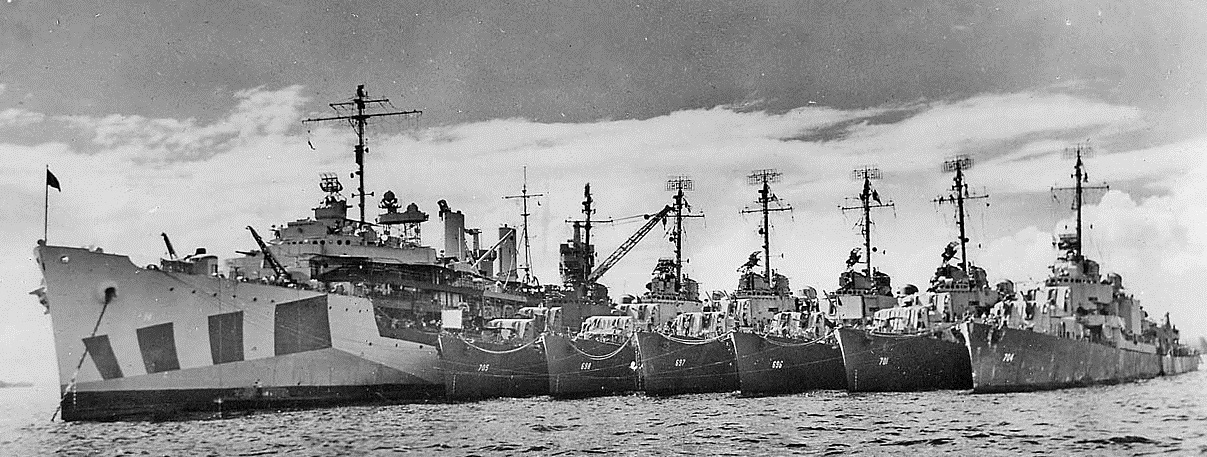
Destroyer Tender Dixie with her charges near Leyte
When the war began, most of the ships available for the advance bases were quite similar to those that had supported the fleet in World War I. Submarines and destroyers were supported by their type-specific tenders. While both types of ship had grown larger, more capable, and more self-sufficient in the interwar years, they still needed the support of tenders, with their extensive workshops, skilled technicians, and supplies of spare parts, ammunition, and food. Larger ships tied up alongside repair ships when they were unable to cope with problems using their internal resources. And hospital ships treated the sick and wounded, and evacuated them to the mainland. Read more...

Recent Comments